Overseas Micro Platform System / Futures Time Trading / Multi-language Micro Trading / UniApp Frontend Practical Setup Guide
Honestly, when I first encountered the overseas micro platform system, I was completely lost. The client came to me with a requirement: they wanted a micro trading system that supported multiple languages and could connect to futures time trading, with a limited budget but many functional requirements. I thought to myself, this is going to be tricky, right? After searching through all the solutions on the market, they were either too expensive or did not match the requirements. Finally, I mustered up the courage to build one myself, and it turned out to be quite stable.
The core of this system is a frontend-backend separated architecture. The frontend is developed with UniApp, supporting both iOS and Android, while the backend uses PHP, making deployment quite convenient. What satisfied me most was its multi-language support. It comes with built-in commonly used languages such as Chinese, English, Thai, and Vietnamese by default. If you need to add minor languages, secondary development is simple and does not require starting from scratch.
1. Detailed System Functions
This micro platform system is not some incomplete half-cooked product, but a truly complete trading system. After I helped the client deploy it, they directly used it in several overseas markets, and the results were good. Let me detail its core functions below:
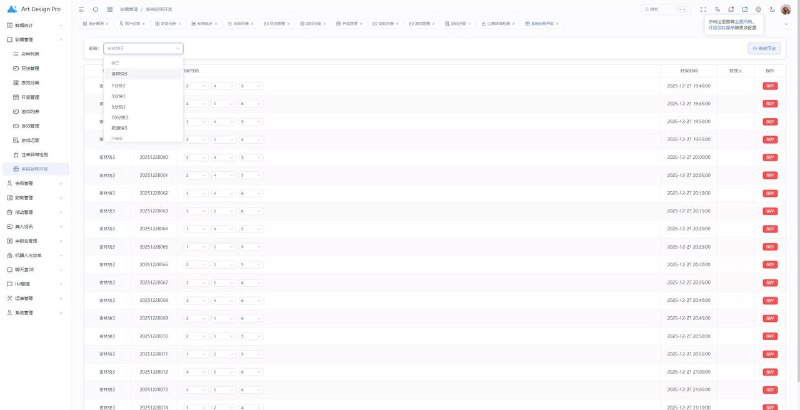
First is the core Futures Time Trading function. This function allows administrators to set multiple trading time periods, with each time period corresponding to different contract varieties. For example, the morning session from 9 to 11:30 AM is for Shanghai Copper trading, and the afternoon session from 1:30 to 3 PM is for Gold trading. The system automatically switches market data, and price trends are completely synchronized with futures data sources. This function is especially useful in overseas markets because futures exchanges in different countries have different trading hours. Multi-time period support can cover more trading varieties.
Second is the Multi-language Switching mechanism. Users can switch languages anytime within the APP. After switching, the entire interface including contract names, trading rules, and help documents will be simultaneously translated. This is not simple text replacement but localized processing based on different regions expression habits.
Third is the Complete Trading Function Modules, including: Real-time market data (connected to third-party data sources with millisecond-level delay control), Order trading (supporting market orders, limit orders, and stop-loss orders), Position management, Fund management (full processes of deposit, withdrawal, frozen funds, and unfrozen funds), Real-name authentication (supporting various ID types such as ID cards and passports), Credit score system (each user has a credit rating; the higher the level, the larger the trading limit), Single control function (administrators can perform refined control over specific users or contracts).
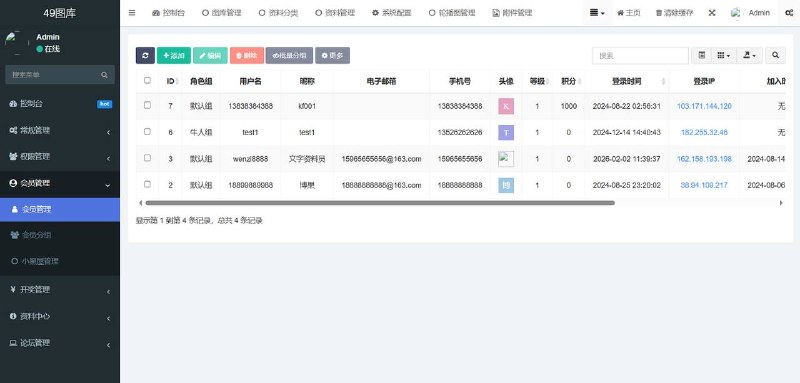
Fourth is the Completeness of the Admin Backend System. The admin backend can monitor all users trading behaviors in real time, set contract leverage multiples, adjust margin ratios, and configure take-profit and stop-loss parameters. The backend also provides complete data reports facilitating operators for data analysis.
2. Setup Preparations and Precautions
Server Configuration: Linux system is recommended, with configuration no less than 2 cores and 4GB RAM, and bandwidth of at least 5Mbps. If the expected user count exceeds 5000, it is recommended to upgrade to a 4 cores 8GB configuration.
Domain Names and SSL Certificates: This system requires two sets of domain names: one for the admin backend and one for the user-facing side. SSL certificates must be properly configured because micro trading involves capital transactions and browsers will strictly check certificate validity.
Precautions: The data source for futures time trading must be stable. If disconnection exceeds 30 seconds, user experience will significantly decrease. Do not rely entirely on machine translation for multi-language translations. Some professional terms require manual proofreading. The credit score system requires a reasonable calculation formula design to avoid scoring exploit vulnerabilities.
3. Common Issues and Pitfall Records
Issue 1: Trading Slippage Due to Market Data Delay
This issue was especially prominent during initial deployment. Because futures exchange data first needs to be cleaned by the data service provider before being transmitted to us, the delay is usually between 200 and 800 milliseconds. For short-term trading, this delay is enough to cause the order price to differ from expectations.
The solution is to use a local caching mechanism, maintaining a real-time market data cache on the server side. When users place orders, they read prices directly from the cache rather than requesting the data source every time.
Issue 2: Data Disorder After Multi-language Switching
When we first did multi-language support, we stored all translation content in language packs. When switching, the entire interface would flicker, and the user experience was poor. Later, we changed to loading language packs by module. The switching speed decreased from an average of 1.5 seconds to 0.3 seconds.
Issue 3: iOS Signature Invalidation After UniApp Packaging
There is a pitfall to note when developing overseas versions of micro platforms with UniApp: iOS packaging must use formal developer certificates, not test certificates. Once the signature becomes invalid, users will experience app crashes after updating.
4. Custom Solutions and Extension Suggestions
Direction 1: Connecting to More Futures Exchanges. The current system supports mainstream futures exchange data sources by default. If you need to connect to futures exchanges in obscure regions, you only need to develop corresponding data adapters. Generally, the workload for connecting one data source is about two weeks.
Direction 2: Adding Social Copy-Trading Functions. Many micro platform users like to follow experts to place orders. The system can add copy-trading functions. After a user follows a trader, their orders can be automatically copied.
Direction 3: Adding Activity Marketing Modules. Such as newbie task systems, invitation friend rewards, trading competitions, and other operational functions.
Key Tip: The core of a micro platform system does not lie in how fancy the functions are, but whether the trading chain is stable, the data is accurate, and the user experience is smooth. Before conducting secondary development, be sure to fully test each trading scenario, especially the system performance under extreme market conditions.
Overall, this overseas micro platform system uses very mature technology selection. The UniApp plus PHP combination performs well when deployed on overseas servers, and the multi-language support has also been verified through actual operations. If you are looking for a micro platform solution that allows secondary development, this system is worth considering.
Important Notice: This article is technical setup experience sharing and does not constitute any investment advice. Micro platform trading involves risks, please comply with local laws and regulations.
#OverseasMicroPlatform #FuturesTimeTrading #MultiLanguageMicroTrading #UniAppFrontend #MicroTradingSystem
-
 Alipay QR Code Scan
-
 WeChat Scan Pay