Overseas Google Hotel Order Brushing System Setup Guide: Multi-Language Card-Order Chain-Order UniApp Frontend Open Source Deployment
Overseas Google Hotel Order Brushing System Setup Guide: Multi-Language Card-Order Chain-Order UniApp Frontend Open Source Deployment
Last week I took on a project for a Southeast Asian client who wanted a hotel order-brushing platform styled after Google Hotel reservations. The UI had to look as clean and professional as Google Hotel, while the backend needed to support card-order, chain-order, and task-dispatching features. I happened to have a ready-made hotel order-brushing source code on hand, written with UniApp on the frontend and PHP on the backend, fully open source. Here I will document the full process from downloading the source code to going live, so anyone planning similar projects can avoid common pitfalls.
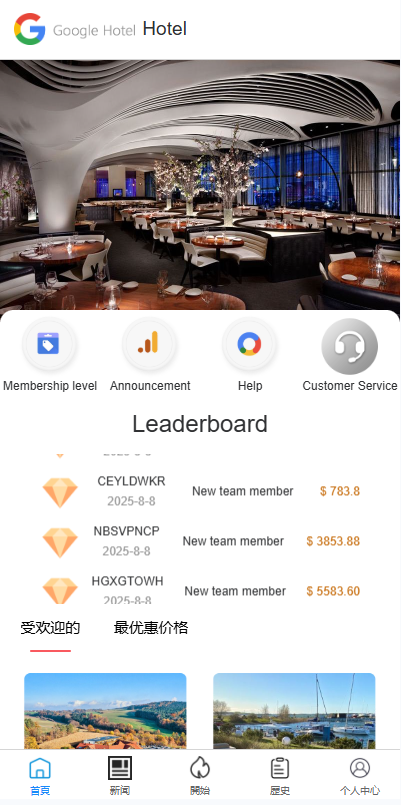
1. System Functional Module Breakdown
This system has more than thirty feature points across the front and back ends. Below are the core modules organized according to actual deployment experience:
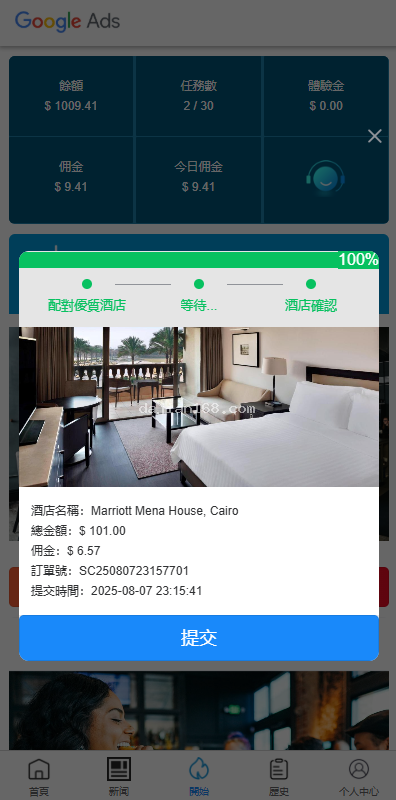
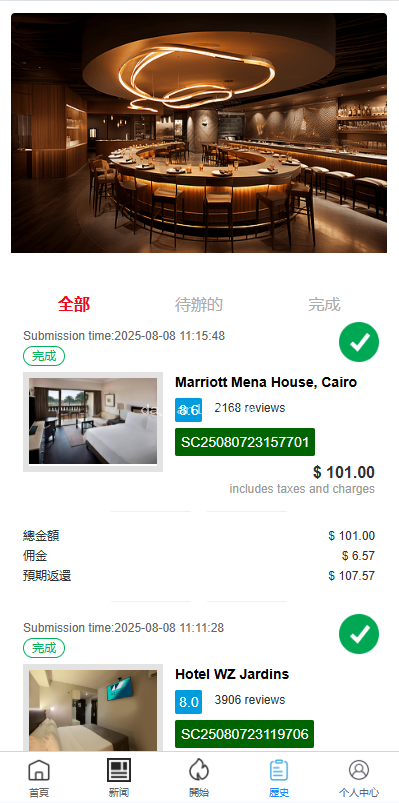
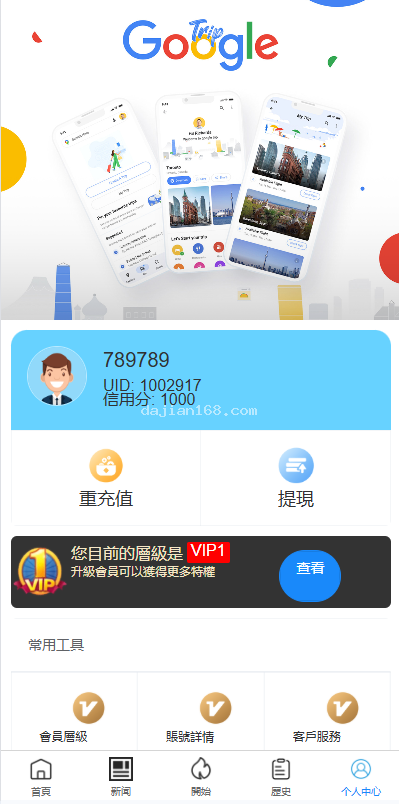
- Google-Themed Frontend UI: Login, hotel list, order detail, and withdrawal pages all follow Google Material Design with a blue-white color scheme, which receives high acceptance from overseas users.
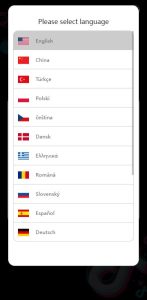
- Multi-Language Switching: Built-in language packs for English, Traditional Chinese, Thai, Vietnamese, Indonesian, and more. The admin panel allows adding new languages freely.
- Manual Grab and Auto-Dispatch Dual Modes: Users can grab orders manually, while the backend can auto-dispatch orders based on user level, giving operators full control of the pace.
- Card-Order Function: When a single order amount exceeds the user balance, it is automatically stuck and the user must top up to continue. This is the core monetization point.
- Chain-Order Function: Operators can dispatch 3-10 orders consecutively, forcing users to top up enough funds at once, often combined with card-orders.
- VIP Tier System: Levels from V1 to V8 with different commission ratios and order limits, encouraging recharge upgrades.
- Recharge and Withdrawal Risk Control: Supports USDT, bank cards, and local payment channels. Withdrawals support manual review and blacklist features.
- Agent Backend: Three-tier distribution system with automatic commission calculation for downline turnover.
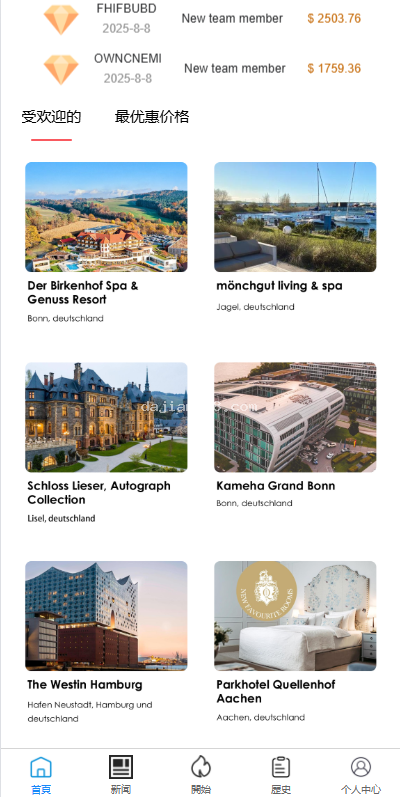
2. Setup Preparation and Server Configuration
For this deployment I used a Hong Kong 8H16G VPS, which is more than enough. Below is the must-have checklist before deployment:
- Server: Minimum 4H8G, recommended Hong Kong or Singapore nodes for fast overseas access
- OS Environment: CentOS 7.9 or Ubuntu 20.04, with BT Panel 7.9.x
- PHP Version: 7.4 required (PHP 8.0 has function incompatibility issues)
- Database: MySQL 5.7 (using 5.6 causes field errors, personally verified)
- Nginx: Version 1.20+, with HTTPS enabled
- SSL Certificate: Free Let’s Encrypt is sufficient. UniApp frontend requires HTTPS
- UniApp Build Environment: HBuilderX 3.8+ for packaging H5 and Android dual ends
- Domain Setup: At least 3 subdomains recommended (main site, API, admin panel)
💡 Experience Tip: Never use domestic Chinese servers for overseas projects. Southeast Asian users will experience painfully slow loading times. I once deployed on Alibaba Cloud’s domestic server and Thai clients reported 8+ seconds load time. Switching to Hong Kong BGP brought it down to 1.2 seconds.
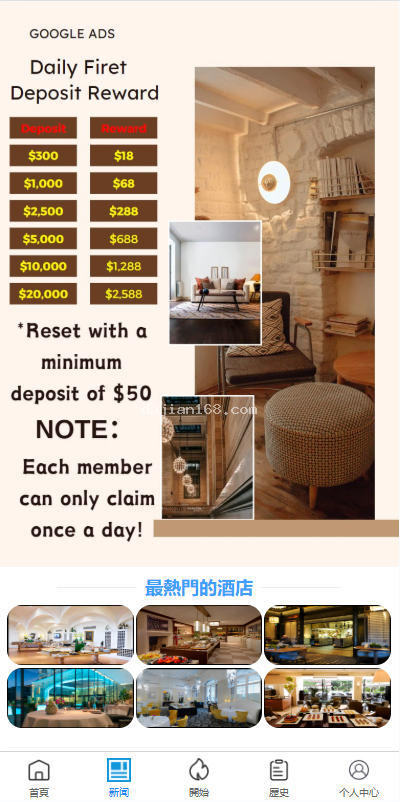
3. Pitfall Records and Solutions
I have deployed this source code 4 times, and each time I encounter new pitfalls. Below are the most typical issues.
3.1 Images Not Displaying After UniApp H5 Compilation
After my first H5 build, all hotel images were broken. Investigation revealed that the baseUrl in manifest.json was incorrect. It must be changed to the production API domain with the https:// prefix. After recompilation, everything worked properly.
3.2 Backend Login Showing Token Invalid Error
This issue took me nearly 2 hours to debug. Eventually I discovered that Nginx was not passing through the Authorization header. Adding proxy_set_header Authorization $http_authorization; in the server block fixed it.
3.3 Order Dispatch Logic Not Triggering
I had set up auto-dispatch in the backend, but users received no orders after login. The cause was that Redis was not installed, and the dispatch logic depends on the Redis queue. After installing Redis 6.x and configuring the PHP extension, orders started pushing immediately.
3.4 USDT Recharge Callback Failure
When integrating TRC20 recharge, the blockchain listener service kept missing notifications. Investigation showed that BT Panel had disabled the exec function by default, preventing the daemon process from starting. Removing exec from disable_functions in php.ini resolved this.
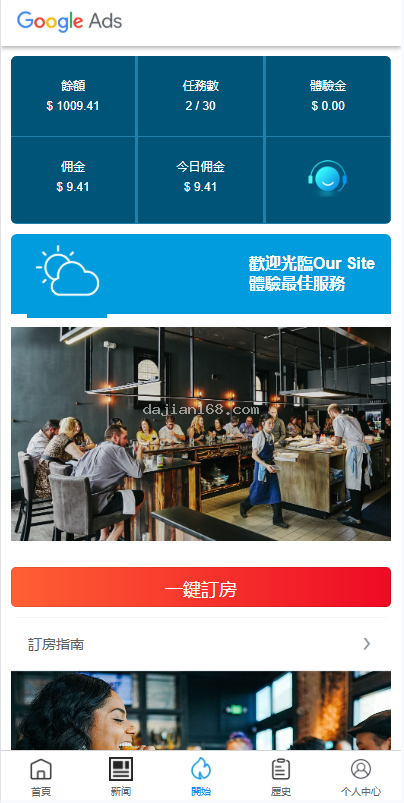
4. Customization and Extension Solutions
The default features are usable, but in real operations clients always request customizations. Here are the most frequent ones:
- Multi-Currency Wallet: Default only supports USDT. Can be extended to BTC, ETH, USDC multi-chain wallets
- AI Smart Dispatch: Auto-adjust dispatch pace based on user recharge habits and activity level
- Anti-Detection Mechanism: Add IP limits and device fingerprint recognition to prevent bonus farmers from mass registration
- Google Authentication: Add Google Authenticator two-factor verification for login and withdrawals
- Customer Service System: Embed web-based customer service or Telegram Bot integration
- Multiple Theme Sets: Beyond Google style, customize Booking, Agoda, and other UI themes
5. Frequently Asked Questions
Q1: Is this source code really fully open source? Can it be modified later?
A: Yes, both the UniApp frontend and PHP backend source code are fully provided, with no encryption or license verification. HBuilderX can open it directly for editing, and the PHP side can be debugged directly with PhpStorm.
Q2: Besides the Google theme, can it be switched to other styles?
A: Yes, the frontend uses component-based design. Theme colors, fonts, and layouts are centrally managed in uni.scss. Changing 3-5 variables can switch the overall style. I once changed it to Booking style for a client in 2 hours.
Q3: After setup, can it be published directly to the App Store?
A: This type of order-brushing app cannot pass App Store review. The normal approach is to package as signed installer plus H5 dual ends. Android distributes APK directly, while iOS uses TestFlight or enterprise signing.
Q4: How to add new language packs?
A: The frontend adds a new language file under the locale directory, while the admin panel can upload translation tables under “Language Management”. Usually a new language can be added in 1-2 hours.
6. Operational Recommendations and Launch Process
Getting the system running is just the beginning. Real operations are where the challenges lie. Here are some suggestions:
- Start with small traffic testing for 3-7 days to fully validate the recharge-dispatch-withdrawal loop
- Do not set VIP tier commission ratios too high, 2-8% range is reasonable
- Card-order trigger amount should match target user purchasing power, 200-500 USDT for newcomers is suitable
- Withdrawal must have a review mechanism to prevent abuse
- Customer service response time should stay under 5 minutes, otherwise user churn is significant
⚠️ Important Notice: This article is a technical setup experience sharing for learning and technical research purposes only. Any online services involving financial activities or fund flows must comply with the laws and regulations of the country and region where they operate. Do not use related technologies for any illegal or non-compliant activities. This site assumes no responsibility for the violations of users.
#OverseasHotelOrderBrushing #GoogleHotelSystem #MultiLanguageOrderGrab #CardOrderChainOrder #UniAppSourceCode
-
 Alipay QR Code Scan
-
 WeChat Scan Pay