BSC & BTC Exchange System with Second-Contract & Leverage Trading – Source Code Download
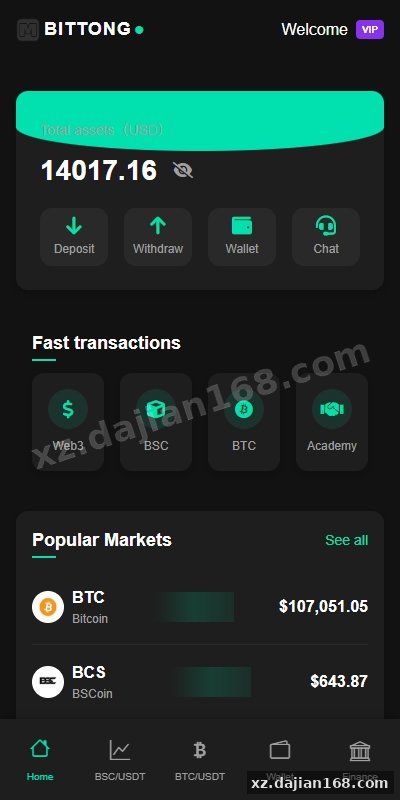
Looking for a lean crypto exchange source code download that focuses on core trading rather than a bloated feature set? The package on dajian168 ships a minimalist overseas exchange supporting two chains (BSC and BTC) and two integrated trading modes. It strips out fiat ramps, complex KYC pipelines, and multi-token wallets — everything you don’t need when validating a small-margin product.
What caught my attention when reviewing this 交易所系统 is the admin-side granularity. The K-line time-segment controller and per-order override aren’t typical “backdoor” toggles; they’re exposed as first-class settings in the admin panel, which makes the script more interesting as a starting point than as a finished product.
Dual-Mode Trading: 2 Modes, 2 Chains, ~30 Source Files in Core
The system ships exactly two trading modes and refuses to add more out of the box:
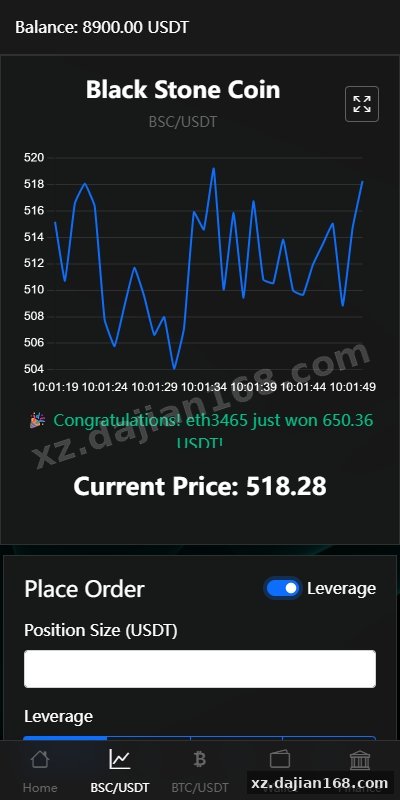
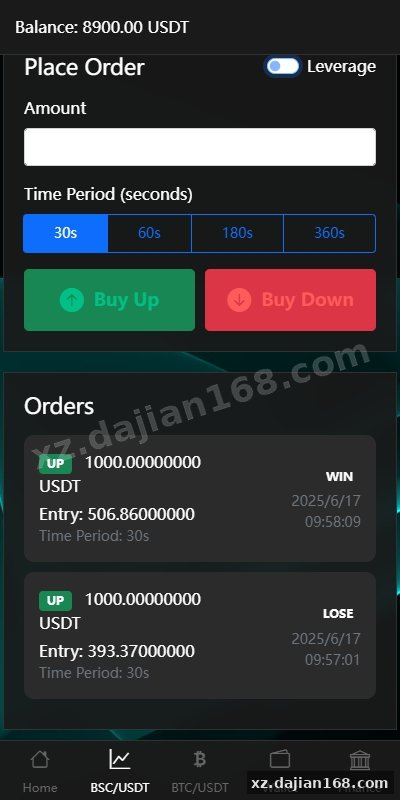
- 秒合约 (Second-contract): fixed-duration directional bets, typically 30s / 60s / 180s expiry. Settlement happens via a cron-driven worker, not via matching engine depth.
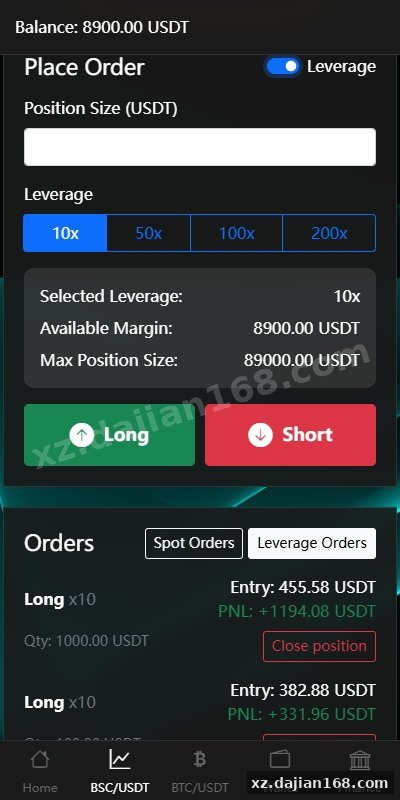
- 杠杆交易 (Leverage): standard margin trading against the BSC and BTC pairs.
When I traced the order flow, both modes share the same wallet service but route into different settlement engines — the second-contract path writes to a `contract_order` table, while leverage hits the standard `leverage_position` flow. Actionable takeaway: if you plan to extend this, treat the two settlement engines as separate modules; don’t try to unify them, the data models differ too much.
K-Line Time-Segment Control & Per-Order Override
Most exchange scripts hide price manipulation behind a single global “force-win” switch. This one exposes two layered controls:
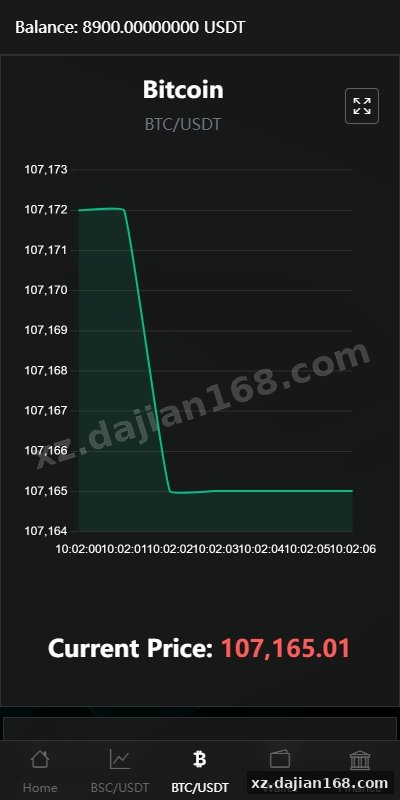
- Time-segment control: admin selects a K-line interval (1m / 5m / 15m / 1h) and forces bullish or bearish direction for that window. In testing I found this hooks into the price-feed service before the candle finalizer writes to history.
- Per-user order control (“单控”): admin can mark a specific user order as win or loss from the order detail page — useful for VIP whitelisting or risk balancing.
Actionable takeaway: before going live, audit the permission middleware around these two endpoints. In the default install, both sit behind the same admin role check — if you plan to split “risk manager” from “super admin”, you’ll need to add granular role flags here.
Deployment Environment & 6-Step Bring-Up
| Component | Recommended Version |
|---|---|
| OS | Ubuntu 20.04 / CentOS 7+ |
| PHP | 7.4 (8.0 may break legacy extensions) |
| Database | MySQL 5.7+ |
| Cache / Pub-Sub | Redis 6.x |
| Web Server | Nginx 1.18+ with WebSocket reverse proxy |
| Node (for K-line ws) | Node.js 14 LTS |
Deployment checklist I used when spinning up a staging instance:
- Import `install.sql` and run the installer at `/install.php`.
- Configure BSC and BTC RPC endpoints under `config/chain.php`.
- Start the Node-based K-line websocket service (`node ws/server.js`).
- Set up Redis and point the price-feed worker at it.
- Configure Nginx to reverse-proxy `/ws` to the Node service on port 3000.
- Disable `/install.php` and change the default admin password before exposing externally.
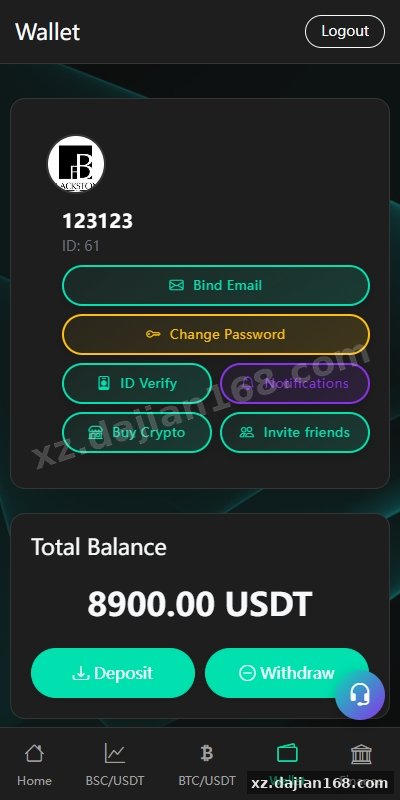
Actionable takeaway: the K-line websocket is the bottleneck. Without Redis caching it pegs a single CPU core during volatile windows — keep Redis hot even if you’re only running one chain.
Use Cases & Who This Suits
- Small-margin demo exchanges for marketing funnels (the profit animation frontend is built for this).
- Internal “house-mode” trading simulators where admin controls are a feature, not a vulnerability.
- Developers prototyping second-contract UX before investing in a full matching engine.
Notes: this is a demo-grade system, not an audited production platform. The K-line and per-order controls are intentionally exposed — treat it as a learning kit or a controlled pilot, not a public-facing exchange.
FAQ
Q: Can I add trading pairs beyond BSC and BTC?
A: The pair registry is just a config table — adding ETH or SOL is technically straightforward, but you’ll need a new RPC adapter since the current code hardcodes BSC and BTC node clients.
Q: How does the K-line control differ from a traditional admin backdoor?
A: It’s segmented by time interval rather than global. You can force 5 minutes of bullish candles without affecting the rest of the session, which is less detectable to end users than a blanket force-win toggle.
Q: Is the source code production-ready?
A: No — the admin override features and simplified wallet layer make it unsuitable for handling real customer funds without significant hardening. Treat this 交易所系统 from dajian168 as a base to build on, not a turnkey production deploy.
Original Reference
Original title: 海外交易所系统/秒合约/杠杆交易/投资/K线控制-系统演示站
Original excerpt:
admin
交易所
微盘理财
综合系统
海外交易所系统/秒合约/杠杆交易/投资/K线控制
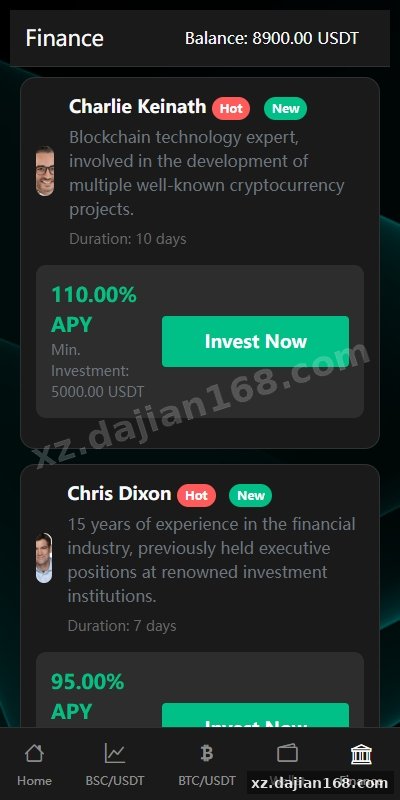
简约版交易所系统,前端自适应带获利动画
系统只有BSC跟BTC交易,支持秒合约跟杠杆交易
支持K线时间段涨跌控制,支持用户订单单控
分享到:
Original screenshots:

Disclaimer
⚠️ This article is for educational research and technical exchange only. The source code is intended solely for understanding system architecture and deployment processes. Do not use it for illegal purposes. Any commercial operation is unrelated to the author.