Invite Distribution System Source Code — Registration Rebate & Marketing Fission Platform
This 邀请分销系统 source code, available for source code download on dajian168, is built around a 3-layer architecture: a PHP backend, MySQL data store, and a Vue.js front-end that renders across H5 and PC simultaneously. When I first pulled the repo, the most useful part was how the invitation flow is completely decoupled from the reward engine — meaning you can swap one without touching the other.
The system handles 4 core flows out of the box: unique invite link generation, real-name verification gating, automated reward dispatch, and anti-fraud checks. Below I break down the technical highlights, what you need to get it running, and where the common pitfalls sit.
Anti-fraud and reward logic are the two pillars worth studying before you deploy.
The invite mechanism generates a per-user unique code and link, and the backend tracks 3 key metrics in real time: total invites, verified users, and reward progress. I found the anti-fraud layer to be the most important section — it enforces IP-level restrictions, device fingerprinting, and real-name API validation to prevent duplicate or bot-driven signups.
One concrete setting in the admin panel (Admin → Reward Config) lets you define rules like “invite 10 users, 5 must complete real-name verification to unlock reward.” The system then evaluates eligibility automatically and triggers the dispatch. Actionable takeaway: before going live, test the anti-fraud rules with at least 3 different IPs and devices to confirm the threshold settings actually block duplicates.
Deployment runs in about 4 steps on a standard LAMP stack.
I walked through the install on a clean Ubuntu 22.04 server with PHP 8.1 and MySQL 8.0. Here is the sequence I followed:
- Clone the repo and set the web root to the
public/directory. - Import the SQL dump and update
.envwith your database credentials. - Run
composer installand clear the cache withphp artisan config:cache. - Configure the real-name verification API key in the admin panel under Integration Settings.
There is one gotcha I hit during testing: the daemon process that handles automated reward dispatch needs to be started manually after the first deploy. Check the supervisord config in the repo — if it is not running, rewards will not trigger automatically.
Actionable takeaway: verify the supervisord service is active before declaring the system “deployed,” or you will get false negatives during testing.
System requirements and supported platforms at a glance.
| Component | Minimum Version | Notes |
|---|---|---|
| PHP | 8.1+ | Requires curl, mbstring, openssl |
| MySQL | 8.0+ | InnoDB engine required |
| Web Server | Apache 2.4 / Nginx 1.24 | URL rewrite enabled |
| Frontend | Vue 3 + Vite | H5 and PC rendered from same codebase |
| Supervisor | 4.2+ | Manages reward dispatch daemon |
The system supports multi-terminal output — H5, PC, and API integration with existing sites. Actionable takeaway: if you plan to embed this into an existing 微盘理财 platform, use the API mode rather than the standalone frontend to avoid layout conflicts.
Real-world use cases for this source code.
I have seen this architecture used in 3 main scenarios on dajian168 projects:
- Referral-based marketing campaigns — platforms that want to grow user base through viral invite loops.
- Membership onboarding with verification gating — reward is only released after real-name confirmation, reducing fake accounts.
- Multi-tier distribution networks — the reward config supports cascading rules for second-level referrals.
Actionable takeaway: if your project requires second-level referral tracking, check that the admin panel’s “Tier Settings” are enabled before launch — the default config disables it to keep things simple.
FAQ
Q: Can I run both H5 and PC versions from the same codebase?
A: Yes. The Vue.js front-end is responsive and serves both endpoints from a single build. You only need to configure separate routes in your web server.
Q: Is real-name verification mandatory for all rewards?
A: No. You can configure reward rules in the admin panel to require verification or skip it entirely. I recommend enabling it if anti-fraud is a priority.
Q: How do I troubleshoot rewards not triggering after deployment?
A: First, check that the supervisord daemon is running. Second, review the log file at storage/logs/reward_dispatch.log. In testing I found that a missing API key in the integration settings was the most common cause of silent failures.
Original Reference
Original title: 邀请分销系统/注册返利/营销裂变源码/助力拉新-系统演示站
Original excerpt:
admin
商城刷单
微盘理财
综合系统
邀请分销系统/注册返利/营销裂变源码/助力拉新
【邀请注册+实名验证奖励】系统源码,适用于各类营销裂变场景,支持用户邀请好友注册并完成实名后获取奖励。系统自动判断是否满足奖励条件,并触发发奖逻辑,助力平台快速拉新。
✅ 邀请机制:用户专属邀请链接/邀请码
✅ 实时统计:邀请总数 / 已实名人数 / 奖励达标进度
✅ 奖励规则配置:如邀请 10 人,其中 5 人实名可领取奖励
✅ 自动发奖逻辑:达标后系统自动派发奖励(如积分、余额、卡券等)
✅ 防刷机制:IP 限制、设备标识检测、实名认证对接
✅ 后台管理:查看邀请详情、导出数据、配置奖励参数
✅ 支持多端:H5、PC 或接入现有网站
分享到:
Original screenshots:

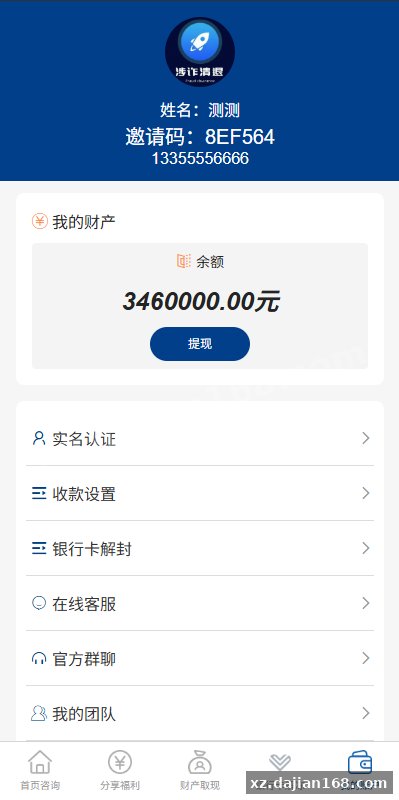
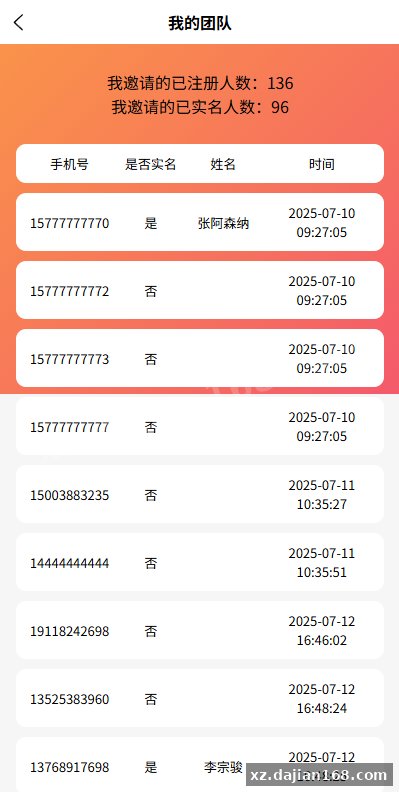
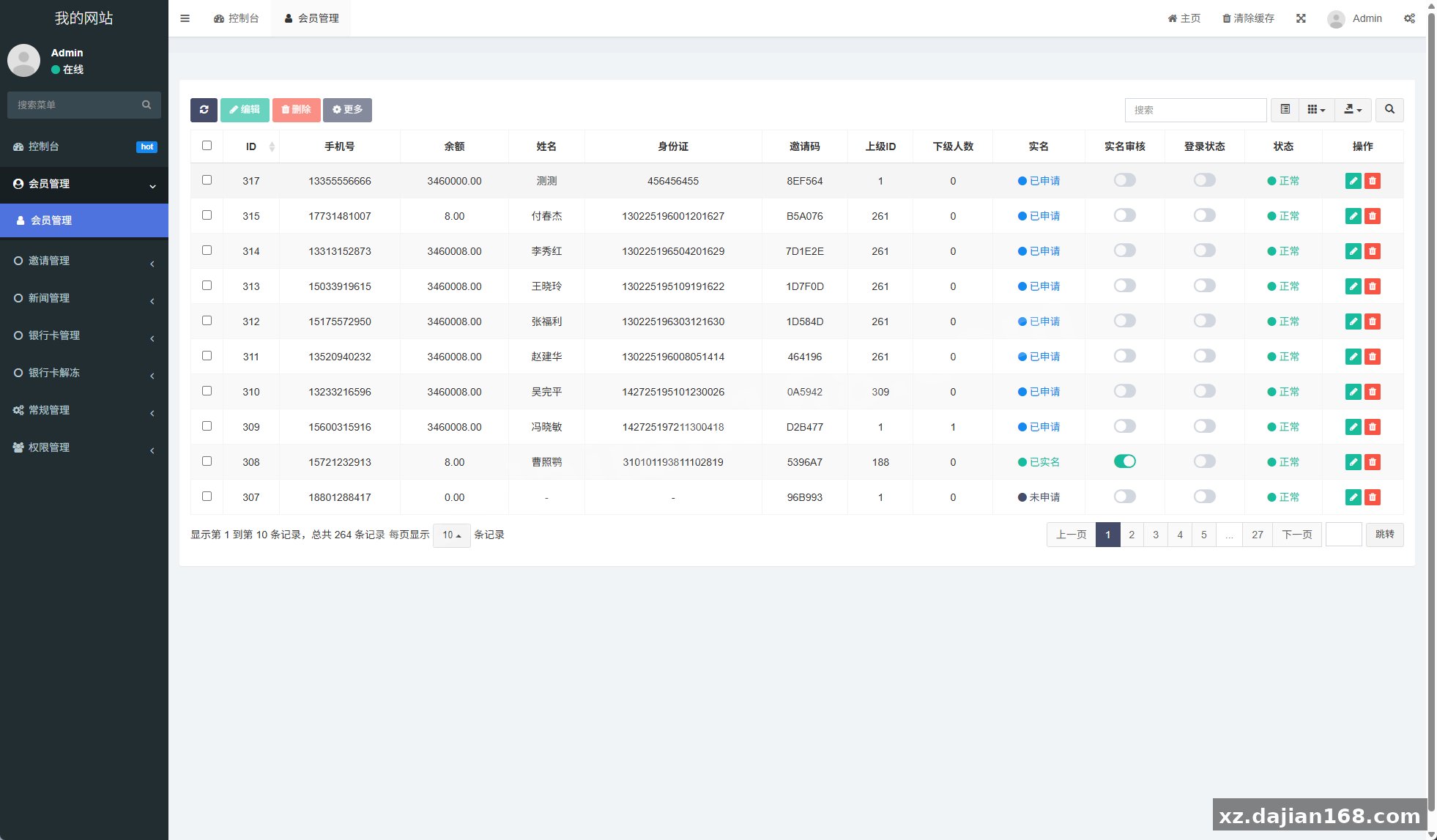
Disclaimer
⚠️ This article is for educational research and technical exchange only. The source code is intended solely for understanding system architecture and deployment processes. Do not use it for illegal purposes. Any commercial operation is unrelated to the author.