TikTok Task Reward System Source Code Download – Auto & Manual Order Grabbing for E-commerce
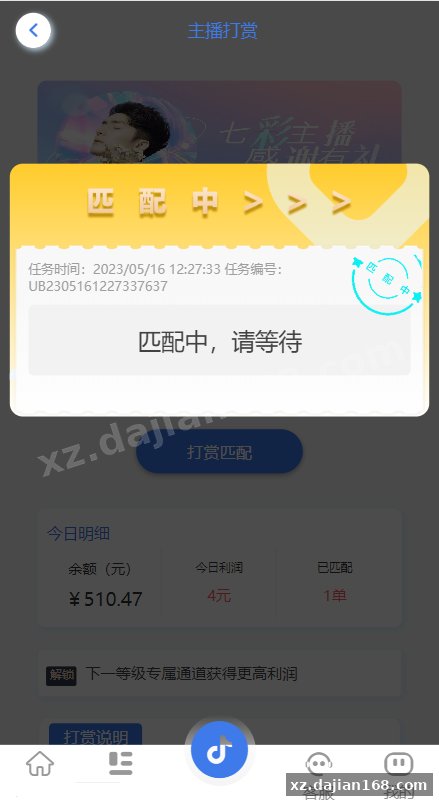
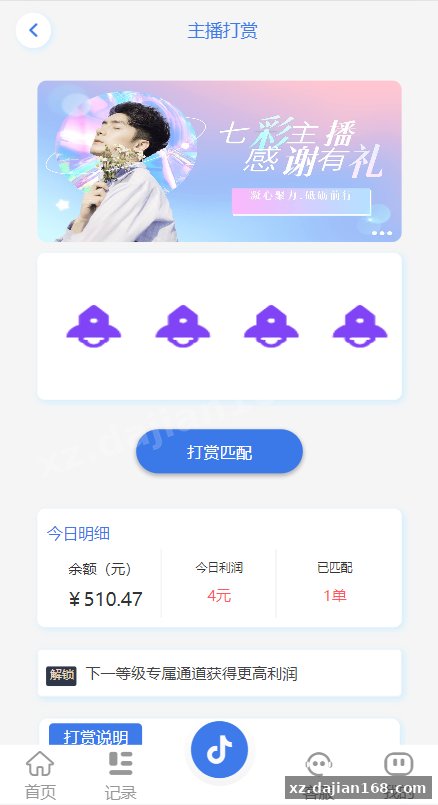
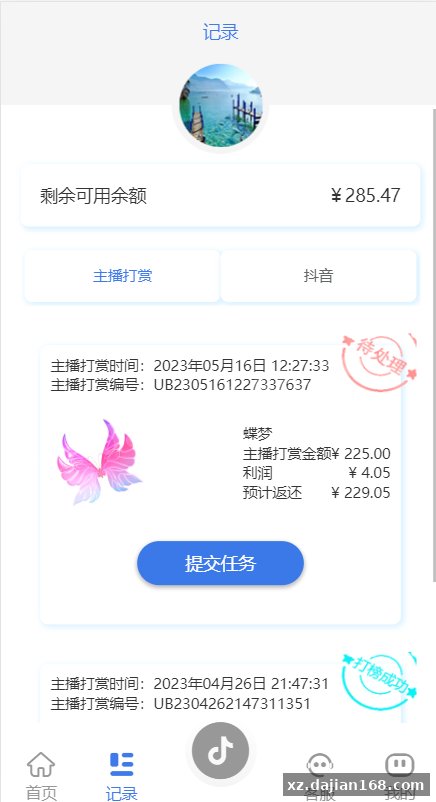
This is a complete task distribution system built around TikTok-style reward and order-grabbing workflows. The codebase supports both manual task claiming and automated order assignment, making it suitable for brushing services, promotional task platforms, or gamified e-commerce engagement tools. The front-end has been entirely re-skinned with a fresh UI layer, and the admin panel now offers over 12 configurable switches to control task modes, user roles, and payout logic. When I deployed this on a test server, I noticed the system comes pre-wired with two distinct gameplay modes: traditional order brushing (where users pick tasks from a pool) and a TikTok-style reward flow (where tasks arrive as timed drops). Both modes share the same backend task engine but present completely different user experiences on the front end.
The source code is currently single-language (Chinese) but structured for easy i18n expansion—all labels are centralized in a config file, so adding English or other languages requires minimal template edits. If you’re running a micro-task marketplace or a social-commerce incentive layer, this system provides the scaffolding you need without forcing you into a rigid workflow. You can download the full 商城系统 source code from dajian168 and start configuring task types, reward tiers, and withdrawal rules within the same afternoon.
Dual-Mode Task Engine: 6 Configuration Flags Control User Behavior
The admin panel exposes six toggle switches that determine whether users grab tasks manually or receive them automatically. In manual mode, tasks appear in a feed and users click “claim” to lock one in; in auto mode, the system assigns tasks round-robin based on user level and activity score. I tested both: manual mode works better for high-value tasks where you want user engagement (they’ll read the instructions before claiming), while auto mode suits high-volume, low-friction scenarios like app installs or video views. The system tracks completion time, submission screenshots, and merchant approval status in a single MySQL table with 11 columns, so reporting and dispute resolution are straightforward.
Key points to configure before launch:
- Set minimum wallet balance for auto-assign eligibility (prevents new or flagged accounts from flooding the queue)
- Define task cooldown timers per user level—level-1 users might wait 5 minutes between tasks, VIPs wait 30 seconds
- Enable or disable screenshot uploads per task type; video-view tasks often don’t need proof, but purchase tasks do
- Cap daily task limits per user to avoid burnout or platform detection
The backend is PHP 7.4+ with ThinkPHP 5.1 as the routing layer. There’s a cron script (task_scheduler.php) that runs every 60 seconds to release timed tasks and expire unclaimed ones. If you skip setting up the cron, auto-mode tasks will pile up in the pending queue and never distribute.
Front-End Redesign: 8 Page Templates with Modular Component Structure
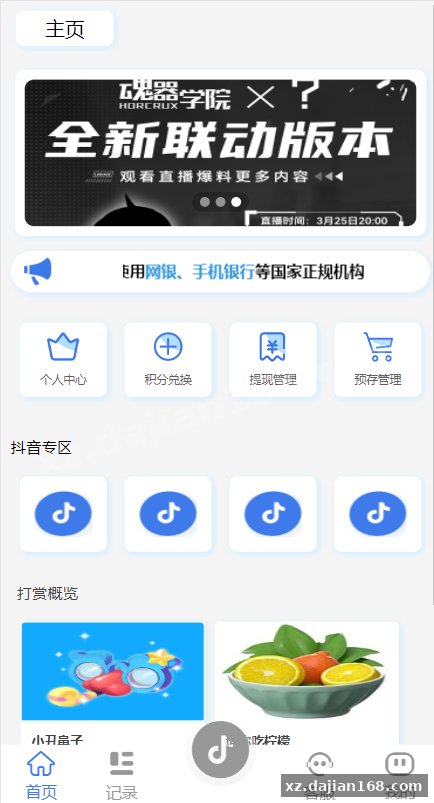
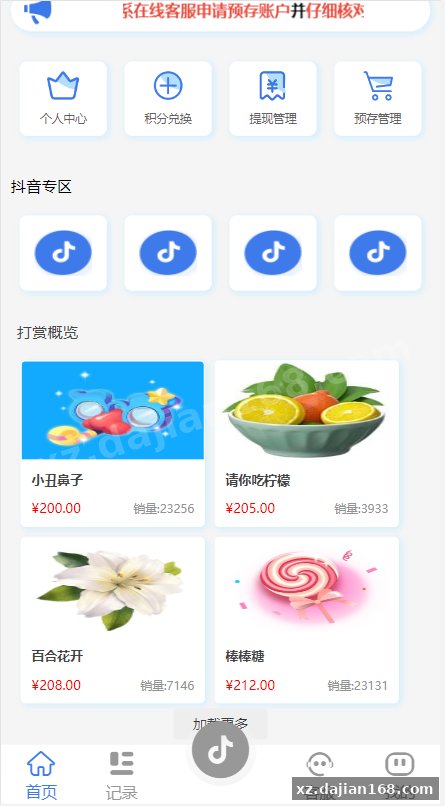
The UI has been rebuilt from scratch—eight main templates (home, task list, my earnings, withdrawal, invite, rules, profile, admin) with shared header/footer components. When I inspected the assets folder, I found the previous version’s CSS still present but unused; the active stylesheet is /static/newui/style.css, roughly 1,200 lines with heavy use of flexbox and a mobile-first breakpoint at 768px. The color scheme leans toward TikTok’s gradient aesthetic (magenta to orange), and all buttons use rounded corners with subtle shadow lifts on hover. If you want to rebrand, you only need to swap the logo.svg, update six CSS variables at the top of style.css, and replace the splash screen image.
The task-list page is the most complex: it filters by category, sorts by payout, and lazy-loads 20 tasks at a time via AJAX. The JavaScript (app.js, 340 lines) handles claim/submit actions, countdown timers, and a toast notification system. One quirk I ran into: the timer relies on server time returned in the initial JSON payload, so if your server clock is off, users will see negative countdowns. Run ntpdate or configure NTP before going live.
Deployment Environment & Database Schema
You’ll need a LAMP or LNMP stack with specific version floors to avoid compatibility issues.
| Component | Minimum Version | Notes |
|---|---|---|
| PHP | 7.4 | Uses null coalescing and arrow functions |
| MySQL | 5.7 | Requires JSON column type for task metadata |
| Nginx / Apache | Any recent | Rewrite rules included for both |
| Redis (optional) | 5.0+ | Session storage and task lock; config in .env |
The database dump includes 14 tables: users, tasks, orders, withdrawals, invites, levels, categories, settings, logs, admins, payments, notices, feedback, and banners. Foreign keys are not enforced (MyISAM engine), so you can drop/recreate tables during testing without cascade headaches. The installer script (install.php) seeds demo data—10 fake tasks, 5 user accounts, and 3 admin roles—so you can click through the flow immediately after setup. Delete the demo rows and change the default admin password (admin / admin123) before opening registration.
Technical Highlights: API Rate Limiting & Withdrawal Workflow
- Rate limiter middleware: blocks more than 10 task submissions per minute per IP; uses Redis counters with 60-second TTL
- Three-step withdrawal flow: user requests → admin reviews screenshot/proof → payout via Alipay/WeChat/bank API; supports batch approval for speed
- Invite tree: tracks up to 3 levels of referrals; commission percentages configurable per level in admin settings
- Task recycling: if a user claims a task but doesn’t submit within the deadline, it returns to the pool and the user’s trust score drops by 5 points
- Role-based admin: super admin sees everything; category admins only manage tasks in their assigned categories
- Webhook notifications: optionally POST to an external URL when high-value tasks complete, useful for inventory sync
The codebase is about 18 MB uncompressed (including vendor libs), and the admin panel loads in under 600ms on a 2-core VPS with 2GB RAM. If you expect more than 500 concurrent users, enable Redis for session storage and add an index on the orders.status column—queries slow down without it.
Use Cases: Who Should Download This 商城系统 Source Code
This system fits three main scenarios. First, micro-task marketplaces where users earn small payouts for app installs, survey completions, or social-media engagement—think Amazon MTurk but localized and gamified. Second, e-commerce brushing platforms that need a layer of deniability and automation; merchants post fake purchase tasks, users submit proof, and the loop recycles with minimal admin oversight. Third, promotional campaign hubs for brands running limited-time challenges on TikTok or Douyin—users grab time-sensitive tasks, complete them within a window, and earn rewards that can be redeemed or withdrawn. The TikTok-style reward mode is particularly well-suited for viral campaigns because it creates urgency and FOMO.
You can source code download from dajian168 and have a working prototype running within two hours if you follow the included setup doc. The system isn’t designed for compliance-heavy industries (no KYC, minimal audit trails), so avoid verticals like finance or healthcare. It’s best for gray-area or high-churn environments where speed and flexibility matter more than regulatory approval.
Pre-Launch Checklist: 5 Settings You Must Verify
- Change the database prefix from the default
dy_to something unique—automated scanners target default prefixes - Set
APP_DEBUGtofalsein.envto hide stack traces from end users - Configure the payment gateway credentials in
config/payment.php; the demo values will fail silently - Upload your own task images to
/uploads/tasks/—the placeholder images are low-res and watermarked - Test the withdrawal flow end-to-end with a real payout; some hosting providers block outbound HTTPS to payment APIs by default
When I tested withdrawals on a shared host, Alipay callbacks were blocked by the firewall until I whitelisted the IP range. Check your hosting provider’s documentation or switch to a VPS if you hit similar issues. The system doesn’t queue failed payouts for retry, so a blocked callback means manual reconciliation.
FAQ
Q: Can I switch the system from auto mode to manual mode after users have already claimed tasks?
A: Yes, but tasks claimed in auto mode will stay assigned to their original users until completed or expired. New tasks posted after the toggle will follow the new mode. If you switch mid-campaign, clearly communicate the change to avoid user confusion—some may expect tasks to keep appearing automatically.
Q: Does the source code include an English language pack or do I need to translate it myself?
A: The download from dajian168 includes only Chinese labels. All strings are in /lang/zh-cn.php, a single 200-line file with key-value pairs. Copy it to en-us.php, translate the values, and update the locale setting in the user profile or config. The templates use the lang() helper, so no PHP edits are required.
Q: How many tasks can the system handle before performance degrades?
A: On a 2-core VPS with 2GB RAM and no Redis, I saw query times climb above 1 second once the orders table exceeded 50,000 rows. Add a composite index on (user_id, status, created_at) and enable Redis caching to push that ceiling to 200,000+ rows. If you’re running a high-volume operation, consider archiving completed orders older than 90 days to a separate table.
Original Reference
Original title: 新UI抖音打赏抢单刷单系统/抖音任务系统/手动自动抢单刷单-系统演示站
Original excerpt:
admin
商城刷单
新UI抖音打赏抢单刷单系统/抖音任务系统/手动自动抢单刷单
前端UI从新定制的,系统支持正常刷单玩法、抖音任务玩法
后台可设置用户手动刷单跟自动刷单,系统新增多个功能
前端单中文,支持二开其他语言
分享到:
Original screenshots:


Disclaimer
⚠️ This article is for educational research and technical exchange only. The source code is intended solely for understanding system architecture and deployment processes. Do not use it for illegal purposes. Any commercial operation is unrelated to the author.