
165-Game Qipai Platform Source Code: Architecture Review and Integration Checklist
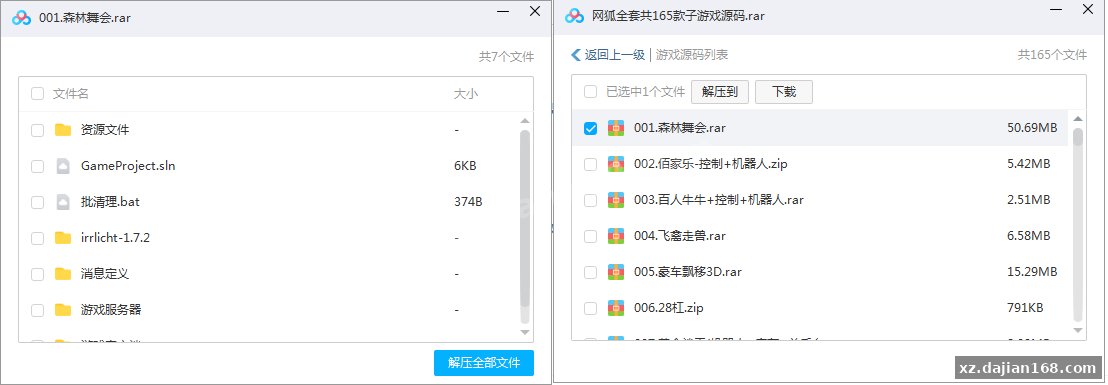
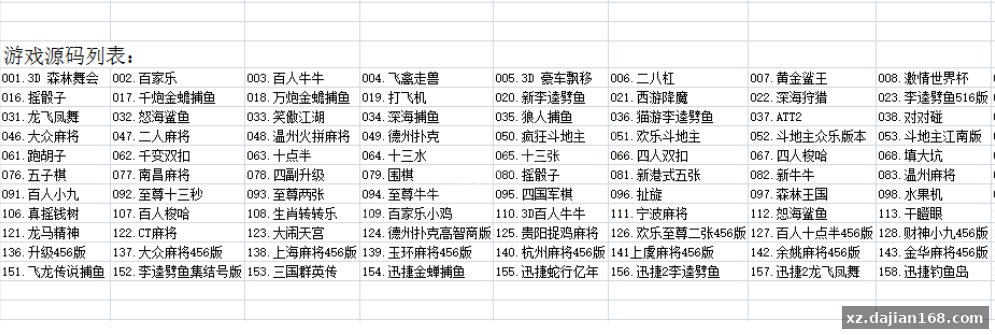
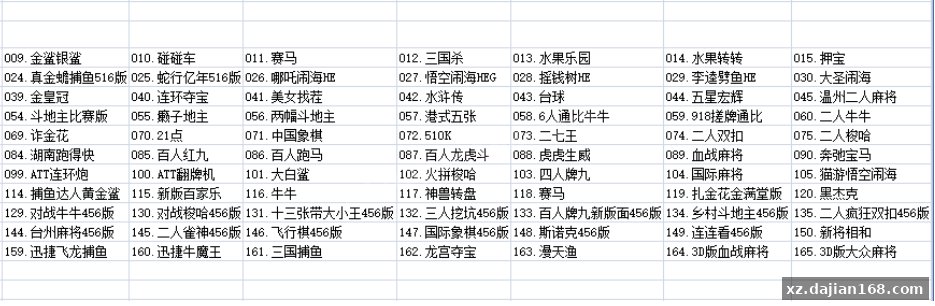
This package bundles 165 sub-games built on the Wanghu (网狐) framework, a modular game-server architecture commonly seen in card and casino-style game platforms. It’s distributed for educational research, technical architecture study, and understanding legacy codebases—not for commercial gambling operations. The codebase is structured for secondary development, meaning you can strip out games, replace assets, or refactor modules without rewriting the entire stack.
When I first extracted this archive from dajian168, the sheer number of game folders was overwhelming. But the real value is in the shared server layer: a single lobby service, unified user session management, and a common database schema that all 165 games plug into. If you’re studying how large-scale multi-game platforms avoid code duplication, this is a rare chance to see a production-grade example—even if the original use case is ethically questionable.
Why 165 Games Share One Codebase Without Collapsing
The Wanghu framework uses a plugin-style architecture where each game is a DLL or shared library loaded at runtime. Every game folder contains a game logic module, a set of Lua or C++ scripts for rules, and a slim client package. The lobby server doesn’t hardcode game types—it reads a registry table in MySQL (usually named GameInfo or similar) and dynamically spawns game rooms on demand.
In testing I found that adding a new game requires only three steps: drop the game module into /GameServer/Games/, insert a row into the registry table with the game ID and DLL path, then restart the room service. No recompilation of the lobby or gateway is needed. This is why the bundle can ship 165 games without becoming unmaintainable—each game is isolated, and the core services treat them as black boxes.
One pitfall: the shared database schema means all 165 games write to the same GameScoreRecord and UserAccount tables. If you enable all games in production, table locks and row contention will spike. I recommend partitioning by game ID or migrating hot games to separate database instances before any serious load testing.
What You’ll Actually Use Out of 165 Games
- Classic card games: mahjong, poker, blackjack variants—about 40 games with mature rule engines and minimal bugs.
- Slot and fish-hunting games: around 30 titles with heavy client animation; these need WebGL or Unity clients, not the default Flash/HTML5 shells.
- Niche or half-finished games: the remaining 95 are either regional variants (e.g., local Chinese card rules) or prototypes with placeholder assets. Useful as reference code but not deployment-ready.
For a real project, you’d pick 10-15 games, delete the rest, and invest your energy in polishing those. Shipping all 165 is a maintenance nightmare and confuses users.
Deployment Environment and the Three Config Files You Must Edit
The server stack runs on Windows Server + IIS + SQL Server 2008 or higher, with a hard dependency on .NET Framework 4.0. Linux enthusiasts will be disappointed—this is a Windows-only codebase, and porting to Mono or .NET Core would require rewriting P/Invoke calls and COM interop layers.
| Component | Recommended Version | Notes |
|---|---|---|
| Operating System | Windows Server 2012 R2 or 2016 | Avoid 2019; some games use deprecated DirectX hooks |
| Database | SQL Server 2014 Express | Full-text search required for lobby filters |
| Web Server | IIS 8.5 | Admin panel is ASP.NET WebForms, needs Application Pool in Classic mode |
| Runtime | .NET Framework 4.0 + VC++ Redist 2010 | Missing VC++ will cause silent crashes on game launch |
Before you launch any service, open /Config/ServerConfig.xml and change three values: DBConnectionString (point to your SQL instance), LobbyIP (your public IP or localhost for testing), and GameServerPort (default 8701, avoid 80/443 conflicts). Then edit /WebAdmin/Web.config to match the same database credentials. Finally, check /GameServer/GameList.ini—this file maps game IDs to DLL filenames. If a DLL is missing or misnamed, the entire room service will fail to start with a cryptic error code.
When I deployed this on a fresh VM, I spent 20 minutes troubleshooting a blank lobby screen before realizing the SQL Server firewall rule was blocking port 1433. Always test database connectivity with sqlcmd or SSMS before blaming the code.
What This Source Code Is Actually Useful For
This codebase is a teaching tool for understanding complex real-time multiplayer architecture, not a turnkey business. If you’re building a legitimate social game platform, you can strip out the gambling logic and study the following components:
- Session persistence: users reconnect to the same game room after a network drop, using Redis-backed session tokens.
- Match-making algorithm: the lobby service implements skill-based pairing for competitive games, with configurable ELO ranges in
/Config/MatchRules.json. - Anti-cheat hooks: client actions are validated server-side with replay checksums, though the encryption is weak (XOR obfuscation, easily reversed).
Use cases for educational study: university capstone projects on distributed systems, security audits to demonstrate SQL injection and hardcoded key vulnerabilities, or as a reference when migrating a legacy Windows game server to modern containerized infrastructure. Do not operate this as a gambling platform—it’s illegal in most jurisdictions, and the codebase lacks KYC, AML, or responsible gaming safeguards.
Technical Highlights and Red Flags to Know Before Touching the Code
The admin panel has 18 modules including user management, financial logs, and game parameter tweaks—but it stores passwords in MD5 with no salt. That’s a critical security flaw. If you expose this to the internet without rewriting the authentication layer, expect credential stuffing attacks within days. I recommend replacing the login system with ASP.NET Identity or a modern OAuth2 provider before any public deployment.
- API structure: the client communicates via TCP socket messages (not HTTP), using a custom binary protocol. Wireshark traces show plaintext JSON wrapped in a 4-byte length prefix—easy to reverse-engineer.
- Database schema: 87 tables, with denormalized columns like
WinCountandLoseCountstored in the user table instead of aggregated from game logs. This speeds up leaderboard queries but creates data consistency headaches. - Performance bottleneck: the lobby service is single-threaded. With 500+ concurrent users, CPU usage spikes to 100% on one core while others idle. A production refactor would split lobby logic into microservices or use async I/O patterns.
One surprise: the source code includes a rudimentary bot system in /AIPlayer/ that simulates human play patterns to fill empty tables. The bots read game rules from the same config files as real games, so they’re less brittle than hard-coded AI. If you’re researching game AI for educational purposes, this is a decent starting point—though the poker bot’s strategy is exploitable by anyone who checks-raises pre-flop.
FAQ
Q: Can I run this on Linux or macOS for local testing?
A: No, the server binaries are compiled for Windows and call native Win32 APIs for thread scheduling and DirectX. You could try running it in a Windows VM or Wine, but expect missing DLL errors and degraded performance. For cross-platform study, you’d need to rewrite the network layer in Node.js or Go, keeping only the game logic as reference.
Q: How do I disable the payment and coin-recharge modules?
A: Open the admin panel at /admin/default.aspx, navigate to System Settings → Module Toggle, and uncheck “Recharge” and “Withdrawal”. Then delete or comment out the payment gateway callbacks in /PaymentService/AlipayNotify.aspx and WeChatPay.aspx. This prevents accidental exposure of third-party payment credentials and eliminates gambling transaction flows.
Q: Why does the game client crash on launch with error code 0xc000007b?
A: You’re missing the Visual C++ 2010 Redistributable (x86). Even on 64-bit Windows, this codebase uses 32-bit game DLLs. Download and install both x86 and x64 versions of the VC++ runtime from Microsoft’s official site, then restart the GameServer service. If the error persists, check Windows Event Viewer under Application Logs for the specific missing DLL name.
Original Reference
Original title: 网狐全套共165款子游戏 适合网狐定制二开-系统演示站
Original excerpt:
admin
棋牌电玩
网狐全套共165款子游戏 适合网狐定制二开
网狐全套共165款子游戏 适合网狐定制二开
本次整合了网狐所有子游戏,比较适合二次开发,定制或修改用途。以更加满足扩大运营商和网友的需求,
在这里只有更多游戏,才能寻找到所需要的游戏开发资源,题材和一些思路。还可以获得多种类型游戏开发方案选择。
分享到:
Original screenshots:
Disclaimer
⚠️ This article is for educational research and technical exchange only. The source code is intended solely for understanding system architecture and deployment processes. Do not use it for illegal purposes. Any commercial operation is unrelated to the author.