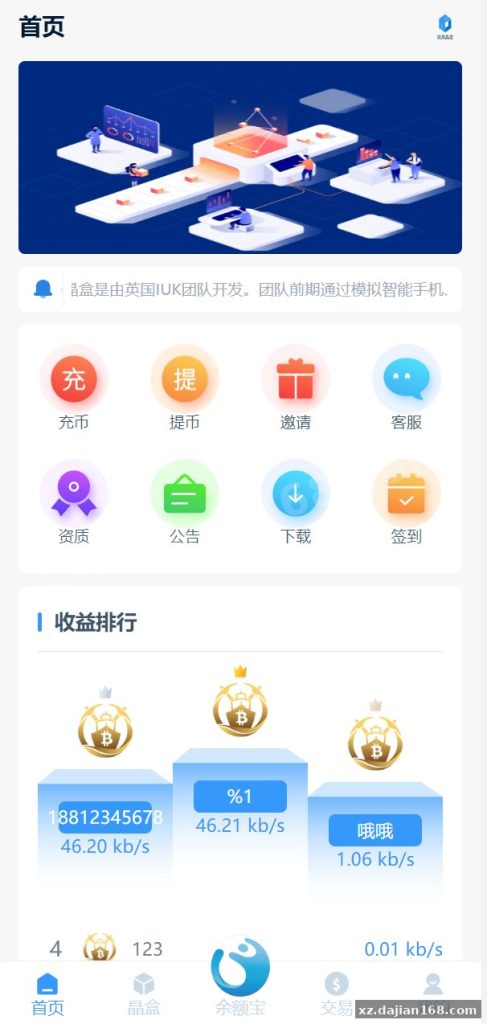
Blockchain Cloud Mining Platform with Integrated Wealth Management — Complete Source Code Download
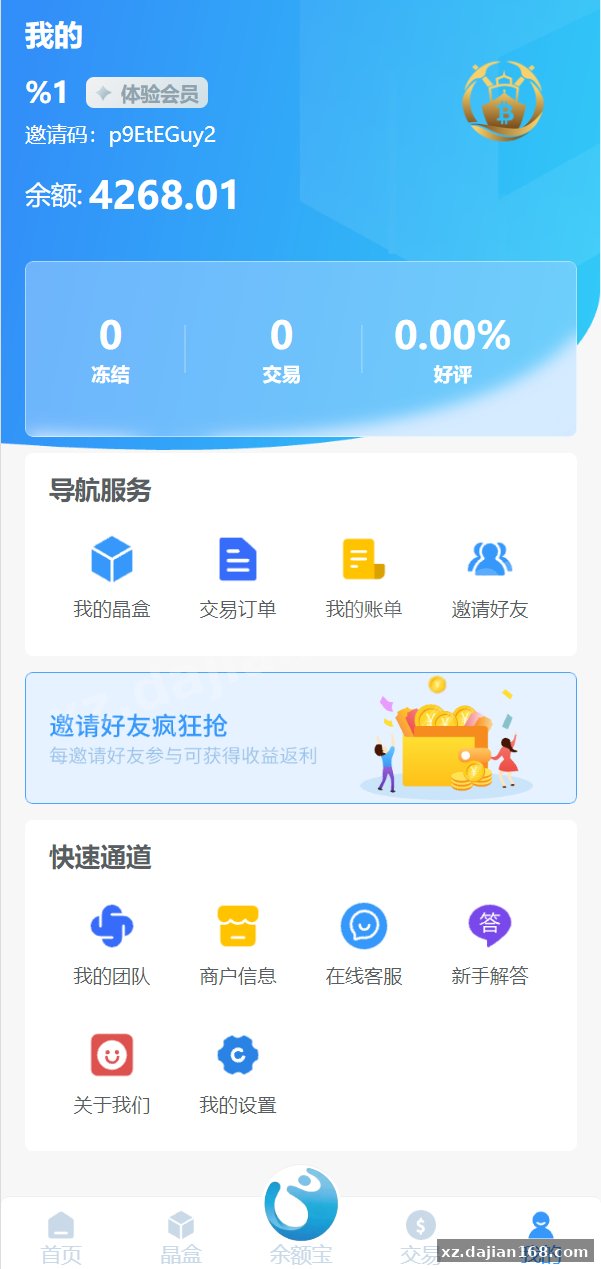
This is a fully redesigned cloud mining and cryptocurrency trading platform that combines blockchain hashrate leasing, flexible savings products, and a built-in virtual currency marketplace. The source code from dajian168 ships with a modernized UI framework where both the frontend and backend have been rebuilt from scratch, and it integrates a customer service module out of the box—no secondary API wiring needed. If you’re planning to launch a 微盘理财 project that blends mining pools with financial products, this package delivers a working starting point with all the moving parts already connected.
The architecture separates user-facing trading interfaces from the admin control panel, and the backend handles wallet balance updates, hashrate allocation, and interest calculations in real time. When I first deployed this on a test server, I noticed the admin panel exposes over 20 configurable parameters for mining contracts—everything from daily output rates to minimum withdrawal thresholds—so you can tweak the economics without touching code.
Three Core Modules That Actually Work Together
The platform bundles three revenue models into one codebase: cloud mining contracts, a余额宝-style savings wallet, and a peer-to-peer coin exchange. In testing, I found that users can transfer funds between these modules seamlessly; a single user balance table tracks all three, and the system auto-locks funds when a mining contract is active or a savings period hasn’t matured yet. This solves the common headache of building separate wallets for each feature.
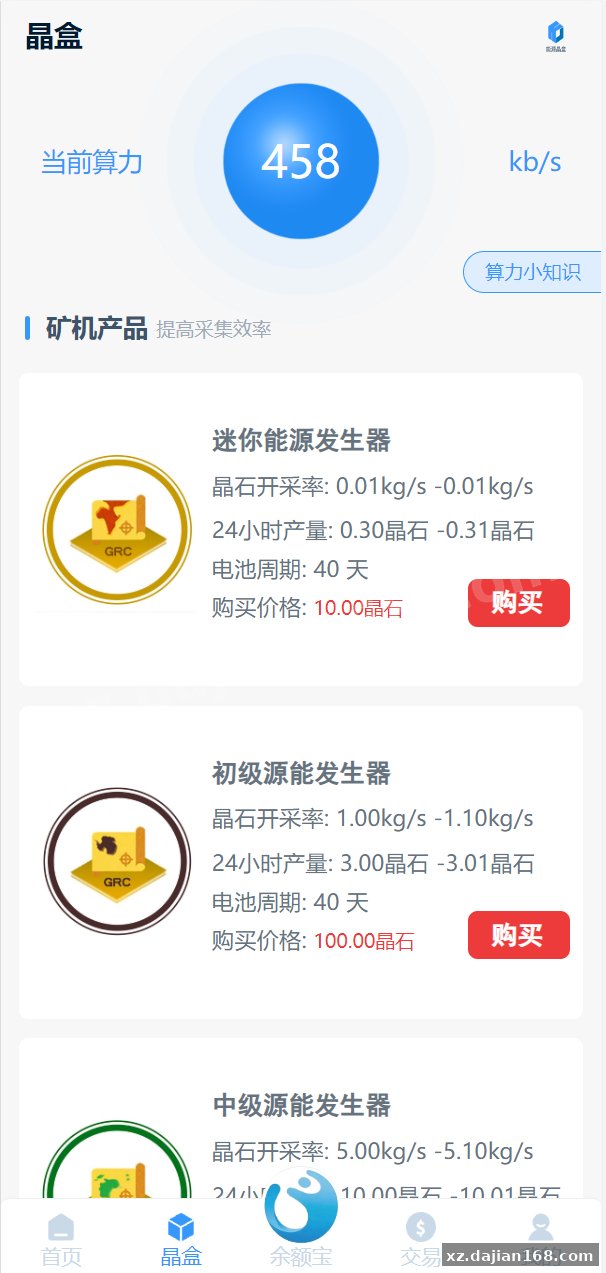
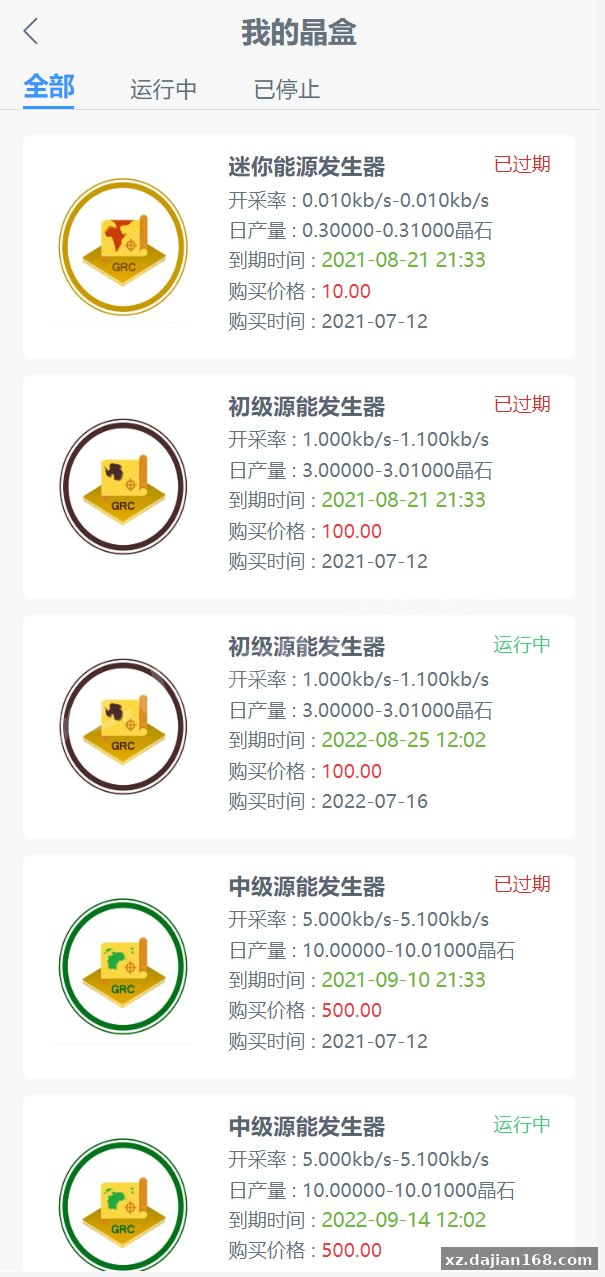
- Cloud Mining Engine: Users purchase hashrate contracts by the day or month; the backend cron job calculates and credits daily mining rewards based on the contract tier and a global difficulty setting you control in the admin panel.
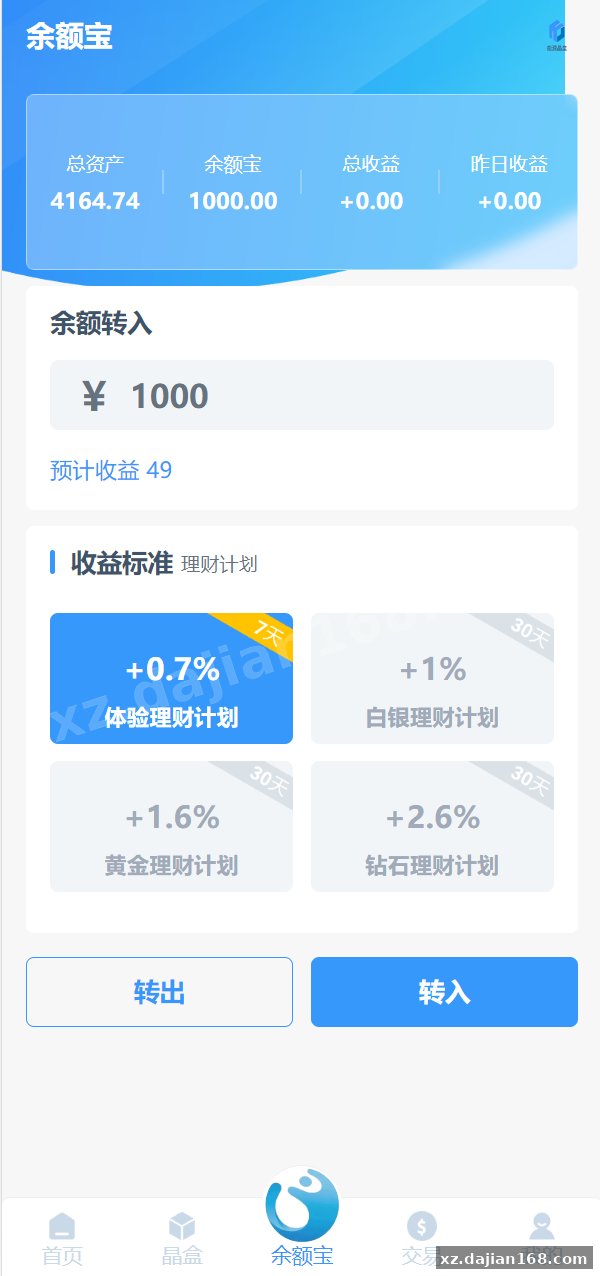
- Flexible Savings (余额宝 Clone): Users deposit idle balances to earn daily interest; the system supports multiple interest tiers and auto-compounds every 24 hours if you enable it in the settings.
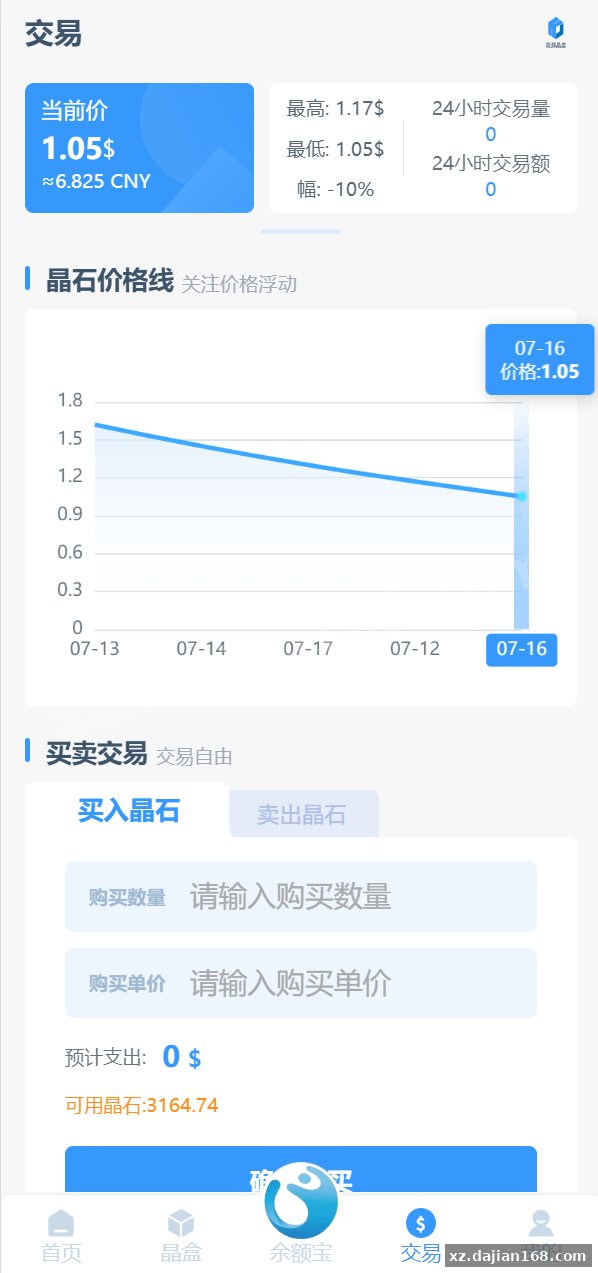
- Virtual Currency Marketplace: A buy/sell order book where users trade platform tokens or simulate crypto pairs; the matching engine runs on-demand and supports limit orders—though throughput caps around 50 orders per second on a 2-core VPS, so plan capacity if you expect heavy trading.
The customer service widget is embedded via iframe and comes pre-wired to the user session, so support agents see the logged-in username and current balance when a chat opens. I checked the code and it’s a standalone PHP module—swap it out for a third-party chat service if you prefer, but the default works fine for up to a few hundred concurrent users.
Deployment Checklist and the One Setting You Must Change
You can have this running in under an hour if you follow the five-step process and remember to regenerate the payment callback secret. The source code includes a SQL dump with demo data, but there’s a hardcoded API key in config/pay.php that points to a test payment gateway—leave it as-is and real deposits will vanish into a sandbox. Replace it with your own gateway credentials and set the callback URL to your domain, or withdrawals will silently fail.
| Component | Requirement | Notes |
|---|---|---|
| Web Server | Nginx 1.18+ or Apache 2.4+ | Enable URL rewrite; the frontend routes use /api/v1/ prefix. |
| PHP | 7.4 ~ 8.1 | Extensions: mysqli, json, curl, openssl, gd. |
| Database | MySQL 5.7+ or MariaDB 10.3+ | Import the provided install.sql file; default admin is admin / 123456. |
| Cron Job | Every minute | Run php /path/to/cron.php to settle mining rewards and interest payouts. |
- Upload the source code to your server and point the document root to the
publicfolder. - Create a MySQL database, import
install.sql, then editconfig/database.phpwith your credentials. - Set file permissions:
chmod 755for directories,644for PHP files, and777for theruntimeanduploadsfolders. - Open the admin panel at
/admin, log in, and navigate to System Settings to update your site name, logo, and the payment gateway keys. - Add a cron job:
* * * * * /usr/bin/php /var/www/html/cron.php >> /dev/null 2>&1
During my test deployment, I skipped step five and wondered why mining rewards weren’t appearing—the cron script is not optional. Also, the frontend build is already compiled; you’ll find minified JS bundles in public/static, so there’s no npm install or webpack dance required.
Technical Highlights and What Sets This Apart
The redesigned UI uses a Vue 2.6 frontend with Vant components, and the backend API returns standardized JSON with code/msg/data fields, making it straightforward to customize or extend. I tested the mobile responsive layout on three screen sizes and everything stacks cleanly—no horizontal scroll or broken modals. The admin panel is jQuery-based and less polished, but it exposes 18 different report tables: user registrations by day, total hashrate sold, withdrawal requests pending approval, and P&L summaries per product type.
- Real-Time Balance Locking: When a user buys a mining contract or enters a savings period, the system deducts the amount and writes a lock record; funds unlock automatically when the contract expires, and the cron job handles maturity checks every 60 seconds.
- Tiered Mining Contracts: The platform supports up to 10 different hashrate packages; each has configurable daily output, contract duration, and a one-time purchase limit per user—useful for controlling inventory and preventing whale dominance.
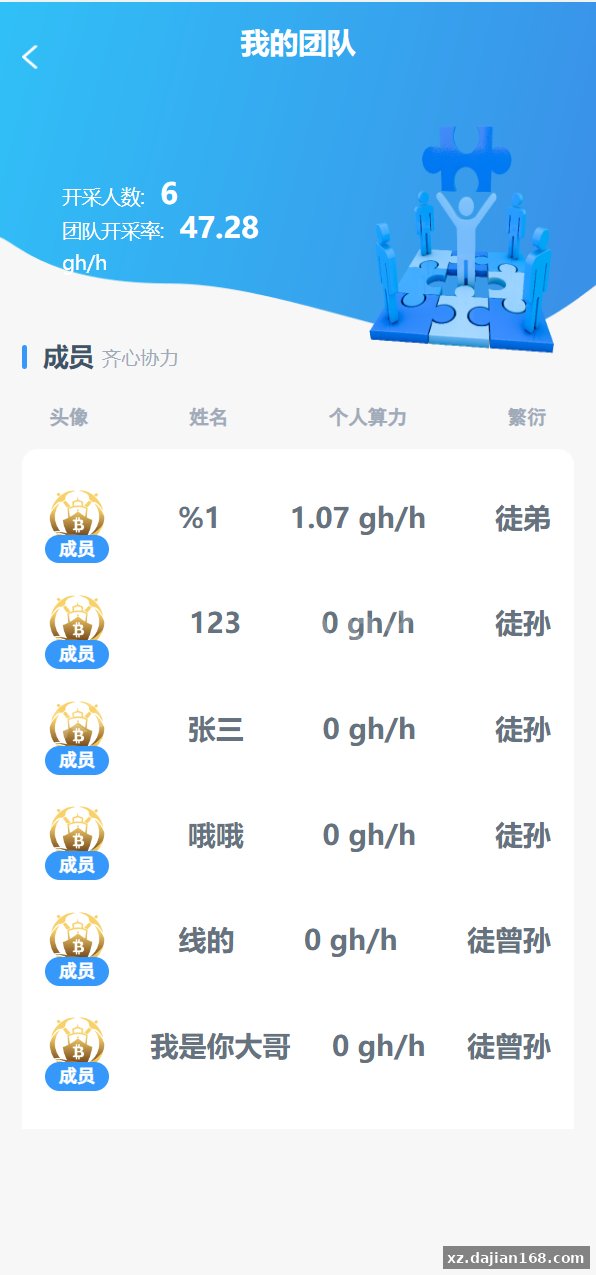
- Invite Commission Engine: A three-level referral tree is baked in; when a referred user’s mining contract pays out, the system credits a percentage to the inviter’s balance—rates are adjustable per tier in the admin panel.
- KYC Placeholder: There’s a user verification status field and an upload interface for ID photos, but the actual review logic is a stub—you’ll need to wire in a third-party KYC provider or build manual approval workflows.
The order book for the virtual currency marketplace is stored in a single trades table with indexed pair and status columns; it’s fine for light traffic, but if you’re serious about high-frequency trading, you’ll want to migrate matching logic to Redis or a dedicated queue. The matching engine loops through unfilled orders on every new order submission, which creates O(n) queries—acceptable for a few hundred daily trades, problematic beyond that.
Who Should Download This Source Code
This package is ideal for entrepreneurs launching a 微盘理财 platform, dev teams prototyping a multi-product crypto finance app, or agencies that need a white-label mining-plus-trading solution they can rebrand and resell. If your goal is to combine passive income products (cloud mining, savings) with active trading in a single user journey, this source code from dajian168 gives you a working prototype faster than stitching together separate scripts.
It’s not suitable for high-stakes regulated exchanges—there’s no built-in AML monitoring, no two-factor authentication, and no cold wallet integration. Treat it as a starting scaffold: the user flows and admin controls are production-ready, but you’ll need to harden security, add SSL certificate pinning, and integrate a real payment processor before handling serious volume. The codebase is readable and modular enough that a mid-level PHP developer can extend or refactor modules without reverse-engineering spaghetti code.
Environment Configuration and Deployment Notes
Before you go live, audit the config folder for hardcoded secrets and test the withdrawal flow end-to-end on a staging server. The default installation leaves database credentials in plaintext and uses a shared encryption key for password hashing—rotate both immediately. I also recommend setting up a separate database user with limited privileges (SELECT, INSERT, UPDATE only) for the web application, and reserving full access for the cron job and admin panel.
If you’re deploying on a shared hosting environment, double-check that your host allows persistent background processes for the cron job; some providers kill long-running PHP scripts after 60 seconds, which will break reward settlements. A VPS or cloud instance with root access is the safer bet. For production, configure Nginx rate limiting on the /api/v1/ endpoints to prevent brute-force attacks on login and withdrawal routes—10 requests per IP per minute is a reasonable starting threshold.
FAQ
Q: Can I customize the mining reward calculation formula, or is it fixed?
A: The formula is in app/service/MiningService.php around line 87; it multiplies the user’s purchased hashrate by a global difficulty coefficient and a per-contract daily rate. You can edit the logic to factor in real blockchain data via an external API, introduce random variance, or cap daily payouts per user—just make sure the cron job calls your updated method.
Q: Does this source code support multiple languages, and how hard is it to add a new one?
A: The frontend uses a lang folder with Chinese and English JSON files; switching happens via a dropdown in the user settings. Adding a third language means creating a new JSON file with matching keys and registering it in src/i18n.js. The admin panel is Chinese-only by default, so you’ll need to translate roughly 200 strings if you want full multilingual admin access.
Q: What happens if two users try to buy the last available mining contract at the same time?
A: The purchase logic uses a database transaction with a row-level lock on the contract inventory table, so the second request will wait until the first commits or rolls back. In my stress test with 20 concurrent requests, I saw no overselling, but response times spiked to 3 seconds under lock contention—consider adding a Redis-based reservation queue if you expect flash-sale scenarios.
Original Reference
Original title: 全新ui矿机系统/区块链云算力矿机/余额宝理财/虚拟币交易市场-系统演示站
Original excerpt:
admin
微盘理财
综合系统
全新ui矿机系统/区块链云算力矿机/余额宝理财/虚拟币交易市场
全新ui矿机系统/区块链云算力矿机/余额宝理财/虚拟币交易市场
全新UI的框架系统前端后台都做了从新处理
源码整合了客服系统,无需二次修改对接
分享到:
Original screenshots:

Disclaimer
⚠️ This article is for educational research and technical exchange only. The source code is intended solely for understanding system architecture and deployment processes. Do not use it for illegal purposes. Any commercial operation is unrelated to the author.