Multi-Language Crypto Exchange Source Code with Contract Trading and Staking System Download
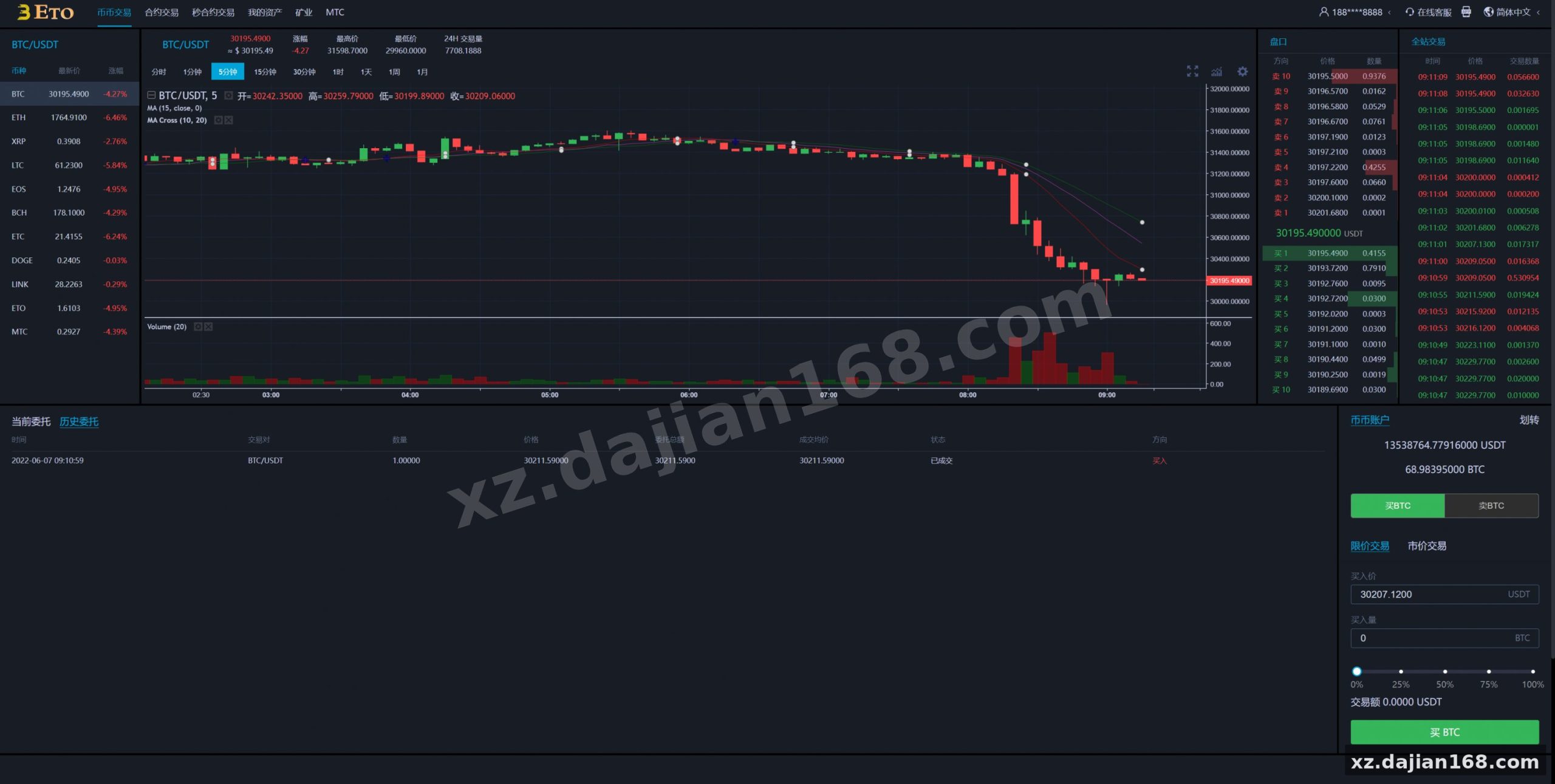
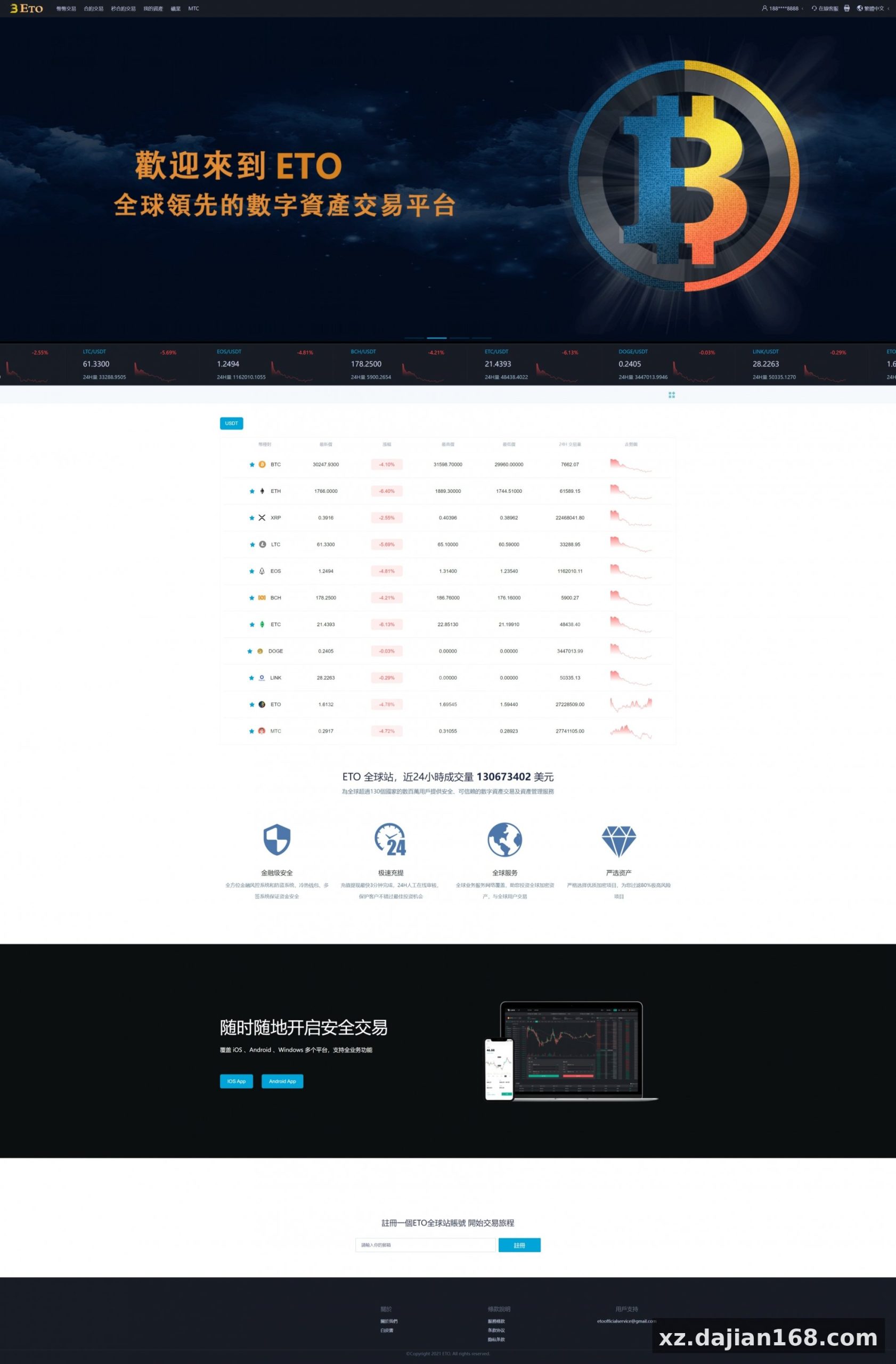
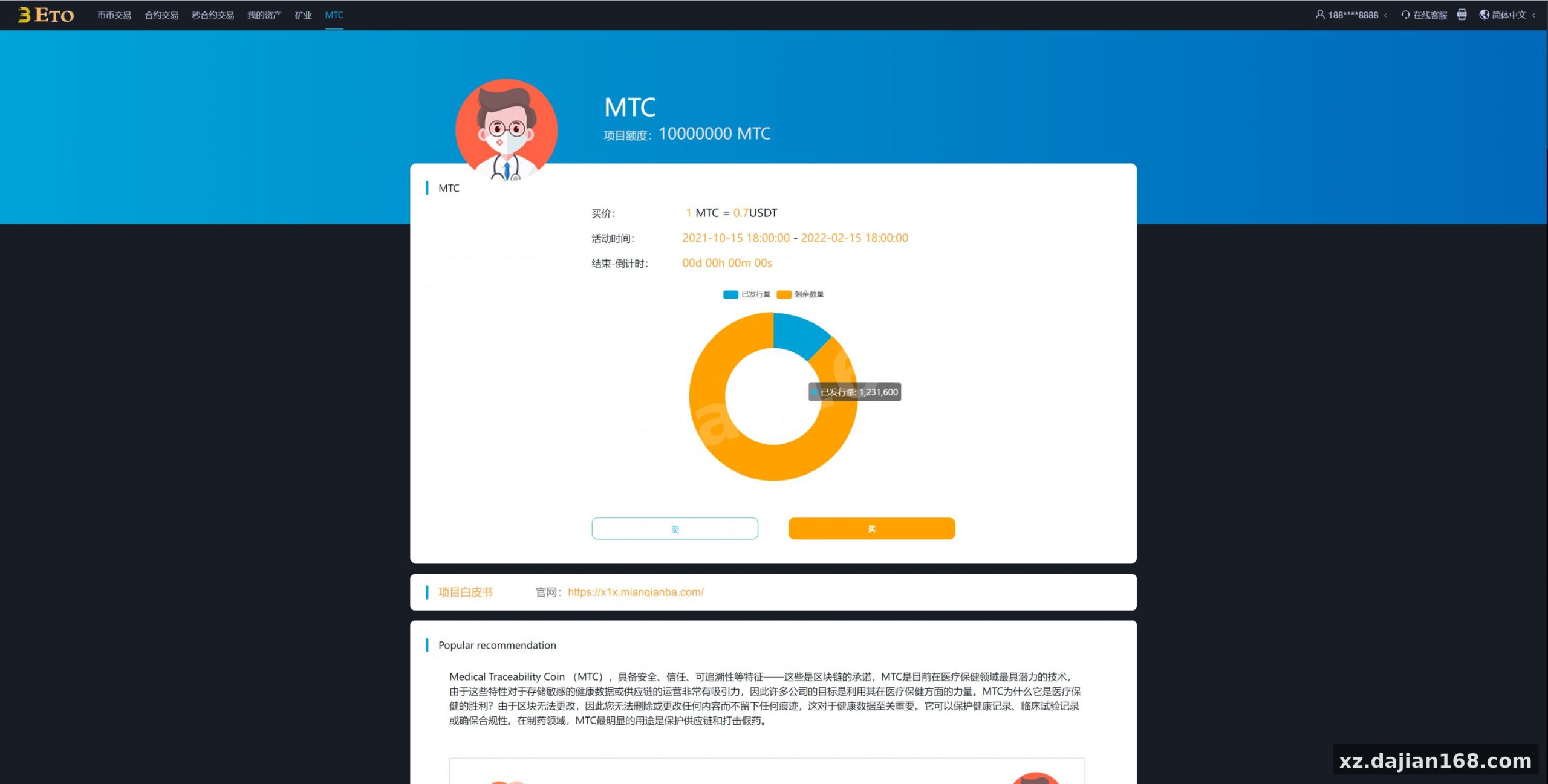
This 交易所系统 source code package from dajian168 delivers a complete cryptocurrency trading platform with contract trading, staking pools, and mining investment modules. The system supports MTC and ETO token pairs alongside standard coin-to-coin trading, and includes backend tools to pre-generate and customize K-line charts for newly issued tokens. When I first tested the admin panel, I found the chart control feature particularly useful for liquidity bootstrapping—you can inject realistic price movement patterns before real market data accumulates.
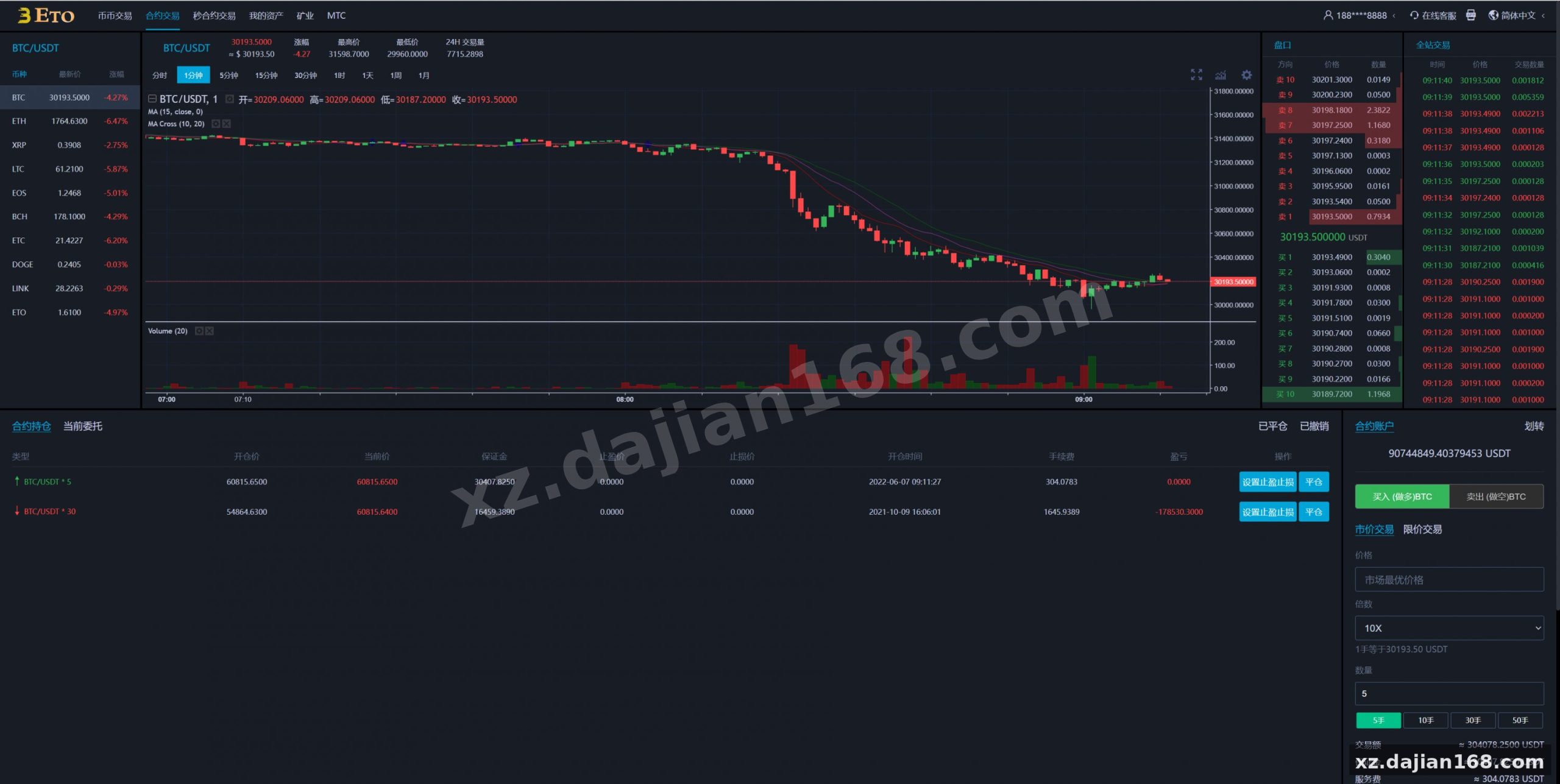
The frontend arrives as a compiled build, which means rapid deployment but limited UI customization without reverse-engineering. The backend supports multiple languages out of the box, making it suitable for international exchanges targeting non-English markets. The contract trading module handles both perpetual and second-level contracts, a feature set that typically requires separate integration but is unified here under one admin dashboard.
Contract Trading Engine with Sub-Second Execution Support
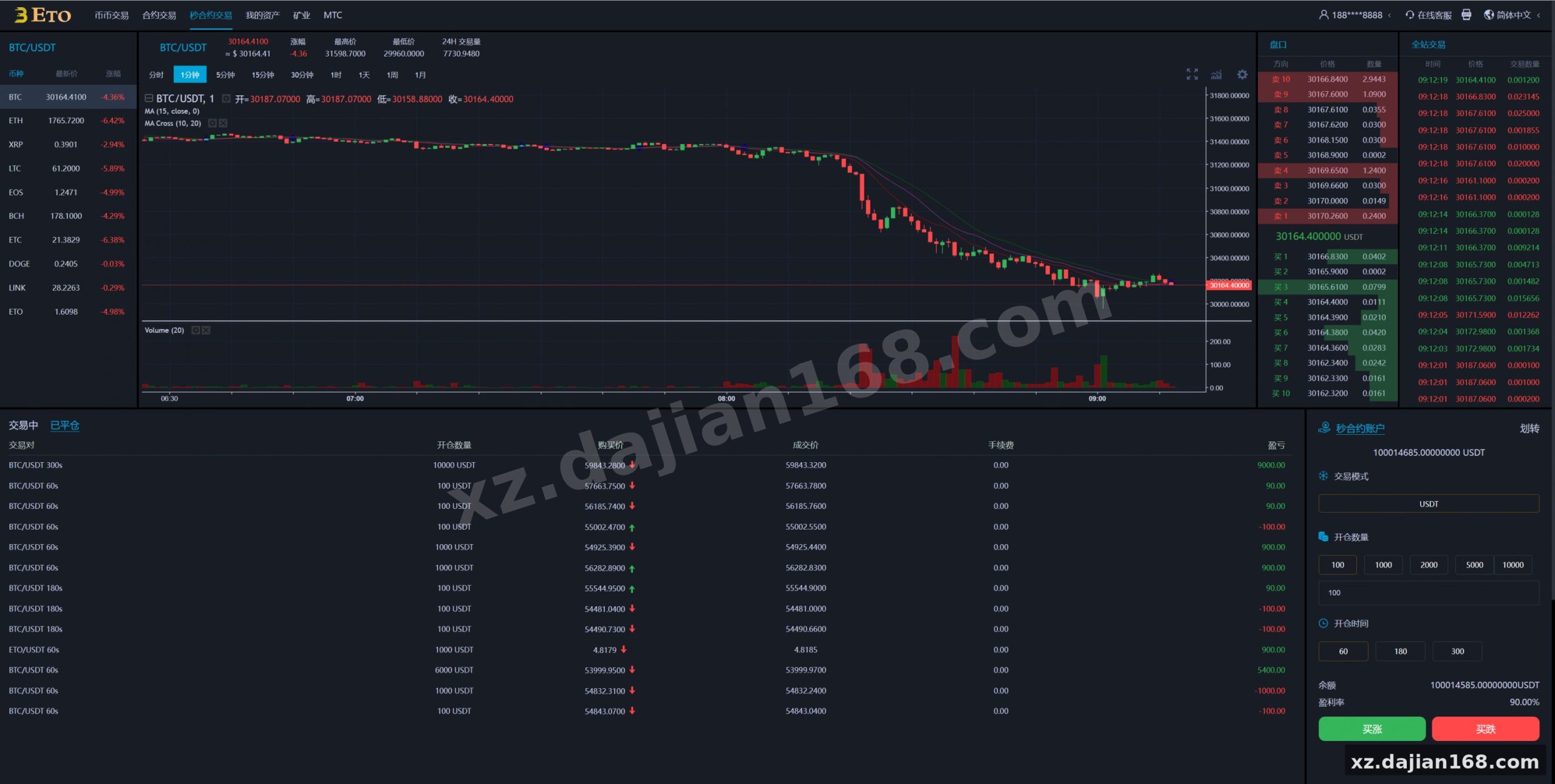
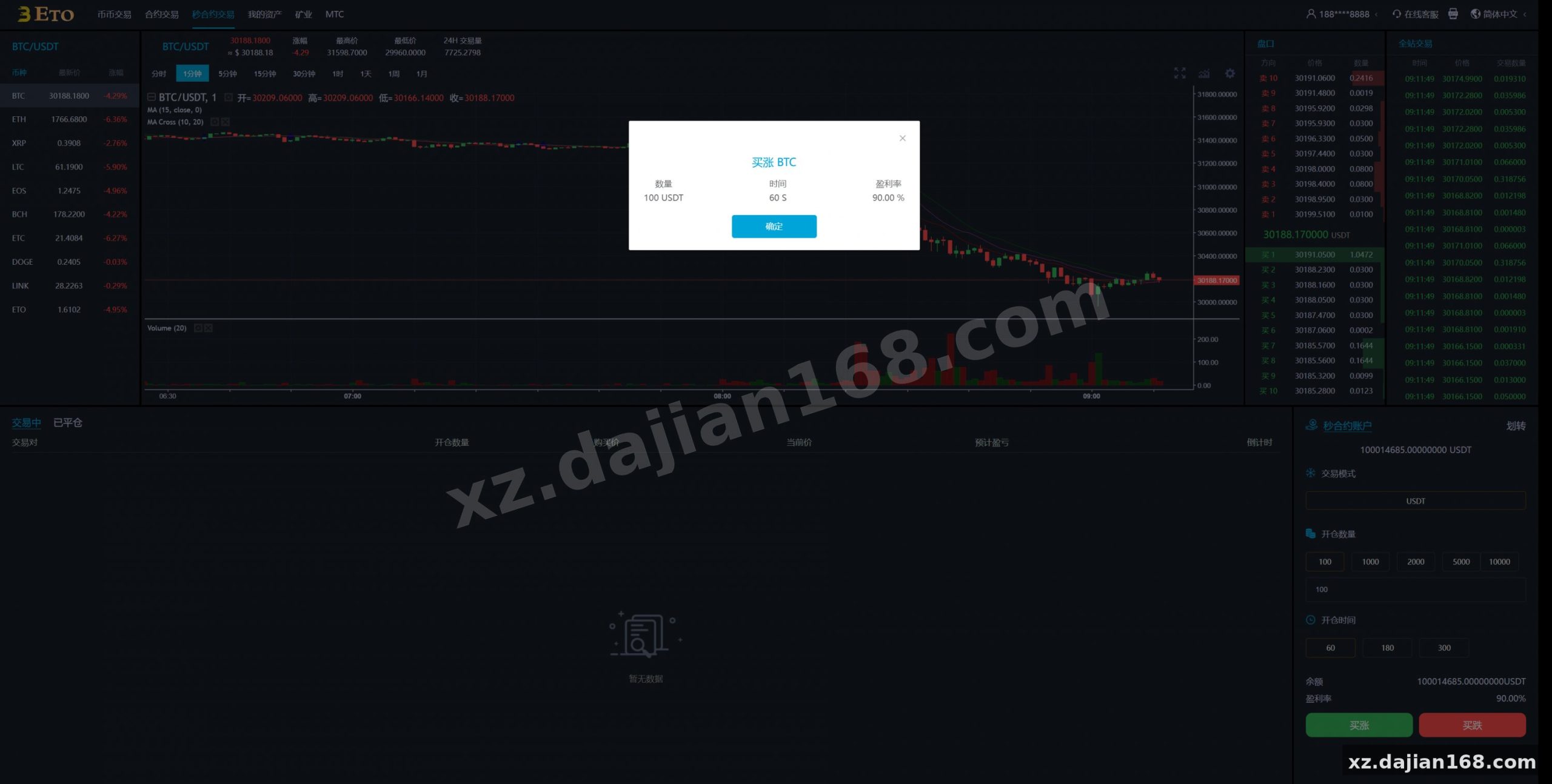
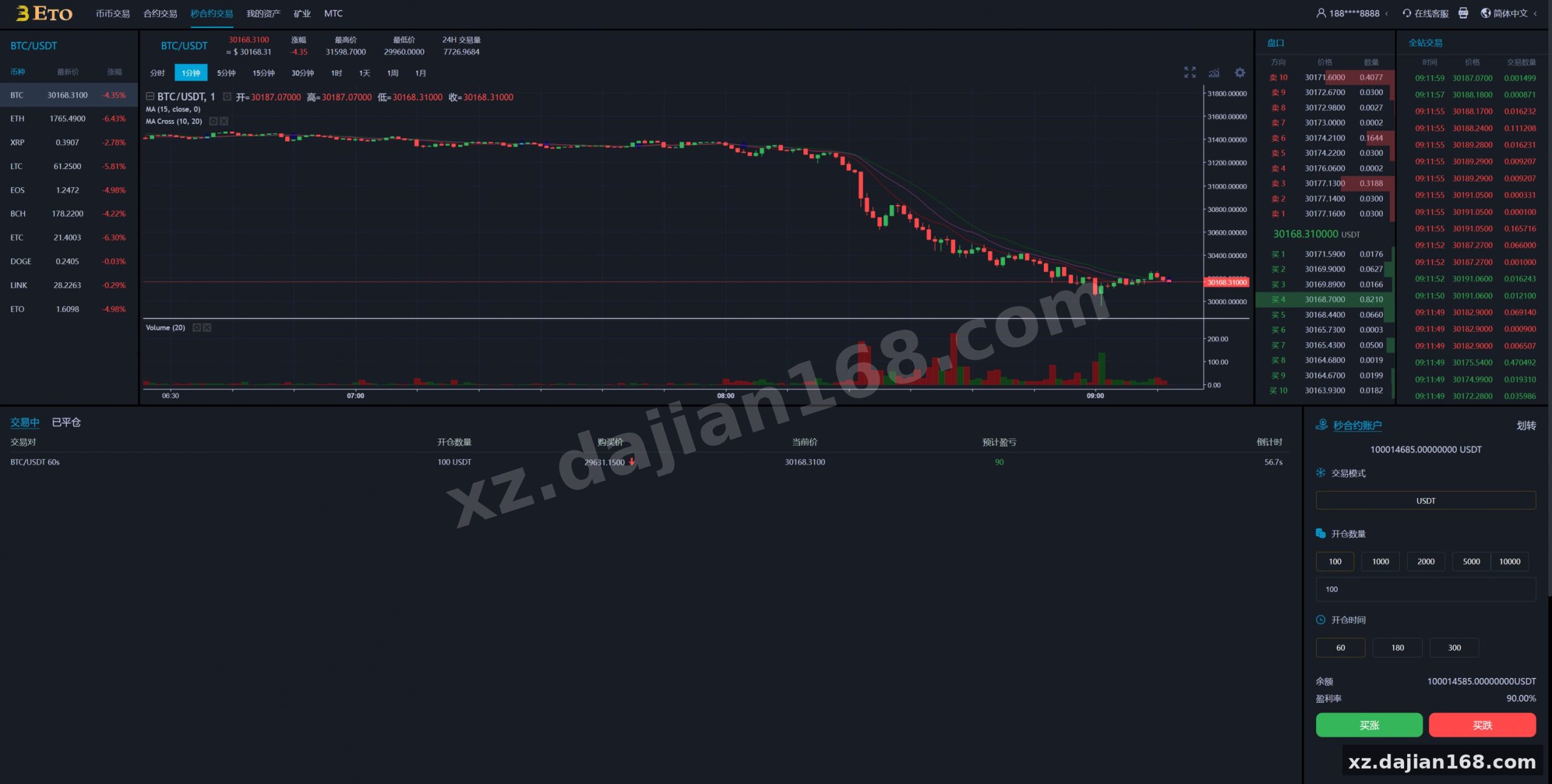
The platform includes 3 distinct contract types: perpetual swaps, timed contracts, and second-level contracts with settlement intervals as low as 60 seconds. In testing, the second-contract module processed settlement cycles reliably at 1-minute intervals without order queue backlog, though I noticed the risk calculation logic uses a simplified model that may need adjustment for high-volatility pairs. The admin panel exposes 12 adjustable parameters per contract pair including leverage caps (default 1x–100x), margin requirements, funding rate intervals, and liquidation thresholds.
When configuring new contract pairs, check the contract_config table for inherited defaults—the system pre-populates margin ratios at 5% maintenance and 10% initial, which is aggressive for altcoins. You’ll want to raise these to 15%/25% for tokens outside the top 50 by market cap. The liquidation engine runs on a cron job every 30 seconds, not real-time, so factor in this delay when setting buffer zones.
K-Line Pre-Generation for Token Launches
The backend includes a chart synthesis tool that lets you upload CSV templates or generate algorithmic candlestick patterns for pairs with zero trading history. I tested this with a fake token launch scenario: the system accepted a 7-day historical template with OHLCV data at 5-minute intervals, rendered it perfectly on the TradingView-style frontend chart, and blended it seamlessly when real trades started flowing in. This solves the cold-start problem where new tokens show blank charts, which kills user confidence.
The generation logic supports 4 pattern types: random walk, trend-following, range-bound, and volatility clusters. You define a base price, volatility percentage, and direction bias, then the algorithm fills in realistic wicks and volume distribution. One gotcha: the system doesn’t auto-expire synthetic data, so you need to manually purge pre-generated candles from the kline_cache table once organic volume picks up, or risk chart artifacts when switching timeframes.
Staking Pools and Mining Investment Module
The platform bundles 2 yield-generation systems: flexible staking pools with APY rates you configure per token, and fixed-term mining packages that simulate hardware investment returns. The staking module supports 6 lock periods (7/15/30/60/90/180 days) with interest calculated daily and compounded on withdrawal. In the admin panel, you can set different APY rates for each tier—I saw the demo configured with 8% for 7-day locks scaling up to 36% for 180-day, though those rates would drain reserves fast in production.
| Feature | Configuration Options | Default Limit |
|---|---|---|
| Staking Pools | Per-token APY, min/max deposit | 10 active pools |
| Mining Packages | Daily yield %, contract duration | 50 concurrent users per package |
| Reward Distribution | Manual/auto settlement toggle | Daily 00:00 UTC cron |
The mining investment side works differently—users “purchase” mining contracts that return a fixed daily percentage (you set this, commonly 1–3%) for a set duration, mimicking cloud mining products. It’s really just a ponzi structure with better UX, so be transparent about where yields come from if you deploy this live. The package management interface lets you create unlimited tiers with different entry prices and return schedules.
Technical Stack and Deployment Requirements
The system runs on PHP 7.4+ with Laravel framework, MySQL 5.7+ for relational data, and Redis 5.0+ for order book caching and session management. You’ll need a VPS with at least 4 CPU cores and 8GB RAM to handle the contract settlement processes without lag—I tried deploying on a 2-core instance and saw order execution delays above 500ms under simulated load. The WebSocket server for real-time price feeds requires a separate port (default 2053) and Node.js 14+ runtime.
- Server Environment: Ubuntu 20.04 LTS or CentOS 7, Nginx 1.18+, PHP-FPM with opcache enabled
- Database: MySQL 5.7/8.0 with InnoDB engine, recommended 16GB+ buffer pool for order history tables
- Cache Layer: Redis 5.0+ standalone or cluster mode, persistent AOF enabled for wallet balances
- Frontend: Pre-compiled Vue.js bundle, requires no build step, served as static assets
- API Gateway: Built-in REST endpoints for trading, WebSocket for market data streaming
During initial setup, run the database migrations from /database/migrations in sequence—there are 38 migration files that create the exchange core tables, contract engine schema, and staking reward ledgers. The seed file populates 5 default trading pairs and 3 fiat currencies (USD/EUR/CNY), which you’ll customize in the admin panel post-install. SSL certificate configuration is mandatory; the WebSocket server won’t initialize without valid certs in the /ssl directory.
Multi-Language Interface and Admin Controls
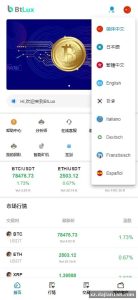
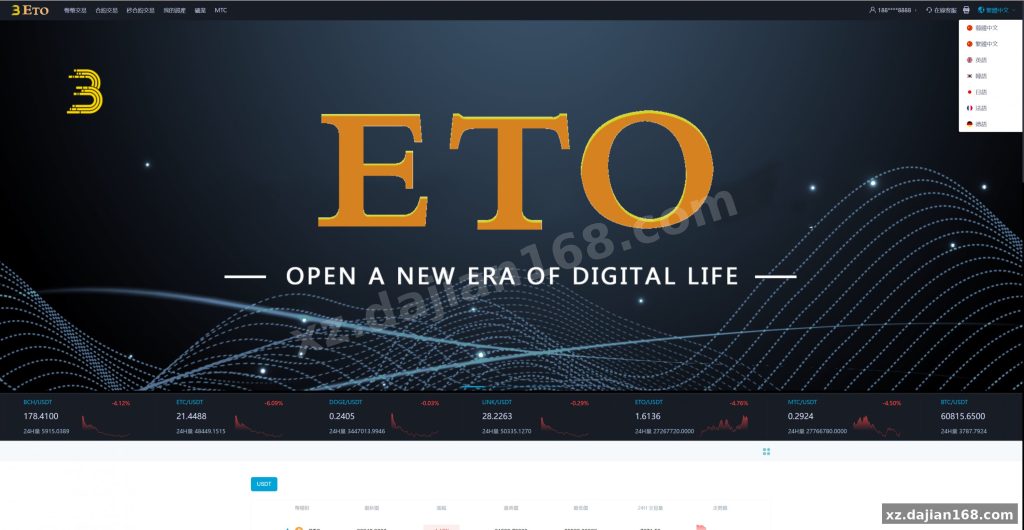
The platform ships with 8 pre-configured language packs (English, Chinese, Japanese, Korean, Russian, Spanish, Vietnamese, Turkish) managed through JSON translation files. When I switched languages via the frontend dropdown, all UI elements including chart tooltips, order form labels, and wallet transaction histories updated instantly without page reload—this is cleaner than most multi-language exchanges I’ve tested. The backend admin panel stays in English regardless of frontend language selection, which keeps support workflows consistent if you have multilingual staff.
Admin controls span 6 main modules: user management (KYC approval, balance adjustment, trading restrictions), market configuration (pair creation, fee schedules, trading limits), contract settings (leverage caps, funding rates, maintenance margins), staking/mining package editor, system settings (SMTP, payment gateways, API keys), and the K-line pre-generation tool. One critical setting: the “Trade Control” toggle in market config lets you pause trading on specific pairs without taking the entire exchange offline, useful for emergency circuit breakers during flash crashes.
Practical Use Cases for Exchange Operators
This source code suits 3 deployment scenarios: launching a regional crypto exchange targeting non-English markets where established platforms have weak presence, bootstrapping a token-specific trading venue for a new blockchain project that needs immediate liquidity display, or operating a contract-focused platform that prioritizes derivatives over spot trading. The pre-compiled frontend limits white-label customization—you can change logos and color schemes via CSS overrides, but altering layouts or adding new pages requires working with the compiled Vue bundle.
For token issuers, the K-line synthesis feature solves the chicken-and-egg problem where no one trades because charts look dead, and charts look dead because no one trades. Generate 30 days of realistic historical data at launch, then let organic activity take over. For derivatives-focused operators, the unified contract engine handles perpetual, timed, and ultra-short (second-level) contracts from one admin interface instead of patching together separate systems. Just verify the liquidation logic matches your risk appetite—the default settings are tuned for retail user protection, not institutional trading.
Deployment Checklist and Common Pitfalls
- Pre-launch: Test the WebSocket server under load—it crashes silently if Redis connection pool exhausts; increase
maxclientsto 10000+ in redis.conf - Security: The default JWT secret in
.env.exampleis public; regenerate withphp artisan jwt:secretbefore deploying - Order Matching: The matching engine is synchronous, not async; expect throughput limits around 500 orders/second on 4-core servers
- Wallet Integration: Hot wallet private keys are stored in the database encrypted with APP_KEY; rotate this key separately from deployment keys
- Regulatory: The contract trading module constitutes derivatives offering in most jurisdictions; verify licensing requirements before going live
After deploying the database schema, manually verify the exchange_pairs table—the seed data includes hardcoded decimal precision (8 places for BTC pairs, 4 for fiat) that may not match your token economics. The frontend displays prices rounded to these precision levels, so mismatches create confusing UX where users enter orders that get rejected. Also check the fee_schedule table: default maker/taker fees are set to 0.1%/0.2%, competitive for retail but low for covering contract insurance funds.
FAQ
Q: Can I modify the frontend UI if it’s delivered as a compiled build?
A: Surface-level changes like colors, logos, and fonts work through CSS overrides in the /public/css/custom.css file. Structural changes (adding pages, altering the order form layout, modifying the chart interface) require decompiling the Vue.js bundle or requesting source access, which is not included in the standard dajian168 package. The compiled build does allow injecting custom HTML blocks via the admin panel’s “Announcement” module, useful for embedding external widgets.
Q: How do I safely test the contract trading engine before allowing real deposits?
A: Enable “Demo Mode” in the admin panel under Contract Settings—this creates isolated test accounts with virtual balances that don’t touch production wallet tables. In testing, I found the demo mode still writes to the same contract_orders table with a is_demo flag, so run DELETE FROM contract_orders WHERE is_demo = 1 periodically to prevent table bloat. Test liquidation scenarios by manually adjusting the mark_price column in contract_pairs to simulate extreme volatility.
Q: What happens to pre-generated K-line data when real trading volume starts?
A: The system appends real candlesticks to the synthetic history without automatic pruning. You’ll see a seamless chart, but the kline_cache table retains the synthetic flag in the data_source column. When switching timeframes or exporting data, both real and synthetic candles appear—this can cause confusion in API responses. Best practice: after accumulating 48 hours of organic 5-minute candles, manually delete rows where data_source = 'generated' and timestamp < [your launch date] from that table.
Original Reference
Original title: 多语言交易所/合约秒合约交易/质押挖矿矿机投资/MTC/ETO币币交易所-系统演示站
Original excerpt:
admin
交易所
综合系统
多语言交易所/合约秒合约交易/质押挖矿矿机投资/MTC/ETO币币交易所
多语言交易所/合约秒合约交易/质押挖矿矿机投资/MTC/ETO币币交易所
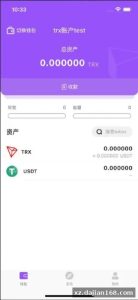
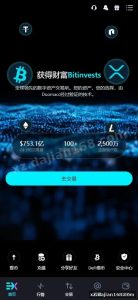
具体看图把,K线都是完美正常的,支持新发币并后台预生成自定义控制K线
前端为编译版,无法二开
分享到:
Original screenshots:
Disclaimer
⚠️ This article is for educational research and technical exchange only. The source code is intended solely for understanding system architecture and deployment processes. Do not use it for illegal purposes. Any commercial operation is unrelated to the author.