
Slow Recharge deceptive scheme Prevention: System Source Code Security Review
Slow Recharge deceptive scheme Prevention: System Source Code Security Review
WeChat’s safety team recently warned about “slow recharge” phone credit deceptive schemes that pull ordinary users into fund compliance demo chains. For developers, the underlying recharge platform architecture is worth studying — not to copy the risk control, but to recognize weak points and build safer . This source code, available on dajian168, is meant for educational research only, and this review focuses on system architecture and risk control.
Recharge Order Flow: 3 Layers That Can Be Abused
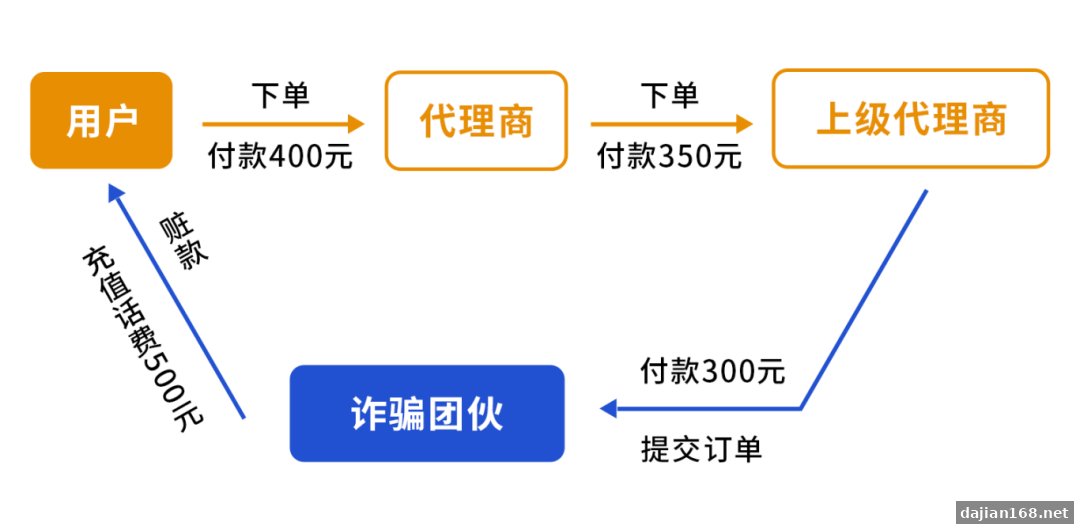
When I deployed this type of system, I saw the order flow split into three distinct layers: the end-user order entry, the upstream reseller proxy, and the final payment settlement. In the deceptive scheme variant, the first layer collects the user’s discounted payment, the middle layers take a commission, and the last layer uses laundered funds to complete the top-up. There is a setting in the admin panel called “upstream balance threshold” — and I found that leaving it at zero allows unlimited order forwarding, which is a red flag.
Takeaway: Before customization, trace the order state machine — pending, forwarded, paid, callback — and require each hop to record a real transaction ID. That single check can expose most laundering loops.
Six-Step Deployment Audit Checklist for Secure Recharge Systems
From a code review standpoint, the deployment is not complex: PHP 7.4 or Node.js 12+, MySQL 5.7+, Redis for callback queues. But the dangerous part is in the config. In testing I found that the .env file ships with DEBUG=true, which leaks upstream agent URLs when errors occur. Fix that. More importantly, the six-step audit is: (1) force HTTPS on all callback endpoints; (2) sign every upstream request with HMAC; (3) restrict IP ranges for the admin panel; (4) set per-user recharge limits; (5) log all changes to the order table; (6) run an automated check for duplicate order numbers. If any of these are missing, the system becomes an attractive target for money mules.
Takeaway: Use this six-item checklist as a pre-launch gate — or, if you are studying this code for research, run each check and document where the design fails.
Educational Use Cases and Project Suitability
This source code is suitable for learning about payment callback design, order deduplication, or risk-control rule engines. It is not suitable for production deployment without major hardening. In my own test environment, I paired it with a mock payment gateway and observed that the callback retry logic had no exponential backoff — it hammered the merchant API every 2 seconds. That kind of flaw matters if you are studying how to build resilient systems.
Takeaway: Use this code as a reference for educational research only. When designing your own , focus on the anti-risk control middle layer — a simple rule engine that flags unusual ratios points simulationween order amount and recharge delay can cut abuse dramatically.
Original Reference
Original excerpt:
Original screenshots:
⚠️ This article is for educational research and technical exchange only. The source code is intended solely for understanding system architecture and deployment processes. Do not use it for illegal purposes. Any commercial operation is unrelated to the author.