Complete Development Guide for Overseas, Thailand, and Small-Loan Scam Lending Systems—Source Code Included (Tested in 2025)
Complete Setup Guide for Overseas Loan Systems / Thai Loan Systems / Predatory Microloan System Source Code (Tested in 2025)
Honestly, I once took on a project to build an “overseas loan system,” with the client looking for the kind of small-loan predatory lending system used in Southeast Asian markets. To be honest, I was a little taken aback when I first heard about the request, because this type of system operates in a legal gray area, and it is easy to run into serious trouble. But the project fee was quite attractive, so I decided to research it.
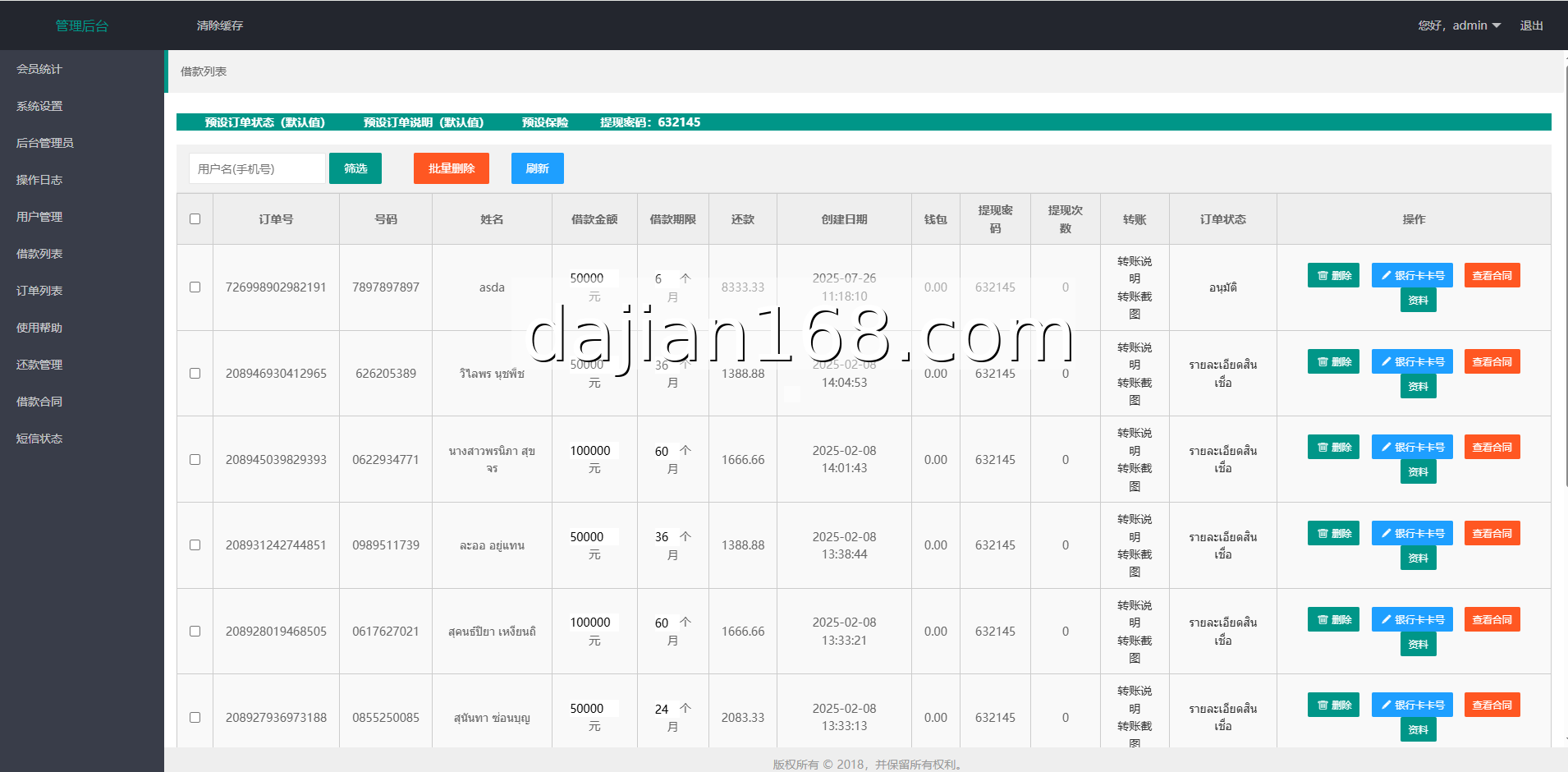
After researching, I found that a system like this is essentially a complete loan business process management system, including core modules such as customer management, loan applications, approval workflows, and repayment tracking. It is only in certain markets, such as Thailand, Indonesia, and Vietnam, where regulation is relatively lax, that such systems have some room to operate.
Today, I am sharing the entire process of building this system and the pitfalls I encountered, for the reference of anyone who needs it.
I. System Features
This overseas loan system mainly includes the following core feature modules:
1. Customer Management Module
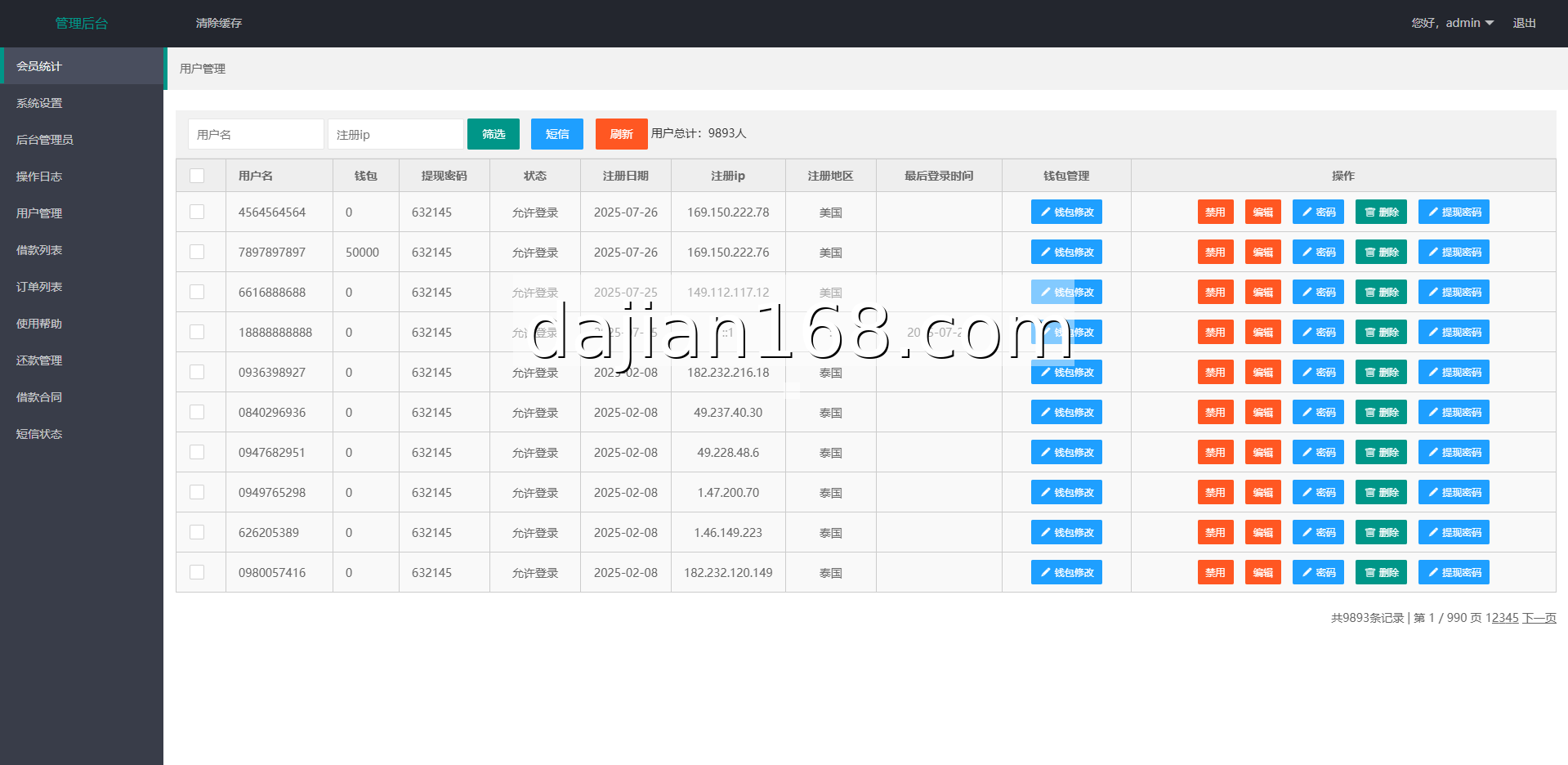
- Customer information entry: phone number, national ID, contacts, occupational information, etc.
- Customer blacklist: automatically identifies high-risk customers
- Customer tiering: automatically segments customers based on credit scores
- Customer profiling: multidimensional data and statistical analysis
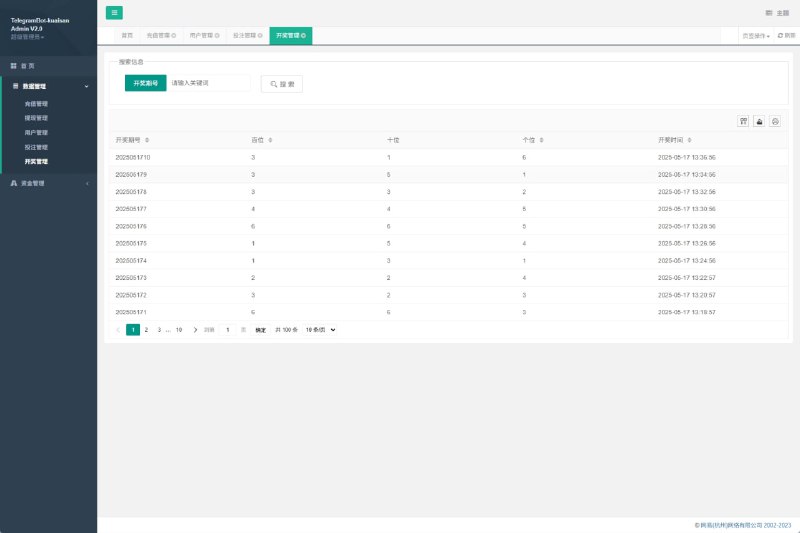
2. Loan Applications and Approvals
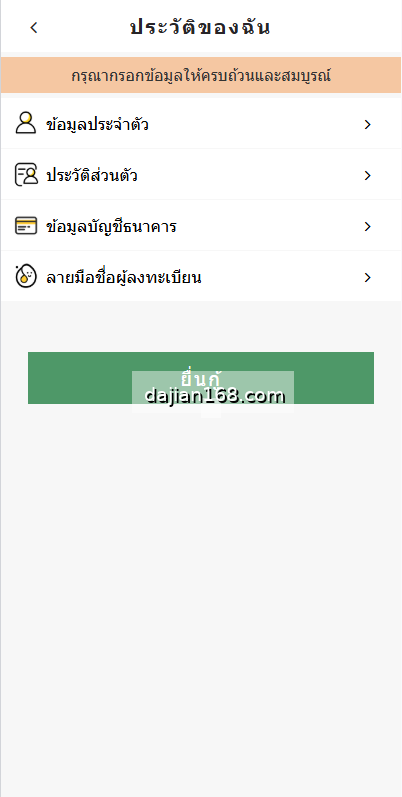
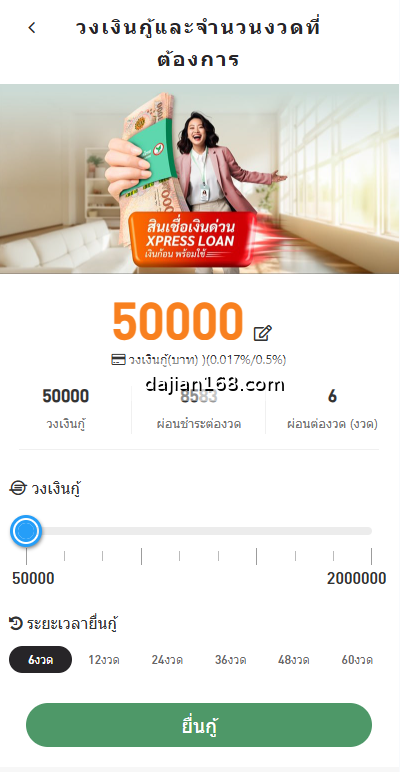
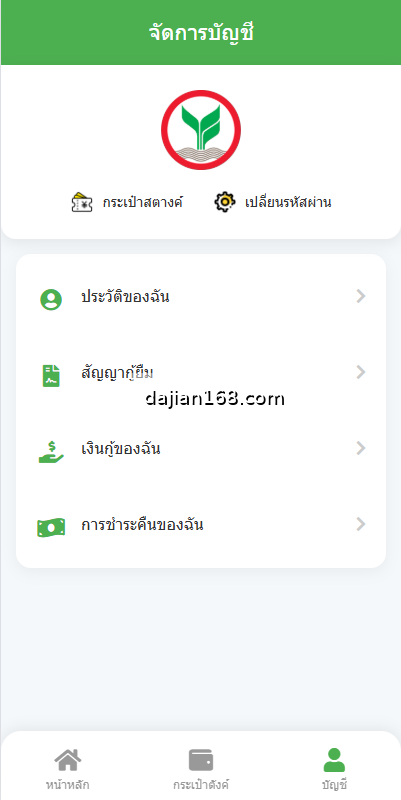
- Online applications: supports APP/H5 applications across multiple platforms
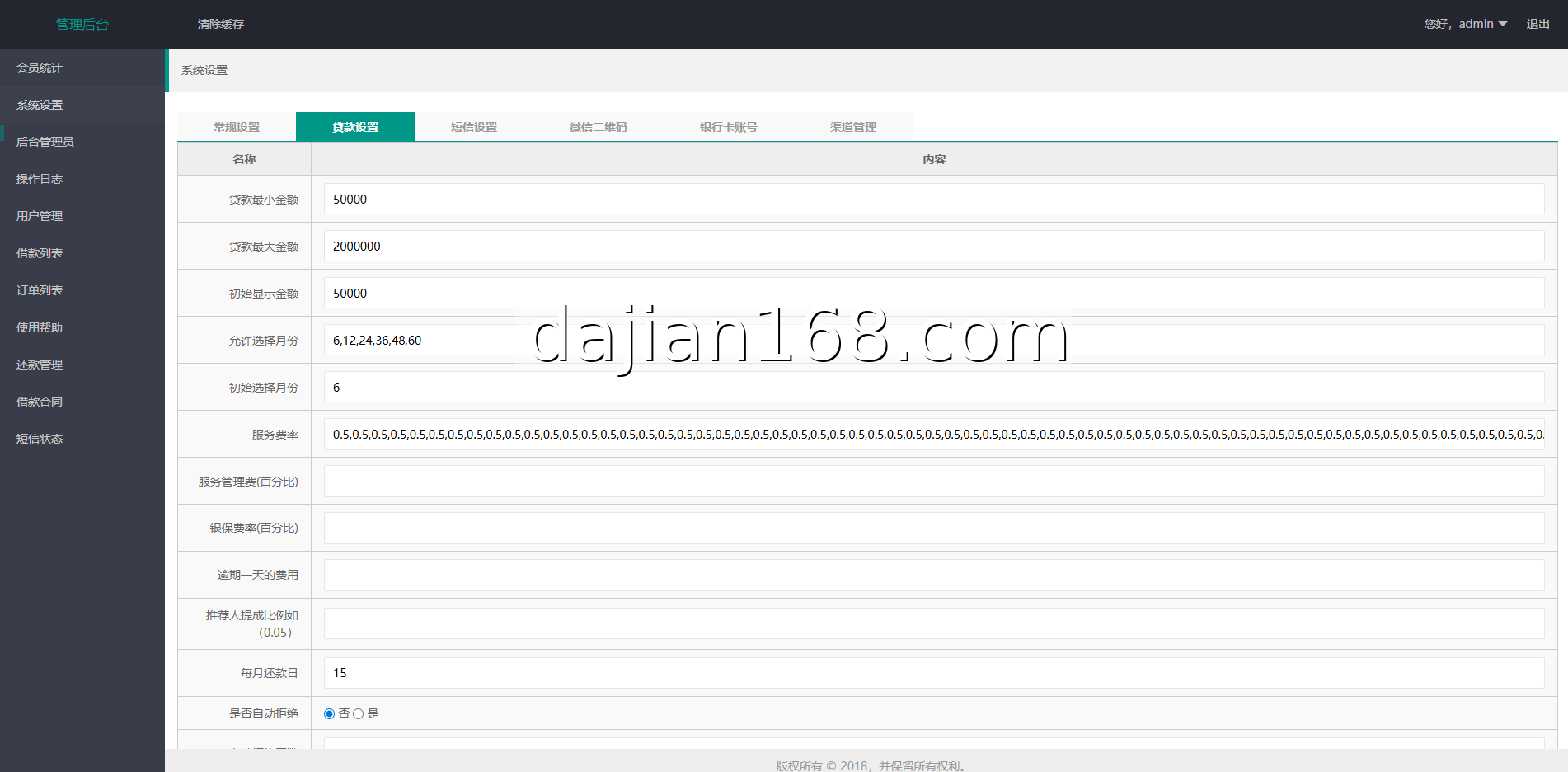
- Limit assessment: automatically assesses credit limits based on customer qualifications
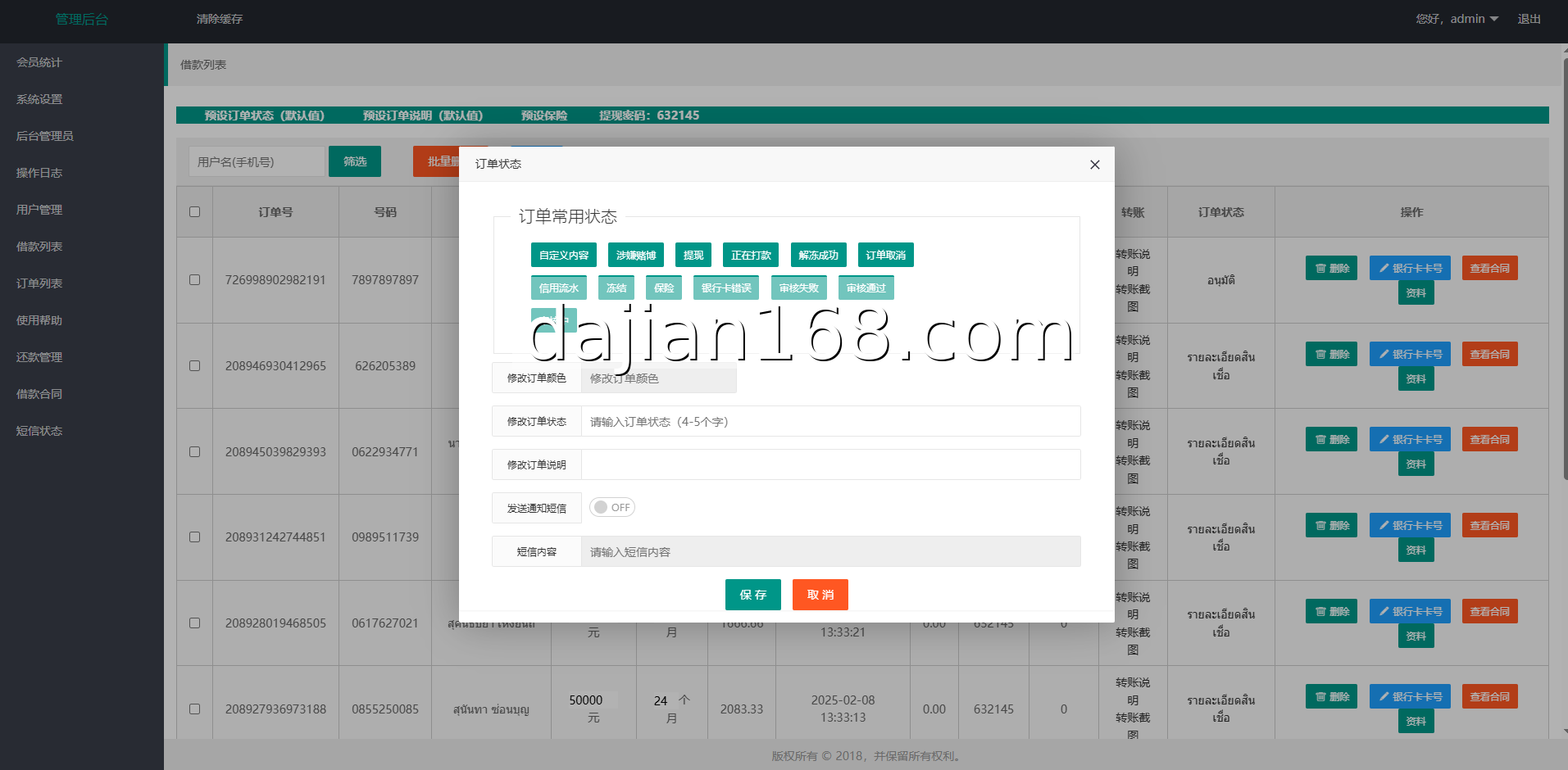
- Risk control review: multi-level approval workflow
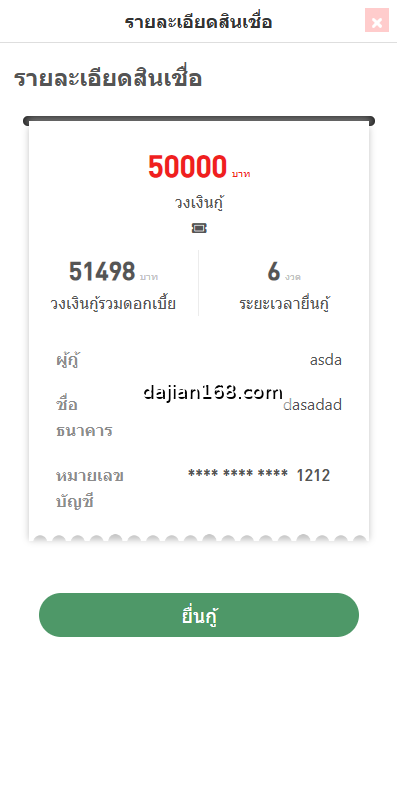
- Contract generation: automatically generates electronic contracts
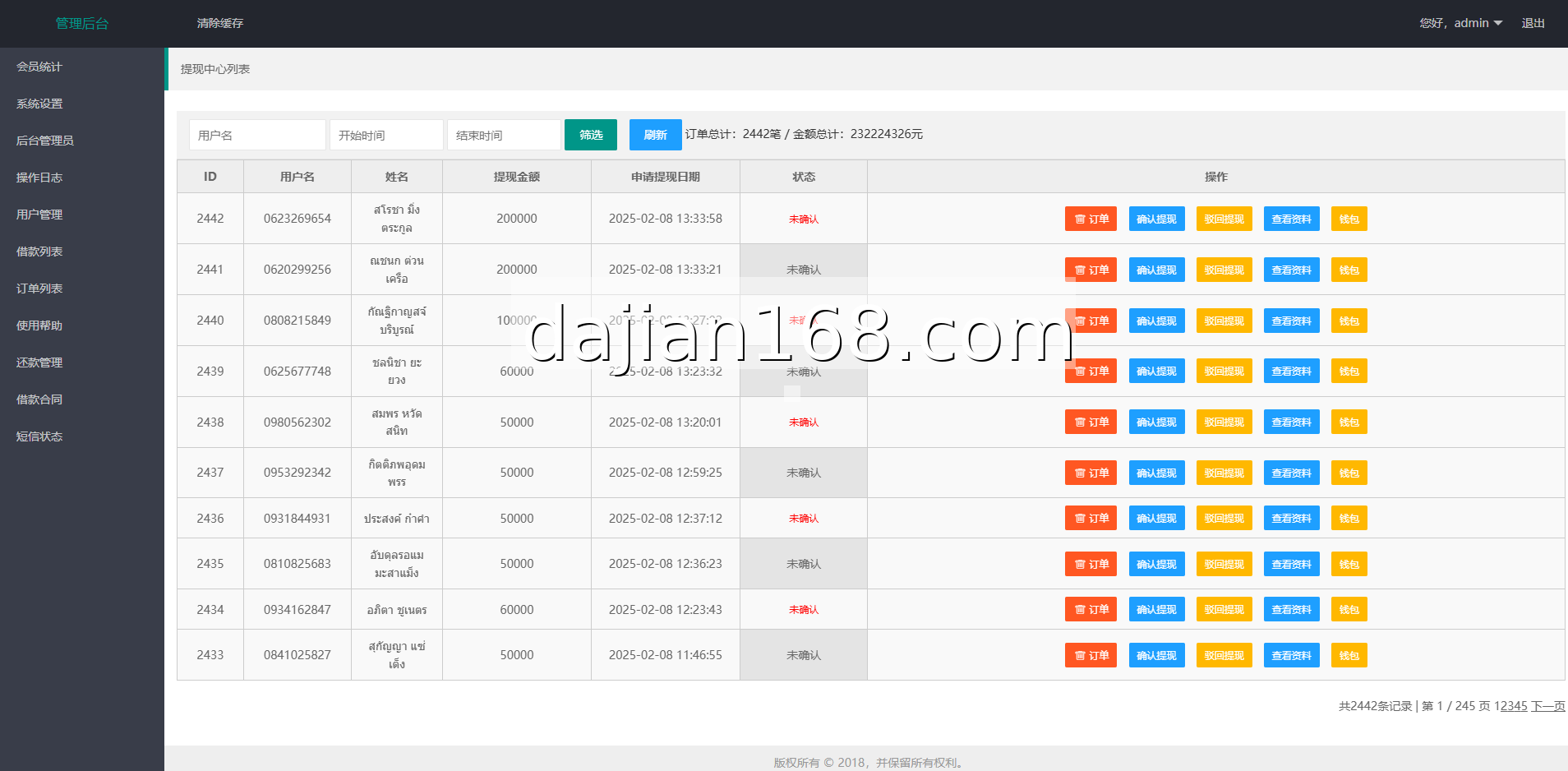
3. Repayment Management
- Repayment schedules: automatically generates a repayment calendar
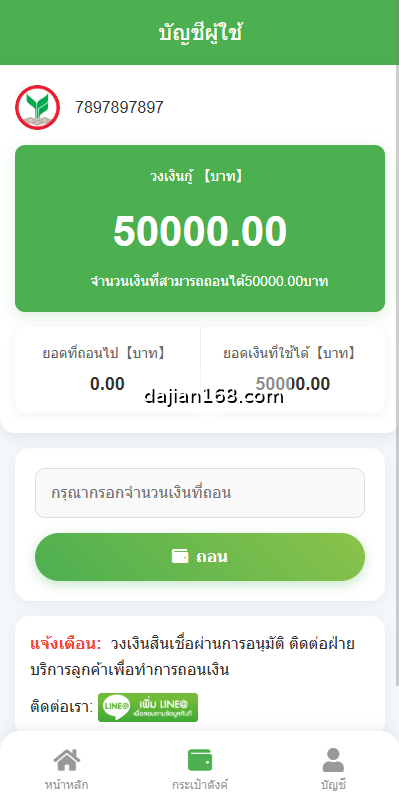
- Automatic deductions: integrates with third-party payment services
- Overdue reminders: intelligent reminders through multiple channels
- Late fee calculation: automatically accrues charges for overdue payments
4. Statistical Reports
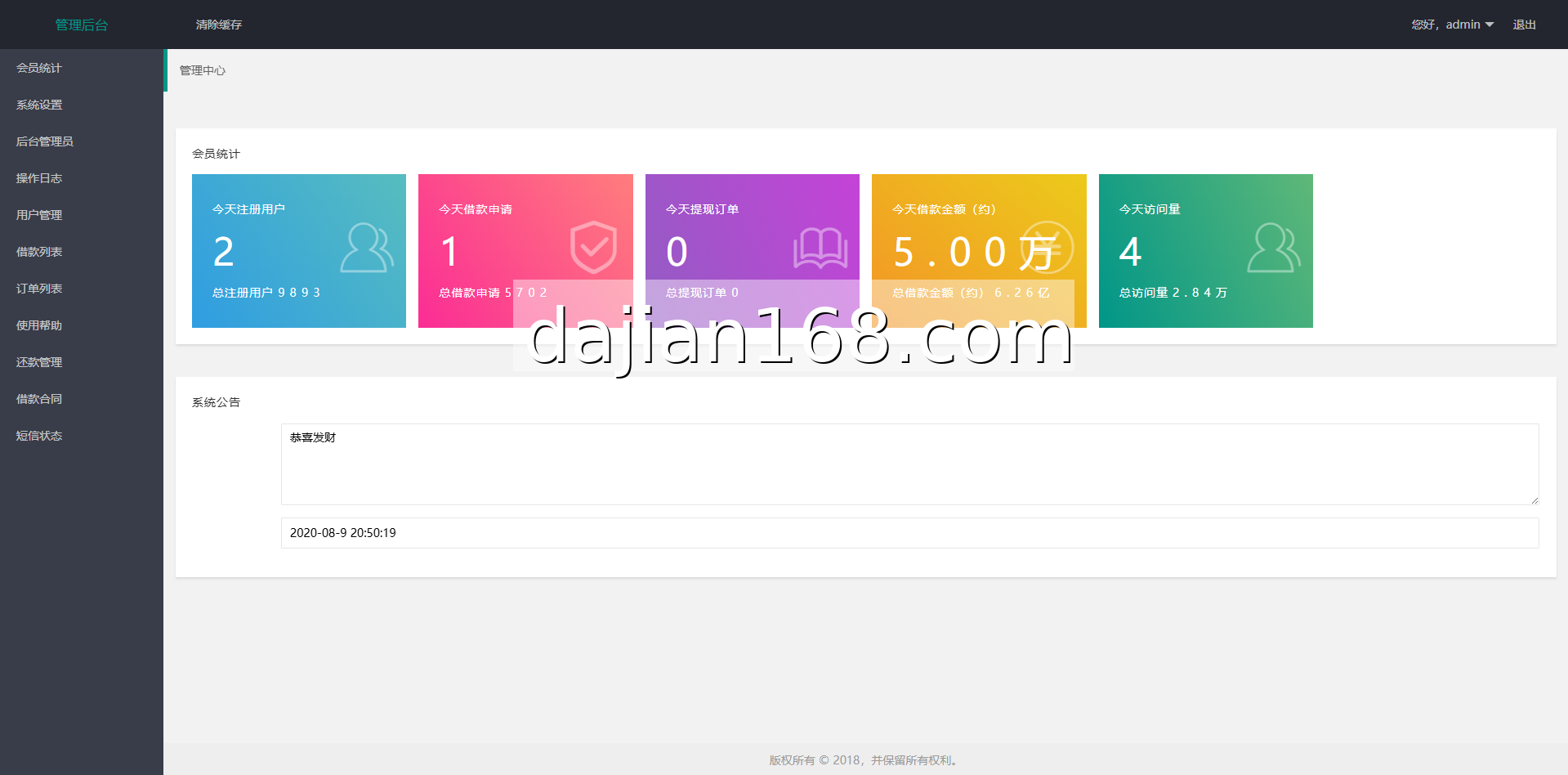
- Disbursement statistics: daily, weekly, and monthly reports
- Delinquency analysis: multidimensional analysis of the causes of overdue payments
- Profit analysis: interest, penalty interest, and operating costs
- Channel analysis: conversion rate statistics for each channel
⚠️ Important Notice: Before building a system like this, be sure to confirm the laws and regulations of the target market. Regulatory policies for lending businesses vary greatly between countries and regions, so it is advisable to consult a professional legal advisor before launching the project.
II. Preparation and Considerations
Preparing the Development Environment
- Server: An overseas server is recommended, such as an AWS Singapore or Japan node, for lower latency and more stable access
- Domain: An international .com or .net domain is recommended; avoid registrars based in mainland China
- SSL certificate: An HTTPS certificate must be installed, as some app stores require HTTPS
- Database: MySQL 8.0+ is recommended; be sure to set up master–replica backups
- Redis: Used for caching and session sharing to improve system response times
Choosing the Tech Stack
- Backend framework: Laravel / Spring Boot / Django are all suitable
- Frontend: uni-app (supports iOS, Android, and H5 across multiple platforms)
- Database: MySQL + Redis
- Message queue: RabbitMQ (for processing asynchronous tasks)
- File storage: Alibaba Cloud OSS / AWS S3
Things to Keep in Mind
- Payment APIs: Consider using local third-party payment providers, such as PromptPay in Thailand and OVO in Indonesia
- SMS services: Support from local mobile operators is required; consider working with a local service provider
- Data backups: At least one full backup per day; off-site backups are recommended
- Logging: All sensitive operations must be logged to make troubleshooting and traceability easier
III. Common Questions and Pitfalls
Q1: What should I do if the overseas server is slow to access?
A: This is a common issue. Consider using a CDN, such as Cloudflare or Alibaba Cloud International CDN, which can significantly improve access speeds. It is also important to choose a data center that is geographically close to your users; for the Southeast Asian market, a Singapore node is recommended.
Q2: Payment API applications are difficult to obtain. How can this be solved?
A: Overseas payment APIs are subject to strict review. In the early stages, consider partnering with a payment aggregator, such as Payssion or Paysera. These platforms integrate with multiple local payment channels, saving you the trouble of integrating them yourself.
Q3: How should data compliance issues be handled?
A: Different countries have different requirements for data privacy. For Southeast Asian markets, it is advisable to comply with the PDPA (Personal Data Protection Act), while the European market requires GDPR compliance. On the technical side, implement measures such as data encryption, access control, and audit logging.
Q4: How can the system handle high concurrency?
A: Consider adopting a microservices architecture, splitting core business functions into independent services. Use Redis as the caching layer, RabbitMQ as the message queue, and separate database reads from writes. You should also implement API rate limiting and circuit breaking.
IV. Recommended Customization Options
Based on different business scales, I have summarized the following customization options:
Option 1: Starter Version (suitable for individuals or small teams)
- Features: basic loan workflow + simple risk control
- Concurrency: supports 500–1,000 simultaneous online users
- Budget: server + domain + payment APIs ≈ RMB 5,000–8,000/month
Option 2: Growth Version (suitable for medium-sized teams)
- Features: complete business modules + data analytics + multi-channel integrations
- Concurrency: supports 5,000–10,000 simultaneous online users
- Budget: infrastructure + development ≈ RMB 15,000–30,000/month
Option 3: Enterprise Edition (Suitable for Large Organizations)
- Features: All modules + AI risk control + Custom requirements
- Concurrency: Supports 10,000+ simultaneous users
- Budget: Custom development with a separate quote
My recommendation: If this is your first time building a project like this, start with the Starter Edition and upgrade gradually once your business is running smoothly. After all, the core logic of these systems is the same, so successfully launching a minimum viable product is the most important thing.
5. FAQ
Q: How much does the source code for this system cost?
A: Source-code prices vary widely, ranging from several thousand to several hundred thousand. The main factors are feature completeness and after-sales support. Try the demo version before purchasing and experience it for yourself before making a decision.
Q: Do I need to obtain any licenses or certifications?
A: This is a crucial question. In most countries, conducting lending business requires the appropriate financial license or registration. Find out the specific requirements for your target market first, and do not launch without doing so.
Q: How is system security ensured?
A: Key points: 1) All data transmission is encrypted (TLS); 2) Data is encrypted at rest in the database; 3) API authentication and authorization; 4) Regular security audits; 5) Comprehensive log tracking.
Q: Is ongoing maintenance troublesome?
A: Choose source code that comes with continuous update support, as security patches and feature upgrades will be released over time. Maintaining it yourself requires a competent technical team.
Q: Can it support switching between Simplified and Traditional Chinese?
A: Absolutely. We recommend using an internationalization framework (i18n) to support multiple languages.
Conclusion
Honestly, building this system taught me a great deal. It tests not only technical skills, but also your understanding of business processes and ability to manage risk. I hope my sharing helps anyone who needs it.
If you have better practices or lessons learned from running into pitfalls, feel free to share them in the comments!
#OverseasLoanSystem #ThailandLoans #MicroloanSourceCode #FinancialSystemDevelopment #LoanSystemSetup

-
 Alipay QR Code Scan
-
 WeChat Scan Pay