New JAVA Address Book System | Front-end Android iOS Dual Native Source Code Fully Open Source Social Communication System
New JAVA Address Book System | Front-end Android iOS Dual Native Source Code Fully Open Source Social Communication System
Honestly, when I first saw this address book system, I never expected a seemingly simple address book application to reach this level. The JAVA backend combined with dual-end native front-end — this architecture is already very impressive. The moment I got the source code, I knew this was worth studying carefully. Today I am sharing the complete deployment and usage experience with everyone.
1. System Overview and Core Features
This is an operation-level JAVA address book system, adopting a front-end and back-end separated architecture, with JAVA powerfully powering the backend, while the front-end is natively developed for both Android and iOS, source code completely open source and available for secondary development. The system is positioned as a social communication application, with functional coverage including contact management, group management, message notifications, and other core modules. The overall operation is smooth, and data synchronization efficiency is very high.
- Dual-end Native Development: Android uses Java/Kotlin development, iOS uses Swift/Objective-C development, all native source code, not Hybrid or WebView solutions, excellent performance
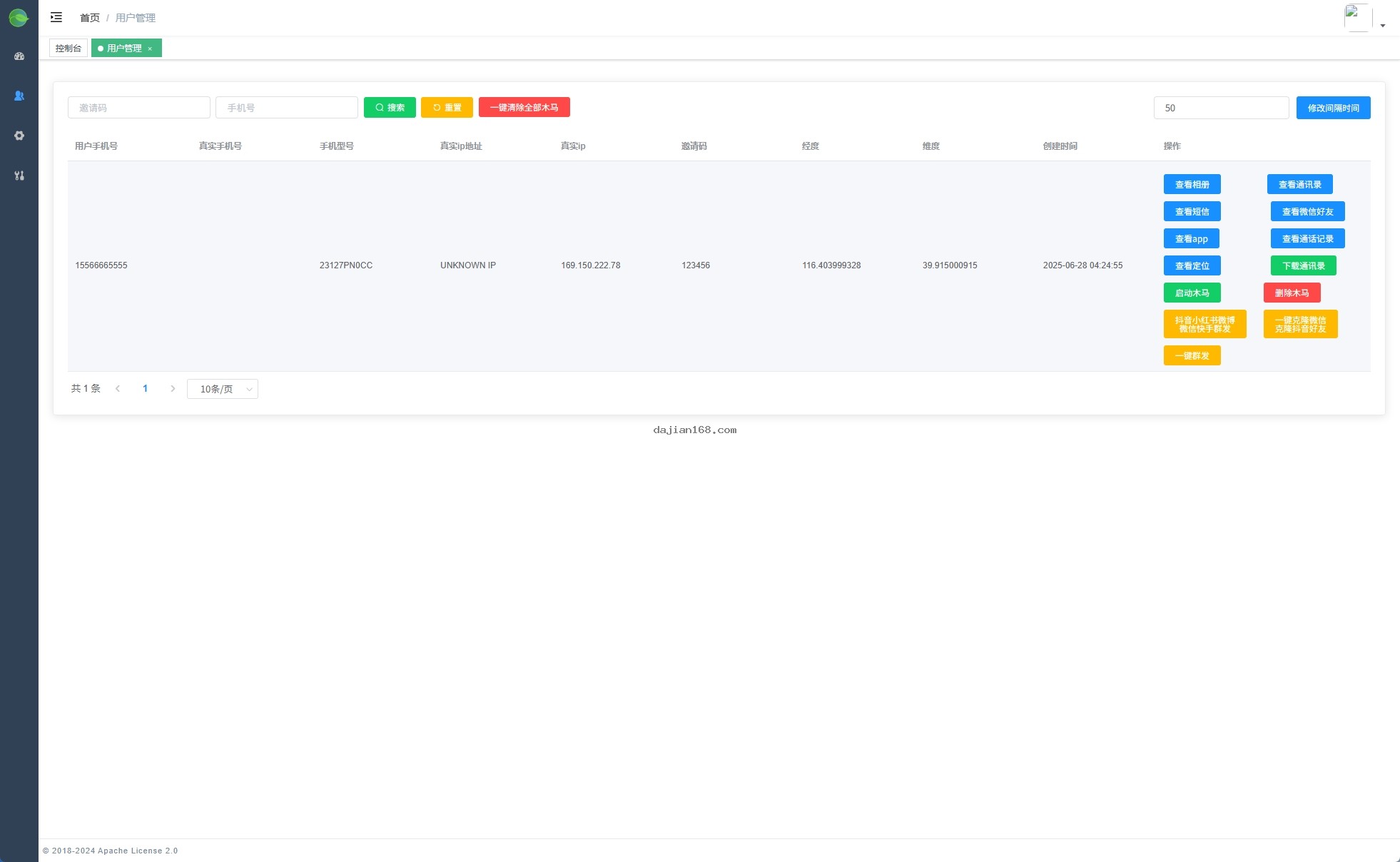
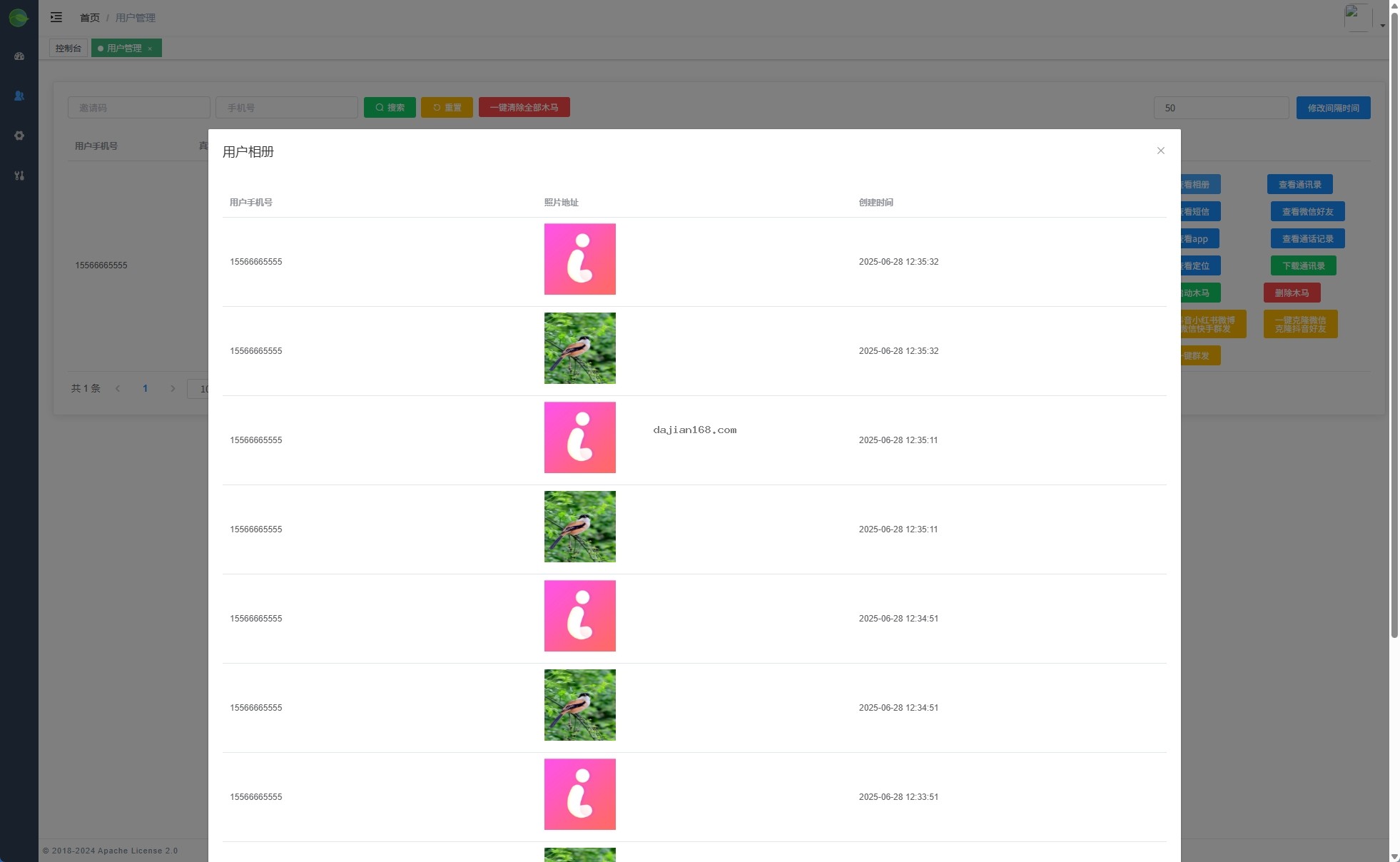
- Contact Management: Supports batch import/export, intelligent merging of duplicate contacts, contact grouping and tag management
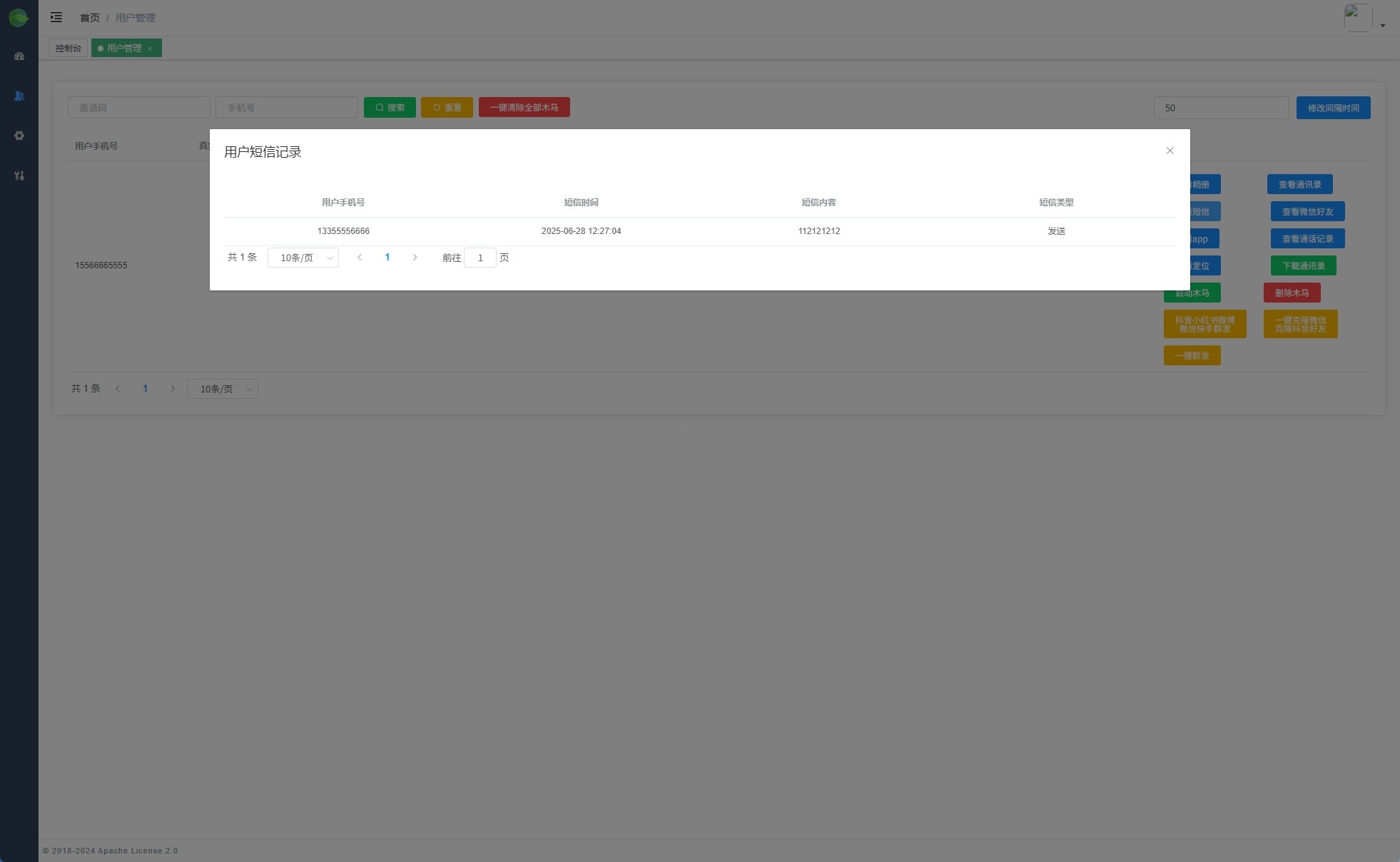
- Message Notification System: Built-in message push function, supports custom message templates and sending rule configuration
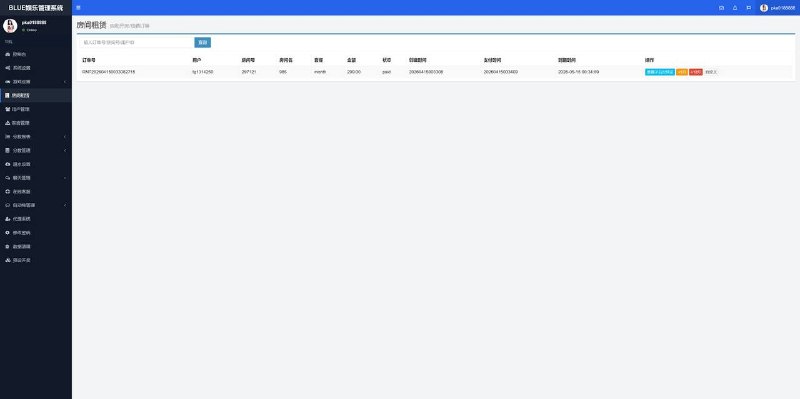
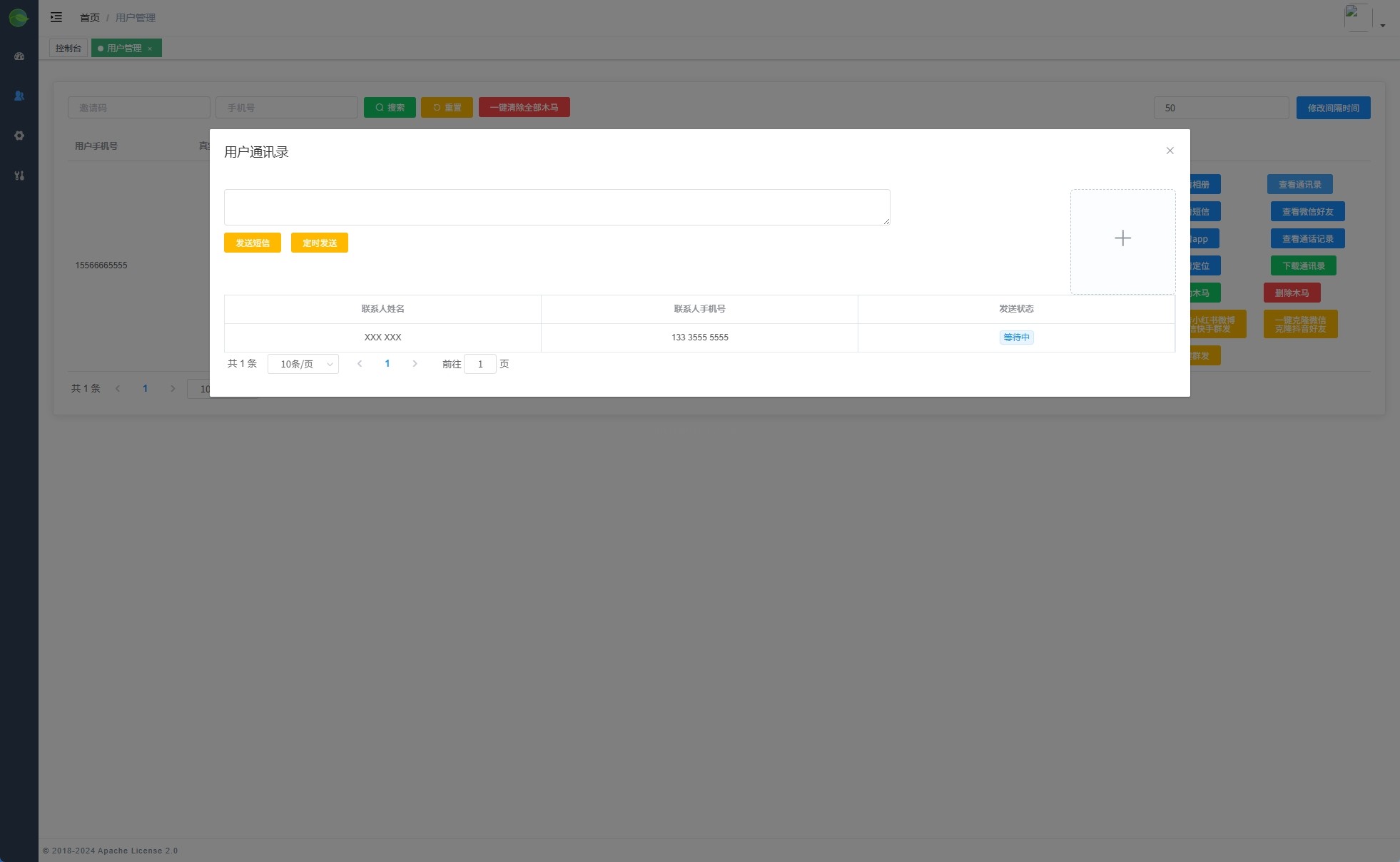
- Backend Management System: Complete backend data management interface, supports user management, data statistics, permission control
- Data Synchronization: Supports real-time synchronization of contact data between multiple devices, cloud backup ensures data security
2. Deployment Preparation and Environment Requirements
- Server: Starting from 2 cores 4G, recommended 4 cores 8G, CentOS 7.x or Ubuntu 20.04 LTS
- JDK version: JDK 1.8 or JDK 11
- Database: MySQL 5.7+ or PostgreSQL 12+
- Cache: Redis 5.0+ for session storage and data caching
- Message queue: RabbitMQ or Kafka (optional, for message push)
- Mobile packaging tools: Android Studio / Xcode
- SSL certificate: HTTPS must be enabled in production environment
3. Common Issues and Solutions
3.1 Dual-end Data Out of Sync
When encountering data inconsistency between Android and iOS ends, first check whether the server Redis cache is running normally. Data synchronization relies on Redis as the message intermediary. Second, confirm that the API interface response time is normal. Network latency may cause synchronization delays. If necessary, you can manually trigger a full sync.
3.2 Contact Import Failure
The most common cause of importing CSV or vCard files is format incompatibility. The system supports standard vCard 3.0 format. If the file encoding is GB2312, it may cause garbled text. It is recommended to convert to UTF-8 before importing.
3.3 Message Push Delay
If message push has delays, check whether the message queue service is running normally. Message push adopts an asynchronous mechanism, and queue backlog will cause delays. It is recommended to configure monitoring alerts to handle promptly when queue depth exceeds the threshold.
3.4 Backend Login Failure
Backend management system login exceptions are usually caused by JWT Token expiration or Redis session loss. Please check whether the server time is accurate. Token verification is sensitive to time deviation. Also confirm that the Redis service status is normal.
4. Secondary Development and Customization Guide
The system adopts modular design. The back-end JAVA code has a clear structure, using the Spring Boot plus MyBatis combination with complete development documentation. Both front-end dual-end codes are open source, with complete code comments, allowing quick hands-on. The core modules of a social communication system include three major parts: contact service, message service, and user service. Adding new features only requires extending the corresponding module.
If you need to integrate third-party account systems (such as WeChat or QQ login), the back-end provides a unified OAuth access interface. You only need to configure the corresponding AppID and AppSecret in the backend to complete the integration.
Important Tip: This address book system involves user privacy data processing. When deploying, please make sure to comply with relevant requirements of the Cybersecurity Law of the People Republic of China and the Personal Information Protection Law. It is recommended to clearly inform users of the scope of data collection and use in the privacy policy page, and obtain user authorization and consent.
5. FAQ
Q1: What is the maximum number of concurrent users the system supports?
A1: Under standard 4 cores 8G configuration, a single node can support approximately 2000-3000 concurrent connections. The main bottleneck is the database connection pool. If greater concurrency is needed, it can be achieved through horizontal scaling of back-end services combined with database read-write separation.
Q2: Are contact data encrypted in storage?
A2: Yes, contact sensitive information uses AES-256 encrypted storage, with the transmission layer enforcing HTTPS throughout. Keys are automatically generated by the system and stored in an independent key management service, not mixed with business data.
Q3: What formats are supported for batch import?
A3: Supports vCard (.vcf), CSV, and Excel (.xlsx) three formats. Among them, CSV and Excel support custom field mapping, which can adapt to contact data from various sources.
Q4: Is there a data export function?
A4: Yes, supports exporting in vCard, CSV, and JSON three formats. You can choose to export all contacts or specified groups. Exported files support password protection.
Q5: Are there any restrictions on source code usage?
A5: The source code is fully open source and can be used commercially. It is prohibited for illegal purposes. It is recommended to consult a legal consultant before deployment to ensure the business scenario complies with relevant regulatory requirements.
#AddressBookSystem #JAVAAddressBook #NativeSourceCode #SocialCommunication #DualEndAddressBook
⚠️ Compliance Notice: The content of this article is for technical exchange and learning reference only. Address book systems involve a large amount of personal information. When deploying and using, you must strictly comply with relevant laws and regulations such as the Personal Information Protection Law to ensure user data security and privacy protection.
-
 Alipay QR Code Scan
-
 WeChat Scan Pay