Multi-Language TikTok Order-Grabbing System: UniApp Frontend and Order Controls
Multi-Language TikTok Order-Grabbing System: UniApp Frontend and Order Controls
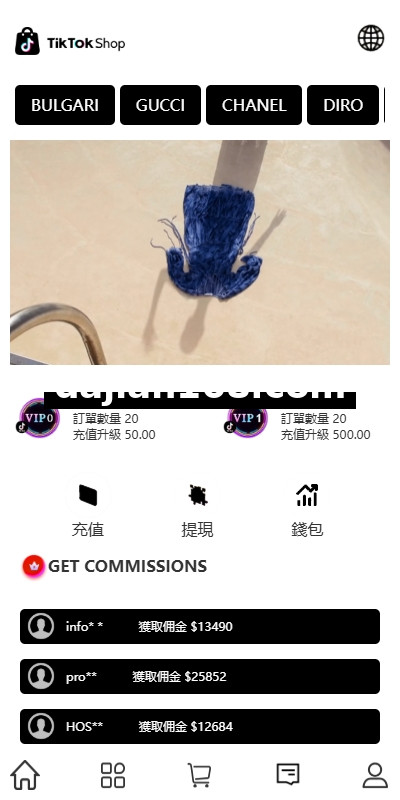
This type of TikTok-style order-grabbing system is usually built for overseas task platforms. The member sees a list of available orders, grabs one, waits for the task state to change and receives a result in the member center. From the technical side, the difficult parts are order matching, continuous order locking, card-order rules and keeping the multi-language front end consistent across mobile devices.
1. Main Functions
- Multi-language interface: language files can be maintained independently so the same system can serve different regions.
- Uni-app frontend: one codebase can be compiled into H5, Android and iOS packages, reducing the cost of mobile adaptation.
- Order-grabbing workflow: members receive or grab orders based on level, balance, activity and platform rules.
- Continuous order control: after a specific order is triggered, the next order can be locked until the current step is completed.
- Card-order mechanism: the backend can mark a special order as a card order and force the member to finish it before continuing.
- Manual adjustment tools: operators can review abnormal users and make controlled account adjustments where business rules allow it.
2. Deployment Baseline
Use at least a 2-core/4 GB server for testing and a stronger instance for production. The web layer normally needs Nginx, PHP or Java depending on the source package, MySQL for persistent records and Redis for order state. If the front end is built with uni-app, confirm whether the package contains compiled H5 files or source code that must be built with HBuilderX or the uni-app CLI.
3. Order-Control Pitfalls
3.1 Continuous orders become a dead loop
If a locked order points to another locked order, the member may never be released. Set a maximum lock depth in the backend and log every lock event. A safe rule is to release the chain automatically after two levels unless an administrator confirms otherwise.
3.2 Order matching is too concentrated
A simple balance-only matching rule sends all good orders to a few high-balance users. Add weight factors such as account activity, level and recent completion rate. This makes the order distribution more natural and easier to manage.
3.3 Multi-language pages break on mobile
Button labels in English and Chinese have different widths. Avoid fixed-width buttons. Use flexible layouts, minimum widths and ellipsis rules so the interface does not overflow after language switching.
4. Testing Before Launch
Create several test accounts at different levels. Test normal orders, continuous orders, card orders, completed orders and manually reviewed orders. The test is complete only when the front-end state, backend order record and wallet log all match. If the platform includes automatic matching, run it repeatedly with different balances to confirm the distribution is not skewed.
Compliance reminder: order-grabbing and task platforms can be abused for deceptive campaigns. Keep the business model transparent, publish clear user rules and avoid promising guaranteed returns.
FAQ
Q1: Can the uni-app front end be wrapped as an APP?
Yes. The same front-end project can usually be compiled into H5 and app packages, but push notifications, payment callbacks and login state should be retested after wrapping.
Q2: Why is Redis important?
Order state changes quickly. Redis reduces repeated database reads and helps the backend lock, release and match orders consistently.
Q3: What should be logged?
Log order creation, order lock, card-order trigger, manual adjustment, settlement and every wallet change. These records are essential for dispute handling.
#TikTok Order System #Order-Grabbing Platform #UniApp Frontend #Continuous Orders #Card Order Control
-
 Alipay QR Code Scan
-
 WeChat Scan Pay