Cocos Multi-language Demo System Deployment: Three UI Themes and MongoDB Integration Notes
Cocos Multi-language Demo System Deployment: Three UI Themes and MongoDB Integration Notes
Disclaimer: This article is for technical education and demonstration only. It is not professional or financial advice. Any real-world deployment must comply with applicable laws and regulations.
I recently helped a client deploy a Vietnamese-language interactive demo system. The frontend runs on the Cocos engine and the backend data layer uses MongoDB. The client requested three UI themes with free switching, plus a backend control panel for managing demo parameters. After three days of wrestling with edge cases, I recorded the key checkpoints below as a reference for anyone tackling a similar project.
Hands-on Functionality Review
On paper this is marketed as an interactive entertainment demo platform, but at its core it is a showcase for demonstrating interactive game logic to the client’s audience. After finishing the deployment I ran through everything myself, and the feature coverage turned out to be more complete than I expected.
Three UI Theme Switching
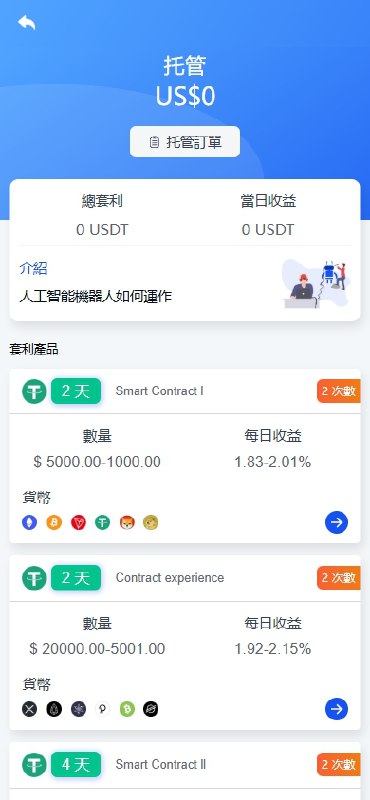
The packaged frontend ships with three built-in themes: a bright style, a dark style, and a retro pixel-art style. The switching logic sits in Cocos’s startup scene, which reads a themeIndex field from the configuration file and decides which asset bundle to load. In my test, swapping themes did not require restarting the client; hot update took effect immediately. This is genuinely convenient for operators, because different user acquisition channels can be served different visual styles on the fly.
Backend Control Panel
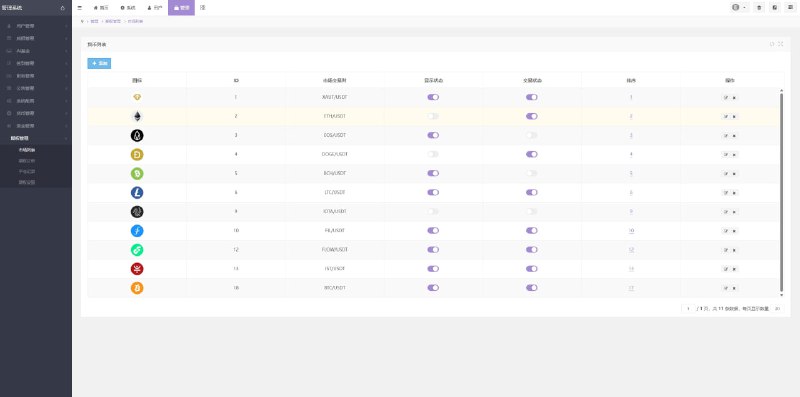
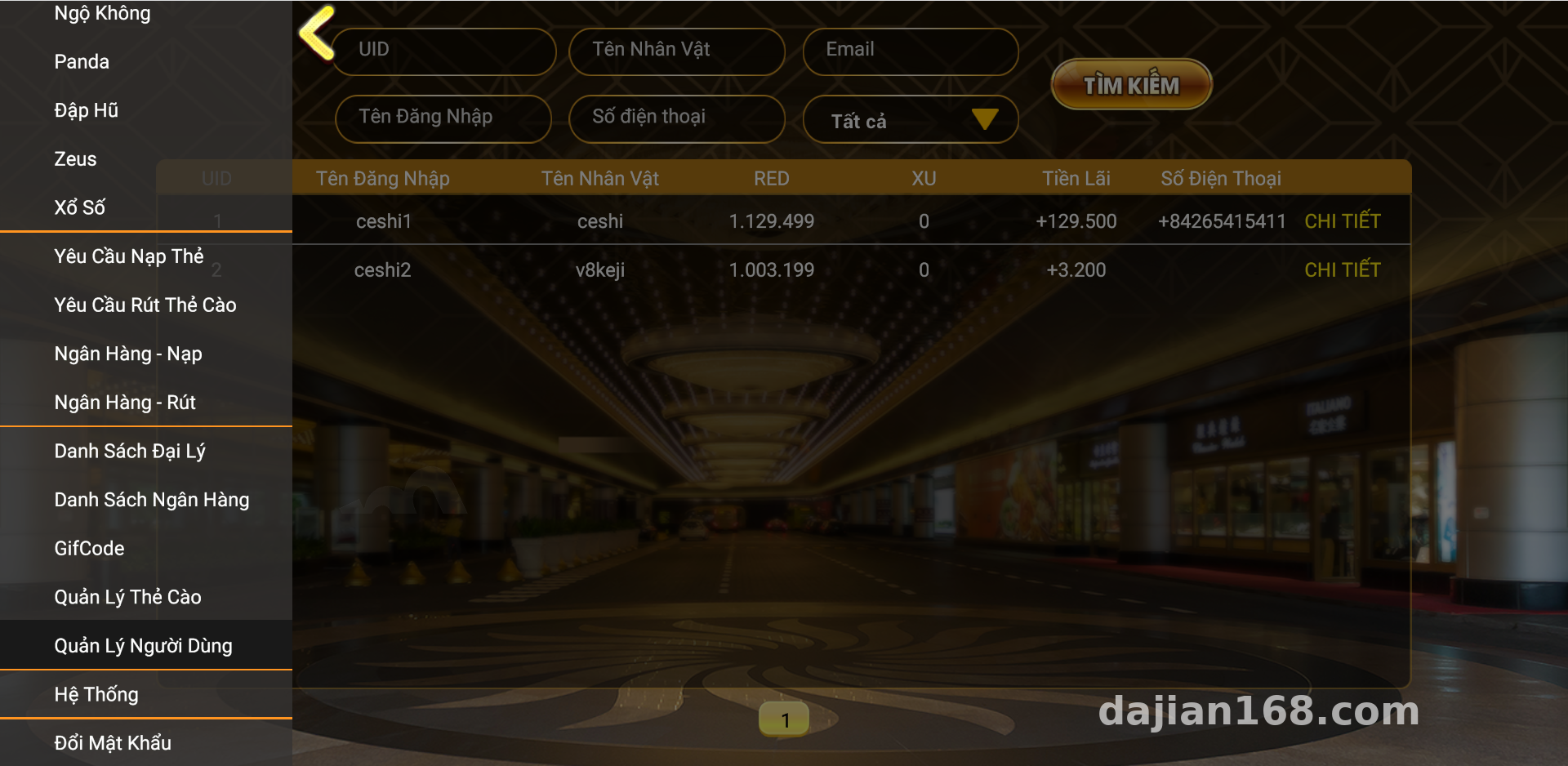
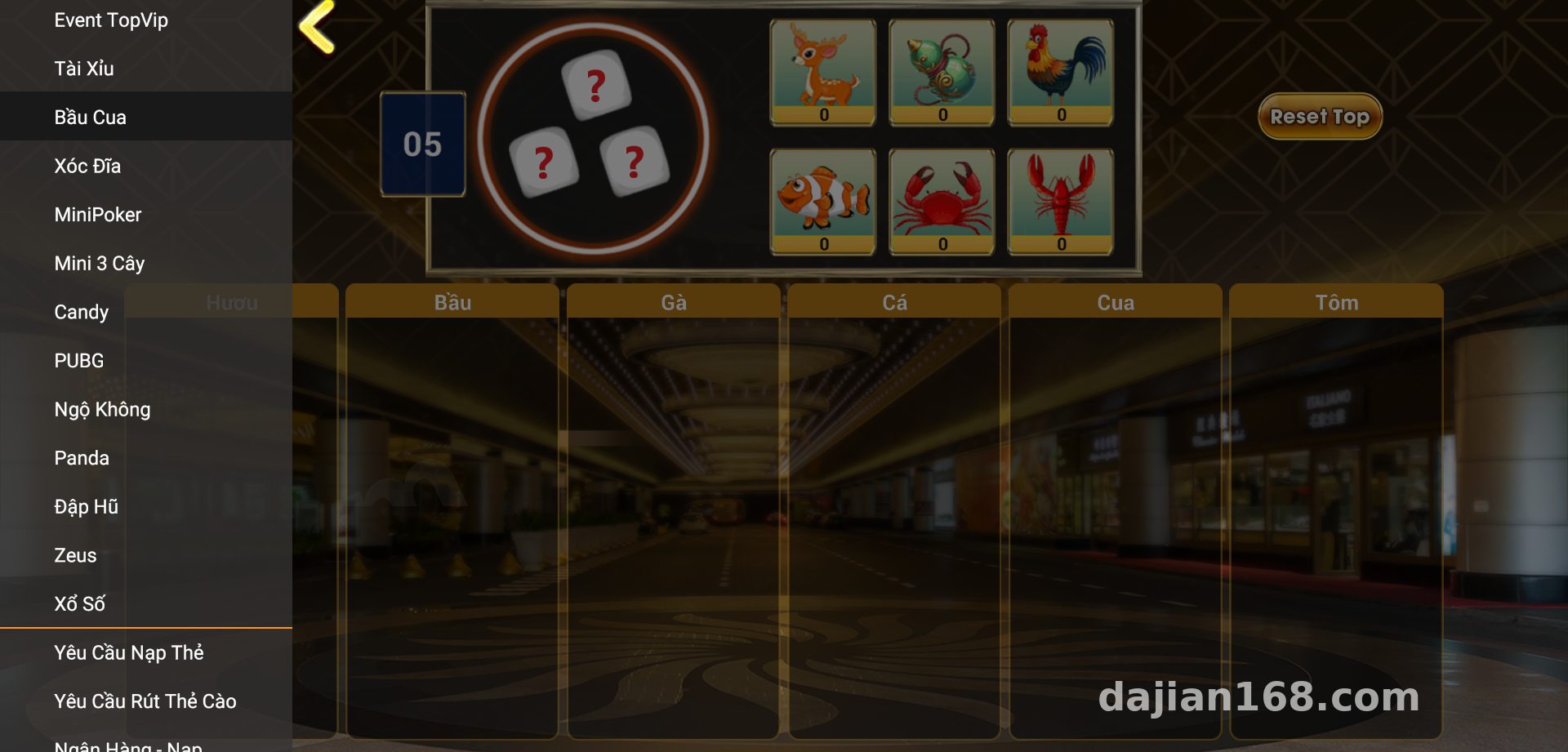
The admin panel is a PC web page. The main adjustable areas are:
- Probability simulation parameters: the trigger frequency of each scenario can be manually configured as a percentage, and the client pulls the latest values after saving
- Points multiplier adjustment: supports two-decimal-place precision multiplier values; during testing I noticed that pushing the cap too high caused numeric overflow, so I recommend keeping it under 10x
- Task distribution rules: a built-in task system that lets you configure trigger conditions and completion rewards, useful for running user acquisition campaigns
- User behavior statistics: every action is recorded in MongoDB with timestamps and outcomes, and can be exported directly for analysis
Multi-language Support
The system ships with Vietnamese and Chinese language packs out of the box. The language files are JSON format and live under the resources directory. I tried adding English directly into the structure; in theory it supports unlimited languages as long as you drop in a translated file. The catch is that you cannot run an older version of Cocos’s Localization plugin. I used the 2.0 version and hit one specific issue: Vietnamese special characters rendered as tofu boxes in some font files, which meant I had to package an additional font subset.
Deployment Checklist
There were quite a few pitfalls in this part, here are the ones worth calling out.
MongoDB Version Selection
The server side runs on MongoDB 4.4. The project documentation requires version 3.6 or higher. I tried to save time by going straight to the latest 7.0 release and quickly discovered that the older mongoose syntax had compatibility issues under 7.0. I ended up rolling back to 4.4 before everything ran cleanly. If you are deploying on your own, just follow the version specified in the author’s documentation and skip the upgrade experiments.
Payment Channel Integration

The system natively supports Vietnamese local payment methods. Looking at the source code, it mainly wraps MoMo, ZaloPay, and bank transfer workflows. For a domestic deployment you simply swap the config to point at local payment channels. The interface uses a standard HTTP callback protocol with an MD5 plus salt signing scheme, so secondary development is not difficult. The only thing to watch is that the callback URL must be an externally reachable HTTPS domain, otherwise the payment platform will fail signature verification.
Static Asset Server
The web-mobile build that Cocos produces needs to be served through Nginx, and there are two things to get right. First, enable gzip, which saves roughly 60% of bandwidth. Second, write the CORS configuration properly, otherwise the browser will reject remote resource loads from the client. I set Access-Control-Allow-Origin to * directly, because this system relies on login authentication and CSRF is not a concern here.
Cocos Creator Version Compatibility
The project uses Cocos Creator 2.4.x, and this detail is critical. If your machine has 3.x installed, opening the project will throw errors immediately because the 3.x API surface changed too much. I recommend installing a separate 2.4.10 editor. The older version boots a bit slower, but it is rock-solid stable.
Highlight: the three-theme switching pattern is worth borrowing. No rebuild needed, just edit a config and you swap visual styles, which is especially practical for multi-region overseas operations. Storing log records there for behavior analysis also feels noticeably smoother than querying the same data out of a traditional MySQL setup.
Who This Suits
- Engineering teams building overseas interactive demo products, especially for the Southeast Asian market
- Anyone who needs to spin up a Cocos-based frontend demo system with a working admin panel quickly
- Developers who want to study how MongoDB exchanges data with frontend game logic
- Operators running task distribution or points incentive campaigns, who can fork this base and customize it

Suggestions for Secondary Development
The overall code structure is fairly clean. The frontend is broken into modules per scene, and the server side follows a typical Node.js plus Express layout. If I were extending it, I would prioritize three things:
- Add two-factor authentication to the admin panel login. The native version only supports username and password, which feels thin when exposed to the public internet
- Add TTL indexes to the MongoDB collections so expired log records auto-purge, otherwise the disk fills up within roughly three months of runtime
- Isolate the payment callback logic into its own module. It is currently mixed into the main route file, and adding new payment channels later will only make the mess worse
Frequently Asked Questions
Q: I don’t have Cocos Creator 2.4 on my machine. Can I just run it on 3.8?
A: No, do not waste your time trying. The materials and UI components in the project were written against 2.4. Even after running the 3.x upgrade tool you will still end up with a pile of errors. Just install 2.4.10 and move on.
Q: Once MongoDB data volume grows, what optimization suggestions do you have?
A: First, build proper indexes, especially on the timestamp and user ID fields of the behavior log collection. Then shard the collection by day. On my setup we generate a few hundred thousand records per day, and after sharding query latency has stayed flat.
Q: The three UI theme asset bundles are quite large. How do I optimize loading speed?
A: Use on-demand loading instead of dumping every UI asset into the initial scene. I packaged each theme’s resources into its own Bundle and dynamically load them on switch. That cut the first-screen payload down by roughly two thirds.
Q: Does this system support the mini-program platform?
A: Not natively, but Cocos does support publishing to the WeChat mini-game platform. I tried it once. You will need to adapt the login state and payment callback handling, which is roughly three days of work.
Q: After I change a config in the backend, when does the client pick it up?
A: The client pulls the remote config once at startup. For runtime hot updates you need to write your own WebSocket push logic; the original author did not implement that. On my end I had the client hit the config endpoint every five minutes, which has been sufficient.
Final reminder: please comply with applicable laws and regulations. This system is intended for legal, technical educational use only and must not be deployed for any unlawful purpose.
Disclaimer: This article is for technical education and demonstration only. It is not professional or financial advice. Any real-world deployment must comply with applicable laws and regulations.
#Cocos Creator deployment #MongoDB integration #multi-language demo system #UI theme switching #Nginx static hosting
-
 Alipay QR Code Scan
-
 WeChat Scan Pay