Thailand Micro Loan System Deployment Guide: UniApp Multi-Language Frontend with Card-Order and Chain-Order Features
Thailand Micro Loan System Deployment Guide: UniApp Multi-Language Frontend with Card-Order and Chain-Order Features
Last year I helped a client deploy a localized loan system in Bangkok. The whole project took nearly three weeks from start to finish. The source code I received was a second-development version of a Thailand micro loan platform. The frontend was built with uniapp in single Thai language. The backend ran on ThinkPHP framework with full open source code. Honestly I thought it would just be a matter of swapping language packs. The reality turned out to be far more complicated. I ran into more issues than I expected. This article compiles the functional points, configuration difficulties and secondary development experiences I encountered during the actual deployment. I hope it serves as a useful reference for anyone with similar requirements.
1. System Feature Overview
This system is essentially an operations-grade platform that combines micro loan services with order brushing tasks. The core modules are clearly structured:
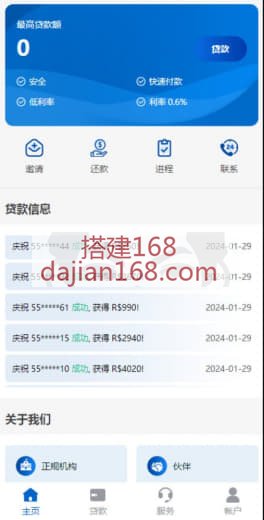
- Frontend Display Layer: Built with uniapp for cross-platform development. The default configuration uses Thai language only. However the code structure reserves multi-language extension interfaces. Each page has an independent JSON language pack under the lang directory.
- User Center: Contains four main sections: loan application, credit limit query, repayment plan and order history.
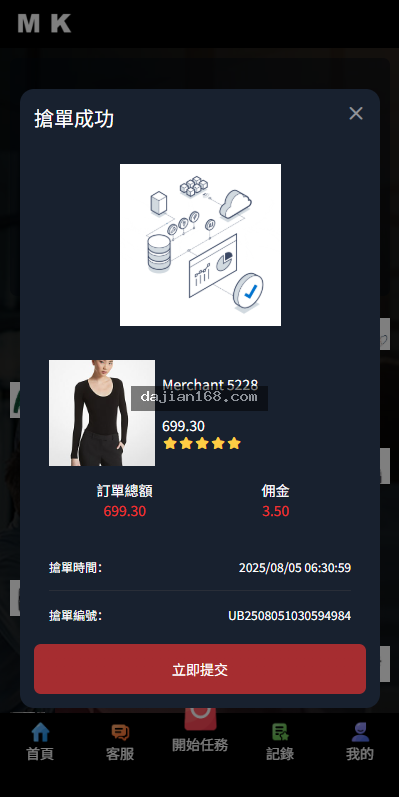
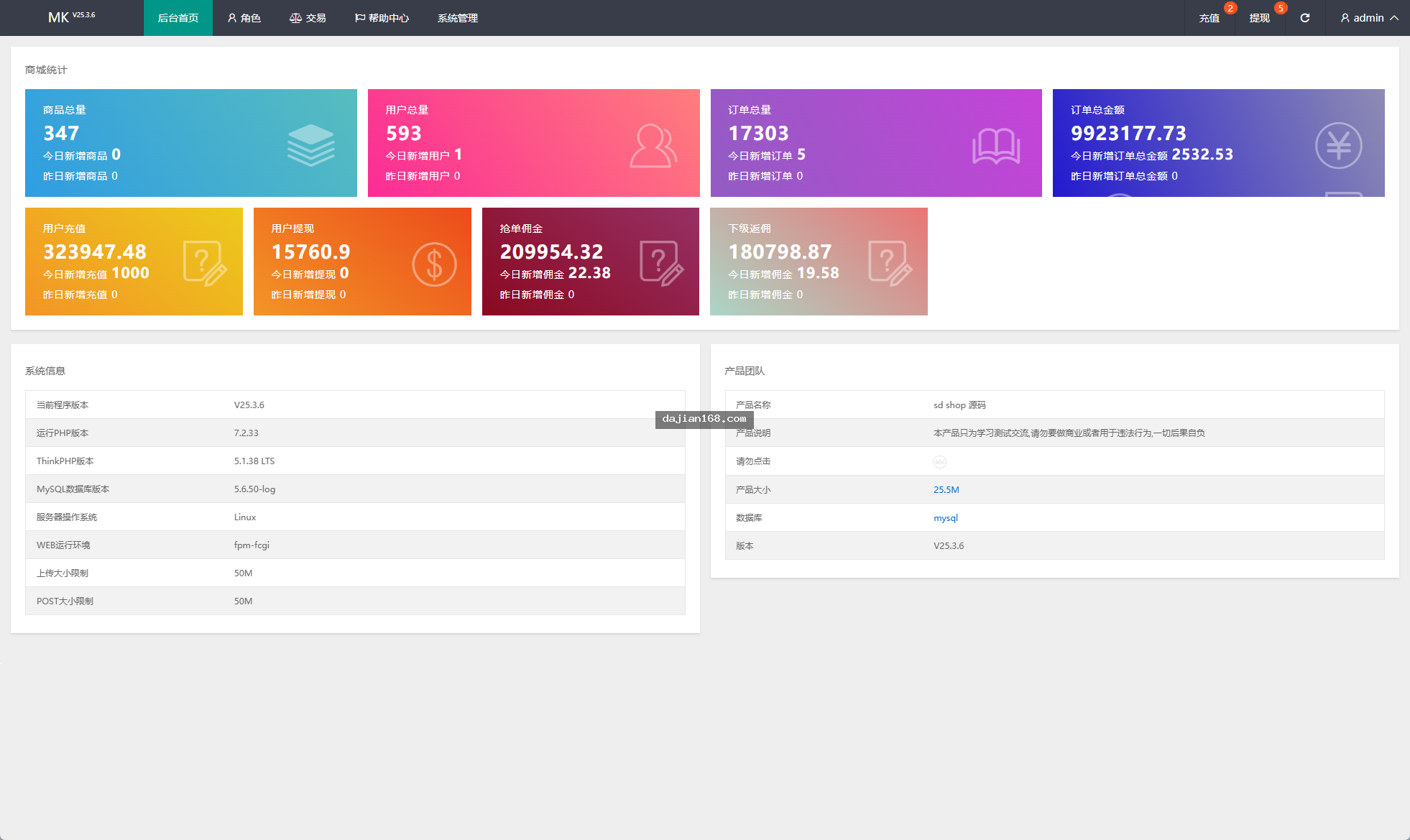
- Order Brushing Task System: Supports both card-order and chain-order modes. The admin backend allows setting task unit prices, chain-order levels and card-order trigger conditions.
- Risk Control Audit: Includes basic identity verification, credit scoring and manual review workflows.
- Payment Gateway: Reserved interfaces for Thailand local bank transfers and e-wallet channels.
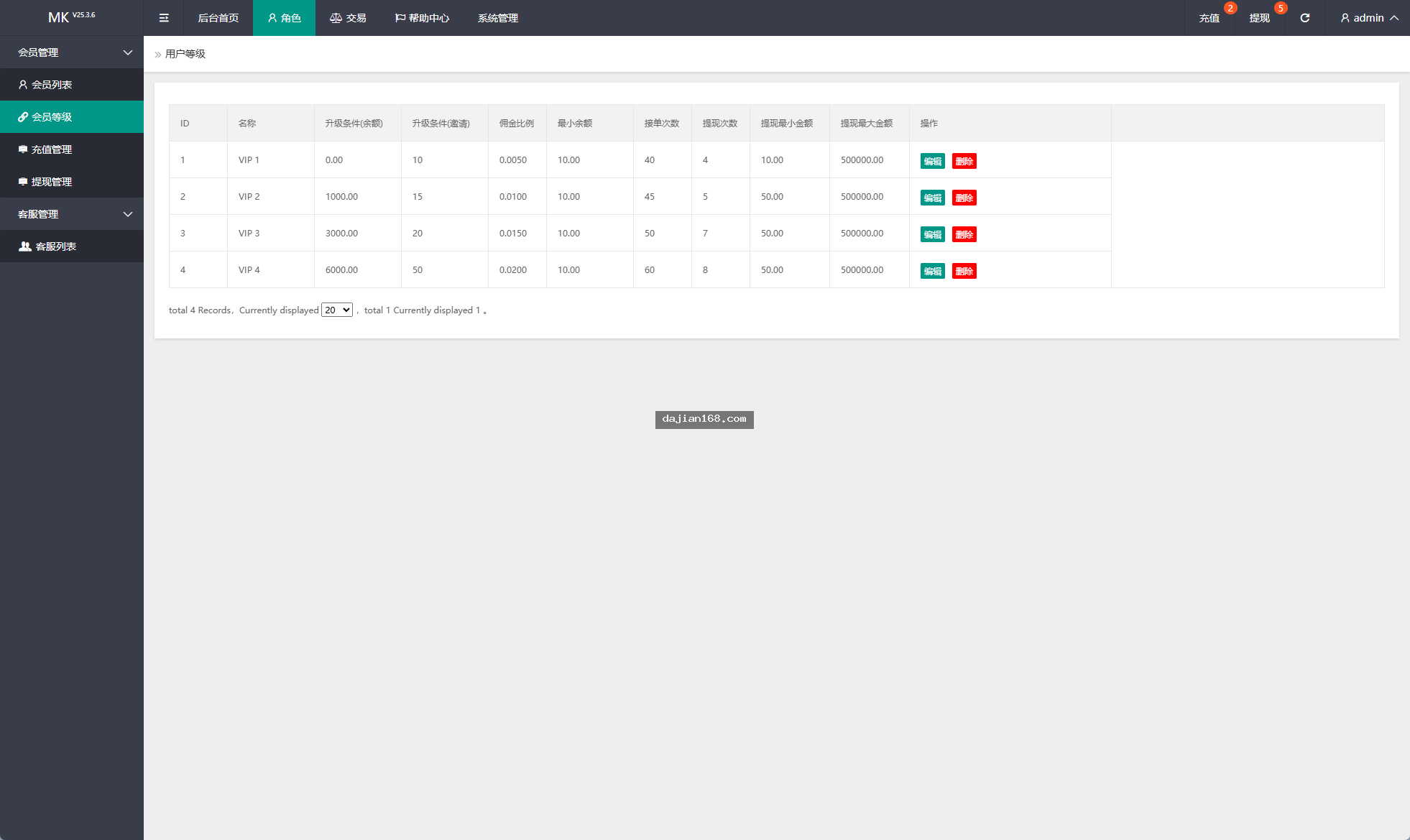
- Agent Commission: Supports multi-level agents with adjustable commission ratios in the backend.
2. Deployment Preparation and Key Notes
Before deployment, review this environment checklist carefully. Missing any item will cause rework later:
- Server: Recommend CentOS 7.6 or Ubuntu 20.04. Minimum 2-core 4GB RAM.
- PHP Version: 7.2-7.4 compatible. Must enable gd, mbstring and openssl extensions.
- Database: MySQL 5.7 or MariaDB 10.3 with utf8mb4 encoding.
- Web Server: Nginx 1.18+. Configure rewrite rules according to ThinkPHP framework standards.
- SSL Certificate: For Thailand local operations, use a proper CA-issued certificate. Avoid self-signed.
- Domain Registration: If targeting Thailand users, no domestic ICP registration is needed.
- UniApp Compilation: Requires HBuilderX 3.4+. Select the correct APPID when packaging.
3. Common Issues and Troubleshooting Records
3.1 Thai Frontend Displaying Garbled Characters
Right after deployment I noticed Thai text showing as square boxes on some Android devices while iOS displayed correctly. After investigation I found it was caused by missing font files. Solution: Import Noto Sans Thai font in the global style of uniapp’s App.vue. Place the font files in the static directory during packaging and reference them with local paths. Do not use CDN as some Thailand carriers have poor connectivity to overseas CDNs.
3.2 Chain-Order Logic Conflicting with Card-Order Logic
When both chain-order and card-order were enabled in the backend, users reported getting stuck at the third task. After debugging I found the chain-order counter and card-order trigger conditions were not properly prioritized. Fix: Modify the checkTaskStatus method in application/common/model/Task.php. Execute card-order judgment only after chain-order completion completes. Do not run cross judgments simultaneously.
3.3 ThinkPHP Route 404 Errors
Even after configuring Nginx rewrite rules, some routes still returned 404. The reason was that ThinkPHP’s pathinfo mode needs extra configuration under Nginx. Add try_files $uri $uri/ /index.php?$query_string; in the location block of nginx.conf, then restart Nginx. Do not only add try_files $uri $uri/ /index.php; because losing query_string will break POST data.
3.4 Database Time Zone Mismatch
The server was in China while users were in Thailand. Order times showed a 7-hour difference. Fix: Set MySQL default-time-zone to ‘+07:00’ in the configuration. Also change timezone to Asia/Bangkok in application/config.php. Both must be changed. Changing only one will not work.
4. Customization Options
The biggest advantage of this fully open-source package is the freedom to customize deeply. Common customization directions include:
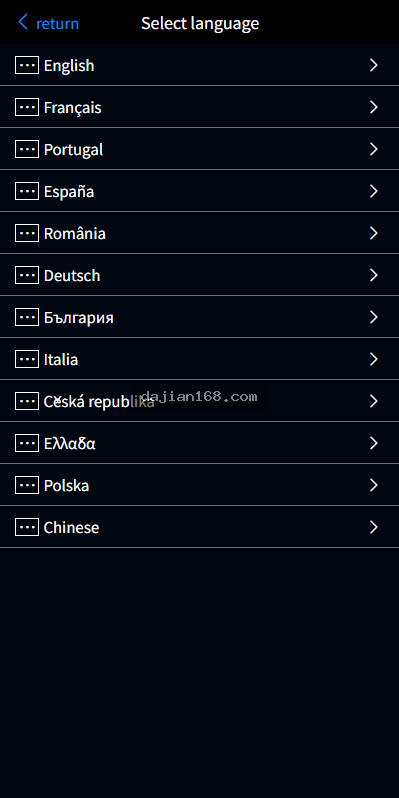
- Multi-Language Extension: Currently only Thai is available. You can add English, Vietnamese, Indonesian and others following the structure of lang/th.json. Each page component already wraps text with $t() methods. Just add language packs.
- UI Theme Change: Uniapp SCSS variables are centralized in uni.scss. Change theme colors, button radius and font sizes all in this one file.
- Payment Gateway Integration: For Thailand local payments like PromptPay and TrueMoney Wallet, add new driver files under application/common/pay/ directory by inheriting the BasePay class.
- SMS Channel: Reserved interfaces allow connecting to Thailand local operators including AIS, DTAC and TrueMove SMS APIs.
- Data Analytics: The built-in backend statistics are fairly basic. You can integrate ECharts for more detailed funnel analysis and retention reports.
Key Note: The fully open-source nature of this system is a double-edged sword. It offers high freedom for modifications but also means no official technical support. I strongly recommend running a complete test of all business workflows in a staging environment before production deployment. Pay special attention to the switching logic between chain-order and card-order modes.
5. FAQ
Q1: Can this system be used directly for formal operations?
A: The code itself is solid. But before formal launch you must complete three things. First, consult a Thailand local legal advisor for compliance review. Second, integrate a proper KYC verification channel. Third, deploy SSL and firewall protection. Change the default database password. My client’s Bangkok launch spent one week on compliance review alone.
Q2: Does packaging the uniapp frontend into an APP require extra fees?
A: HBuilderX basic edition is free. But publishing to Google Play requires a developer account with a one-time fee of 25 USD. iOS distribution requires Apple Developer Program membership at 99 USD per year. Additionally, Thailand local app stores such as AIS Store require separate applications.
Q3: Is the database table structure complex? What is the secondary development difficulty level?
A: There are 32 tables total. The core tables are user, loan_order, task_list and agent_tree. ThinkPHP models and association queries are written in a standard manner. Developers with TP foundation can get started quickly. Those without TP background should spend two days familiarizing themselves with the Db class and model associations first.
Q4: How is the commission settlement cycle configured for card-order and chain-order?
A: In the backend under “System Configuration – Task Settings”, chain-order commissions default to T+1 settlement while card-order commissions credit immediately. This logic is in the settleCommission method of application/common/service/TaskService.php. You can modify it to real-time settlement or weekly settlement.
Source Reference
This article is compiled from yanshigw.top/19064.html with secondary creation and expansion. It is provided for technical exchange purposes only.
#ThailandMicroLoanSystem #OrderBrushingSourceCode #UniAppMultiLanguage #CardOrderChainOrderSystem #OverseasLoanPlatform
-
 Alipay QR Code Scan
-
 WeChat Scan Pay