Overseas DAPP Exchange System Setup Guide: Options Contracts, Staking Authorization, AI Quantitative Trading, and Mining Machine Leasing Complete Deployment
Overseas DAPP Exchange System Setup Guide
At the beginning of this year, a boss doing overseas markets came to me and said he wanted to build a DAPP exchange with options and contracts, plus support for staking authorization and AI quantitative trading. I initially thought a system of this level would cost at least several million, but the other party handed over a source code and said to try it first. After two weeks of work, it actually ran successfully. Today I am sharing the complete setup experience for this DAPP exchange.
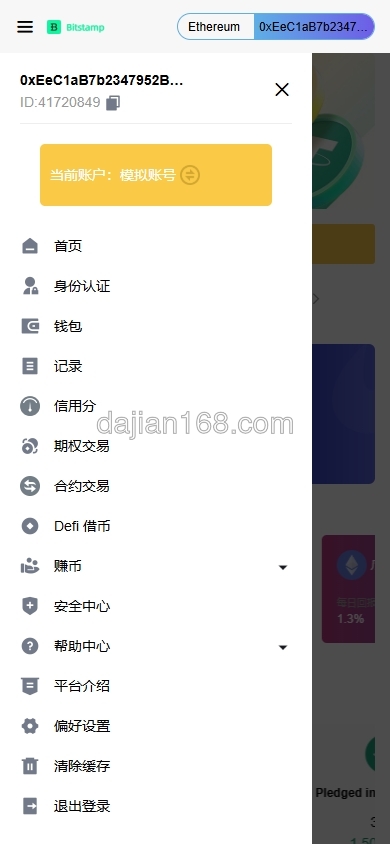
The biggest feature of this system is the separation of frontend and backend. The frontend uses a multi-language DAPP, and the backend interfaces are complete. It also comes with a demo account feature where novice users can receive virtual assets to practice each month. This design is indeed clever for customer acquisition.
1. System Features Overview
The functional modules of this exchange are very rich. I will list them by priority:
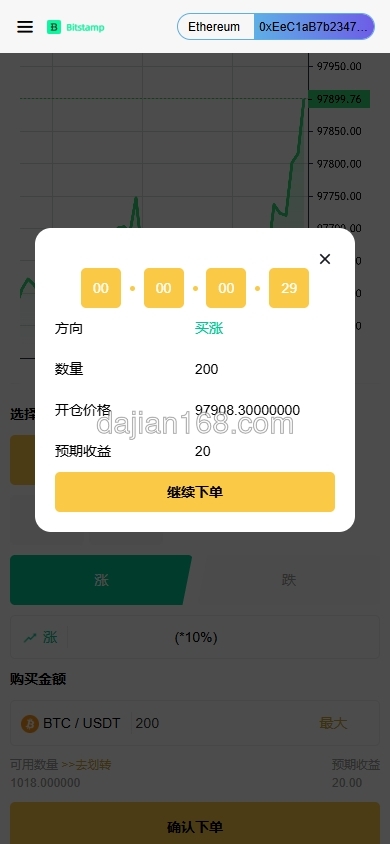
- Options Trading: Supports call and put, settled by seconds, shortest 30 seconds per round. K-line data connects to real exchange APIs to ensure fairness.
- Contract Trading: Perpetual contracts support 1-100x leverage, real-time liquidation mechanism, funding rate automatically calculated.
- Staking Authorization: Users can stake mainstream coins to the platform for annualized returns. Supports flexible and fixed-term staking modes.
- Lending Function: Collateralized lending, supports multi-currency combination collateral, LTV ratio adjustable in backend.
- AI Quantitative Trading: Built-in three quantitative strategies (grid, martingale, trend following), users can copy with one click.
- Mining Machine Leasing: Virtual mining machine display, leased by computing power, daily automatic settlement of returns.
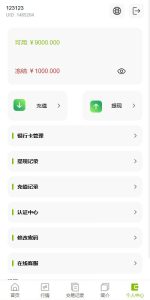
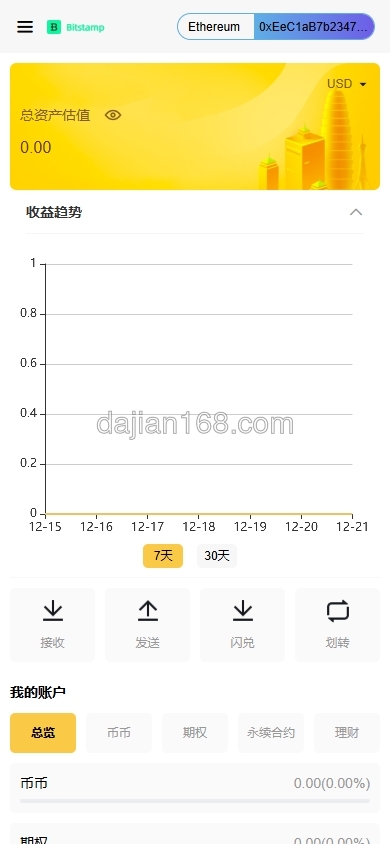
- Dual Account System: Real accounts use USDT deposits, demo accounts automatically receive 10000 USDT experience funds monthly.
2. Pre-Deployment Environment Preparation
This level of system has relatively high server requirements. Do not think about running it on a cheap virtual machine:
- Server Configuration: 4 cores 8GB RAM minimum, recommend 8 cores 16GB. Bandwidth at least 10M, CDN recommended for many overseas users.
- Blockchain Nodes: If you need on-chain interaction, deploy ETH or BSC full nodes, or use Infura or QuickNode RPC services.
- Database: MySQL 8.0+ as primary, Redis for caching and queues, MongoDB optional for K-line historical data.
- Web3 Wallet: MetaMask for testing, production environment recommend WalletConnect or self-built wallet SDK.
- Security Audit: Must do code audit before going live, especially fund-related contract logic. I recommend CertiK or SlowMist.
- Legal Compliance: Overseas operations require relevant licenses, such as US MSB, Canada MSB, Estonia MTR, etc.
3. Common Issues and Troubleshooting Records
3.1 Large Deviation Between Options Settlement Price and Real Market
When first testing the options feature, the settlement price differed from Binance by nearly 1 percent. Users would definitely be furious. Investigation found the data source used a free public API with delays of 3-5 seconds. Later changed to Coinbase Pro WebSocket real-time push, keeping deviation within 0.05 percent. Remember, exchange data sources absolutely cannot be cheap.
3.2 Staking Rewards Calculation Inaccurate
The staking module used floating-point numbers for reward calculations. After large numbers of users staked, the total daily rewards differed by dozens of USDT. The solution is to use BigNumber with string type for all amounts, precise to 8 decimal places, then convert back to display precision.
3.3 DAPP Won’t Open in Some Wallets
This system requires users to open the DAPP in wallet apps for login, but performance varies between Trust Wallet and TokenPocket. The issue is Web3.js version compatibility, as different wallets have different built-in browser kernels. I recommend using WalletConnect 2.0 protocol as a unified access layer for lowest adaptation cost.
3.4 AI Quantitative Strategy Drawdown Too High
The built-in grid strategy performs well in ranging markets, but once encountering one-way trends, drawdown can exceed 30 percent. My approach is to add stop-loss lines to each strategy, while limiting user single-copy amount to no more than 20 percent of account balance. The platform must protect users, otherwise complaints will overwhelm you.
4. Secondary Customization and Advanced Features
The source code structure of this system is very clear, leaving large room for secondary development. Extensions I have done for clients include:
- IEO Launch Module: Added project token listing function, supporting multi-round subscriptions and lock-up releases.
- Social Copy Trading: Traders publicly display positions, ordinary users copy with one click, platform takes 10 percent commission.
- NFT Membership System: Issue platform membership NFTs, holders enjoy trading fee discounts and airdrop rights.
- Multi-Chain Support: In addition to ETH and BSC, also integrated Polygon, Arbitrum, Tron and other networks.
This system is officially priced between 30000 and 80000 dollars, depending on functional modules. If your budget is limited, I recommend launching core trading functions first, with other modules added iteratively.
Risk Warning: Exchanges involve user fund security. Be sure to implement cold and hot wallet separation. I recommend keeping 90 percent of funds in cold wallets, with hot wallets only holding 10 percent for daily turnover. Also configure multi-signature, so single point failure does not mean total loss.
5. FAQ Frequently Asked Questions
Q1: How many users can this system support trading simultaneously?
A: On an 8-core 16GB configuration, tested support for 2000 users trading online simultaneously. For larger user bases, I recommend using microservices architecture to split order books, matching engines, and account systems.
Q2: Can demo account experience funds be withdrawn?
A: By default they cannot be withdrawn. Experience funds are only for simulated trading. But you can configure profit conversion activities in the backend, such as demo trading profits reaching 100 percent can receive real account rewards.
Q3: Do smart contracts need to be re-audited?
A: If you modify fund-related contract logic, it must be re-audited. If you only change frontend UI or backend configurations, generally not needed.
That covers the complete setup experience for this overseas DAPP exchange. From environment preparation to launch and operation, every step is a lesson bought with real money. Feel free to leave a comment if you have any questions.
#DAPP Exchange Setup #Options Contract System #Staking Authorization Platform #AI Quantitative Trading #Mining Machine Leasing
Important Notice: Digital asset trading carries extremely high risks. Please ensure the platform has a complete risk control system and fund security protection mechanisms. Consult a professional legal team before operation to ensure compliance with local regulatory requirements.
-
 Alipay QR Code Scan
-
 WeChat Scan Pay