Order-Grabbing System Agent Commission Revolution: Passive Income Distribution
Order-Grabbing System Agent Commission Revolution: Passive Income Distribution
The agent commission layer is what turns a simple order-grabbing platform into a scalable distribution machine. Instead of paying for every user acquisition, operators let agents bring in their own networks and earn a share of task rewards. This article explains how to configure the multi-level commission rules, settlement cycles and agent dashboard so the passive-income model works without manual intervention.
1. Core Concepts
- Direct commission: an agent earns a percentage of the task reward completed by a user they directly invited.
- Indirect commission: lower percentages are paid for users invited by the agent’s downline, usually two or three levels deep.
- Commission pool: a reserved portion of platform revenue is allocated to agent payouts before the rest is distributed.
- Settlement cycle: agents can request settlement daily, weekly or when they reach a threshold.
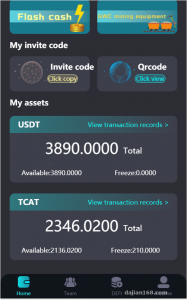
- Agent dashboard: shows team size, total task rewards, commission history and withdrawal records.
2. Recommended Architecture
The commission layer is usually a set of tables on top of the existing order-grabbing backend. You need a user relationship table, a wallet log table and a commission record table. Redis is useful for real-time team statistics, but the actual commission calculation should be done in MySQL with transactions to prevent double payouts. The frontend dashboard is typically a Vue or H5 admin panel.
3. Configuration Steps
- Define the number of levels and the percentage for each level. Keep the total percentage low enough to preserve platform margin.
- Decide whether commission is calculated from the task reward, the platform fee or the net profit.
- Set the minimum withdrawal amount and the settlement cycle. Faster cycles attract more agents but increase administrative work.
- Enable the agent dashboard and grant agents read-only access to their own team data.
- Run a test scenario with a small agent tree and verify that every commission is recorded correctly in the wallet log.
4. Common Pitfalls
4.1 Circular invitation loops
A user might accidentally or maliciously set a descendant as their own referrer, creating a loop. Add a check during invitation registration that rejects any referrer ID already in the user’s downline tree.
4.2 Commission double payout
If the settlement script is not idempotent, running it twice can pay the same commission twice. Use a commission status field such as pending, processing and paid, and lock the rows during settlement.
4.3 Dashboard shows wrong team size
Real-time team counts can be off if the Redis cache is not invalidated when a new user joins. Invalidate the cache for every ancestor in the tree when a referral is recorded.
5. FAQ
Q1: How many levels should I allow?
Most platforms use two or three levels. More levels increase viral potential but also increase legal scrutiny and complexity.
Q2: Can agents also be users?
Yes. The same account can grab orders and earn commission from referrals. Make sure the two ledgers do not interfere.
Q3: How do I prevent agents from gaming the system?
Add activity checks, limit the commission for self-dealing accounts and monitor abnormal patterns such as many new accounts joining from the same device.
Compliance note: multi-level commission structures can be regulated as referral or network marketing programs. Verify the legal limits in your target markets and avoid structures that resemble illegal pyramid schemes.
#OrderGrabbingSystem #AgentCommission #MultiLevelDistribution #PassiveIncomePlatform #CommissionSettlement #AgentDashboard
-
 Alipay QR Code Scan
-
 WeChat Scan Pay