Wanghu Framework Card Game Demo System Setup: Dual-Currency (Coins + Room Vouchers) Deployment Notes
Wanghu Framework Card Game Demo System Setup: Dual-Currency (Coins + Room Vouchers) Deployment Notes
Disclaimer: This article is for technical education and demonstration only. It is not professional or financial advice. Any real-world deployment must comply with applicable laws and regulations.
I recently helped a client set up a card game demo platform in the style of a card league system, built on the classic Wanghu framework with a dual-currency model: coins plus room vouchers. Honestly, I’ve worked with quite a few of these older framework codebases, but this one packs in a surprisingly large number of game modules — a full thirteen-card series, Niu Niu-style point games, San Gong, and Zha Jin Hua-style simulated gameplay, all included. It works well as a technical demo and as practice material for secondary development. Below I’ve written up the deployment process and the pitfalls I ran into, to save anyone else some time.
Feature Testing: How the Dual Modes Actually Work
The core selling point of this system is that coins and room vouchers run on two parallel accounting systems. From my testing, coins use a global account system with unified settlement in the user center, while room vouchers are room-level consumable credentials — deducted on entry, refunded on exit. The logic lives in two separate tables, and the admin panel lets you configure which mode each game uses individually.
Game Module List
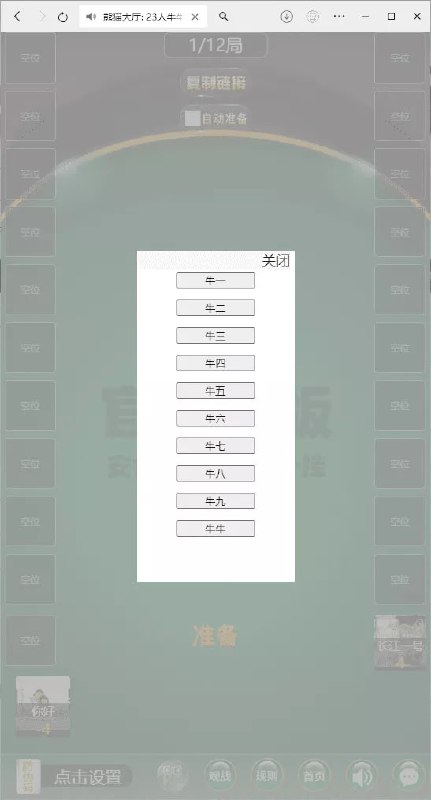
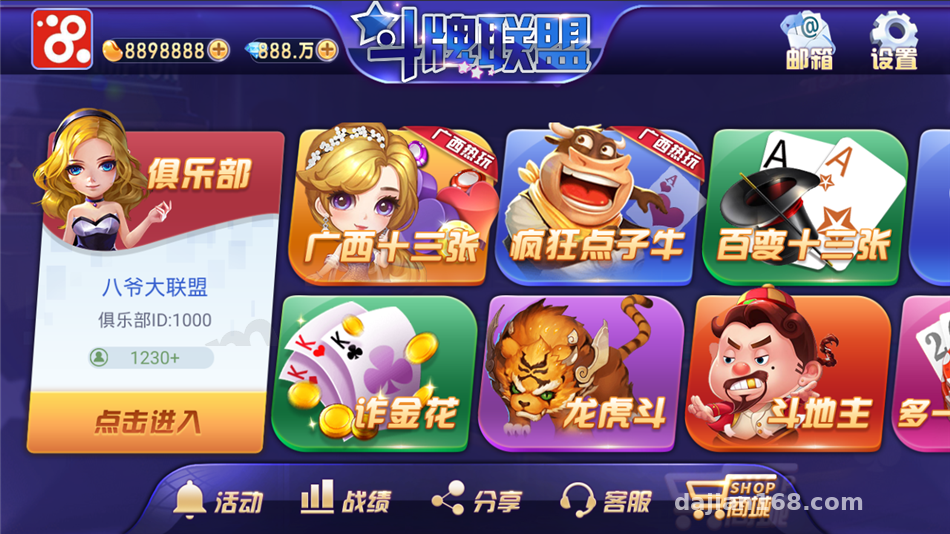
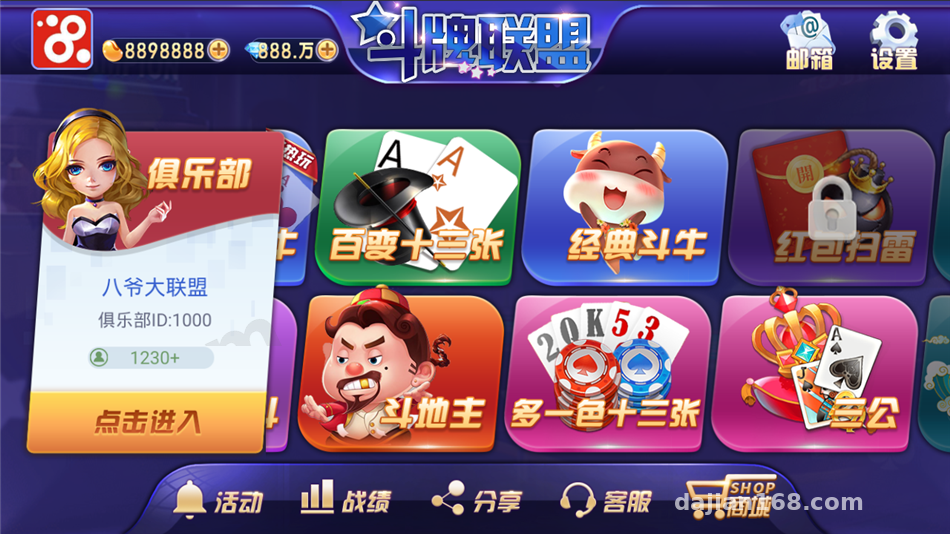
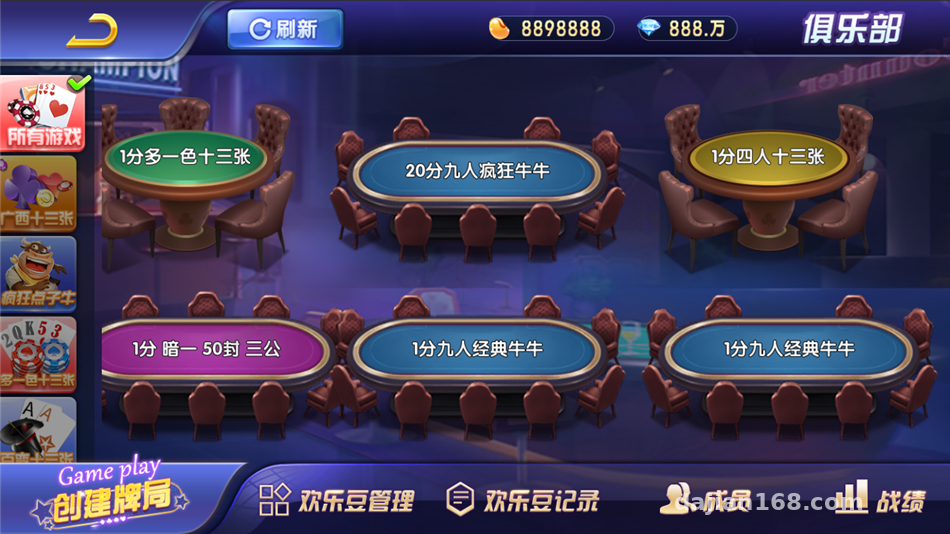
The modules visible in the admin game list include: Guangxi Thirteen Cards, Crazy Point Niu Niu, Variable Thirteen Cards, Classic Bull Fight, Extra-Card Thirteen Cards, San Gong, Dragon-Tiger Half, and a card simulation simulation. Each module runs as an independent game server process, with its own port and database prefix in the config files. This is very friendly for later secondary development — modifying one game doesn’t affect the other modules.
Admin Panel Testing
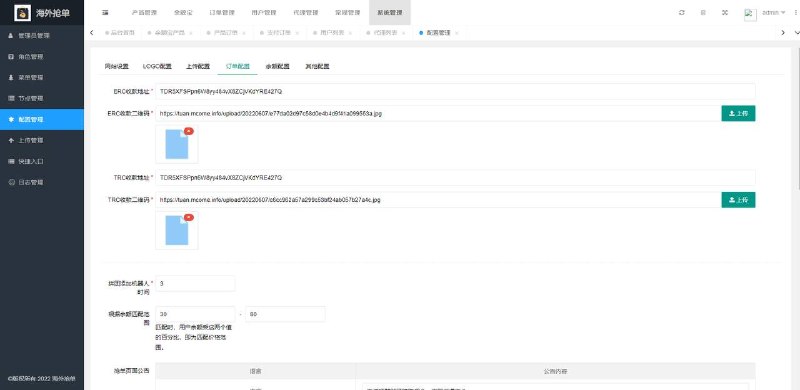
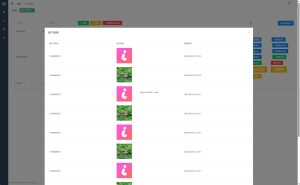
The admin backend is a classic ASPX structure, with clearly organized sections: member management, game configuration, room management, data statistics, and an announcement system. I focused on the room configuration section — you can set base scores, entry thresholds, and seat counts, and the parameter granularity is fine enough. Data statistics include daily reports and transaction log queries, which came in handy when troubleshooting.
Deployment Essentials: Environment and Pitfall Log
This is an older Windows-based architecture. My recommendation is to go straight to Windows Server 2012 R2 + SQL Server 2008 R2 + IIS. Don’t try to force it onto newer versions — the compatibility issues will multiply to the point of despair.
Step-by-Step
1. Restore the databases first — there are two: the main platform database and the game record database. Make sure the collation is set to Chinese_PRC_CI_AS, otherwise Chinese nicknames will show up garbled.
2. Create the IIS site pointing to the Web directory, and set the application pool to Classic mode, 32-bit. This is the most common pitfall with older frameworks.
3. Start each game server module individually, and update the database connection strings in each config file one by one.
4. Open the game port range in the firewall. I got stuck here for half an hour — the client just wouldn’t connect, and it turned out I hadn’t opened the full port range.
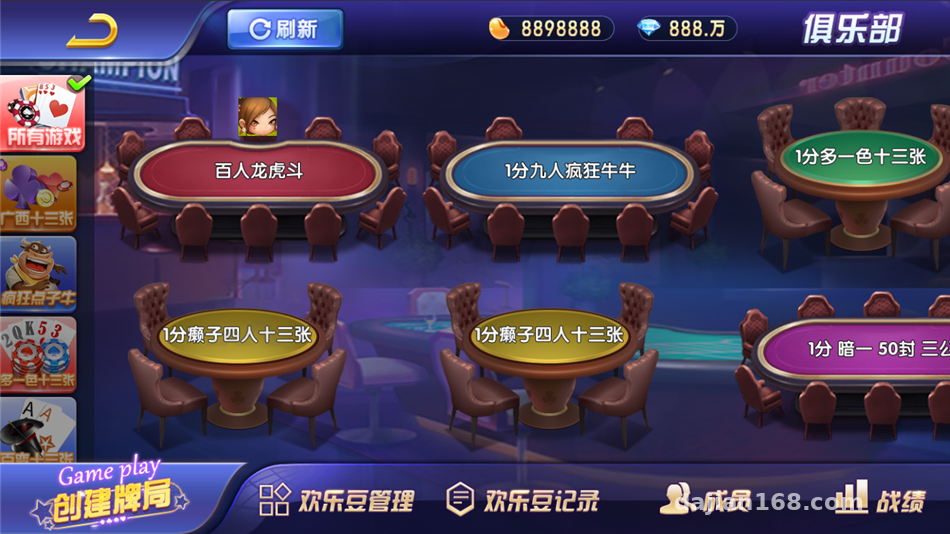
Highlight: the coin and room voucher dual modes can be mixed at the room level — the same game can use different currencies in different rooms. This design makes it very convenient for running promotional demo scenarios.
Secondary Development and Extensibility Assessment
The source code follows the classic Wanghu layered architecture: server logic, database scripts, client resources, and admin backend — four parts. To add a new game, you copy an existing module’s framework and modify the rules. The card simulation algorithms live in a shared library, so the modification cost is low. Client resources are packaged, so changing skins requires repackaging — that’s where most of the workload sits. A standard payment interface reel simulation is reserved, but for a demo environment I’d recommend using the simulated recharge channel only. Don’t hook up real payment — it saves headaches and keeps things compliant.
Multi-language and Mobile
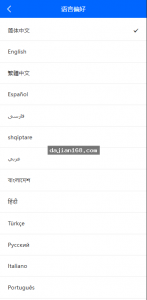
This build ships with Simplified Chinese only. Multi-language support means editing resource files yourself — not a small job. There’s no native mobile app; the setup is an H5 login page paired with the PC client. If you want a mobile version, that requires separate adaptation work, so budget for it and set expectations with the client early.
Who This Is For
First, developers who want to study the Wanghu framework’s structure — the code completeness here is good, making it a solid learning sample. Second, teams that need card game algorithm demos or random number logic for teaching. Third, client projects that require simulated game operations demos. If your goal is to launch something publicly, you’ll need to sort out compliance first — demo and educational use is the right way to use this codebase.
FAQ
Q: Are the server requirements high?
A: Not really. 4 cores and 8GB RAM will run all modules. The main bottleneck is bandwidth — 5Mbps is enough for a demo environment.
Q: The client can’t connect to the server. What should I do?
A: Nine times out of ten it’s firewall ports not fully opened, or the IP in the server config set to an internal address. Check each game module’s port configuration one by one.
Q: Can I switch to coins-only mode?
A: Yes. Turn off the room voucher option in the admin game configuration and clean out the related tables. Just remember to back up the database fully before making changes.
Q: What if database restore throws an error?
A: Check the SQL Server version and collation, and verify disk path permissions — the IIS application pool account needs read/write access to the database directory.
Disclaimer: This article is for technical education only, sharing deployment experience. The related source code is intended solely for lawful technical study and teaching demonstrations. Users must comply with applicable laws and regulations, and bear full responsibility for their own use.
Disclaimer: This article is for technical education and demonstration only. It is not professional or financial advice. Any real-world deployment must comply with applicable laws and regulations.
#Wanghu Framework #Source Code Setup #Game Server #Deployment Notes #System Demo
-
 Alipay QR Code Scan
-
 WeChat Scan Pay