Payment Gateway Integration & Cashier System Build Log: Multi-Channel USDT Sandbox Demo Platform Deployment Notes
Payment Gateway Integration & Cashier System Build Log: Multi-Channel USDT Sandbox Demo Platform Deployment Notes
Disclaimer: This article is for technical education and demonstration only. It is not professional or financial advice. Any real-world deployment must comply with applicable laws and regulations.
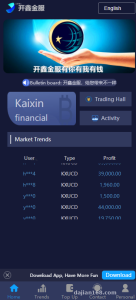
I recently helped a client deploy a USDT-based sandbox demo cashier system. It uses a front-end/back-end separated architecture, with the front end written in uniapp that compiles into both H5 and App versions, plus a backend with nine-language switching. After two-plus days of tinkering and hitting plenty of pitfalls, I’m documenting the deployment process and my hands-on findings for anyone who might need it. To be clear up front: I only use this for technical demos and sandbox environment validation, in compliance with applicable laws and regulations, and it must not be used for anything unlawful.
Hands-On Testing: What This System Can Actually Do
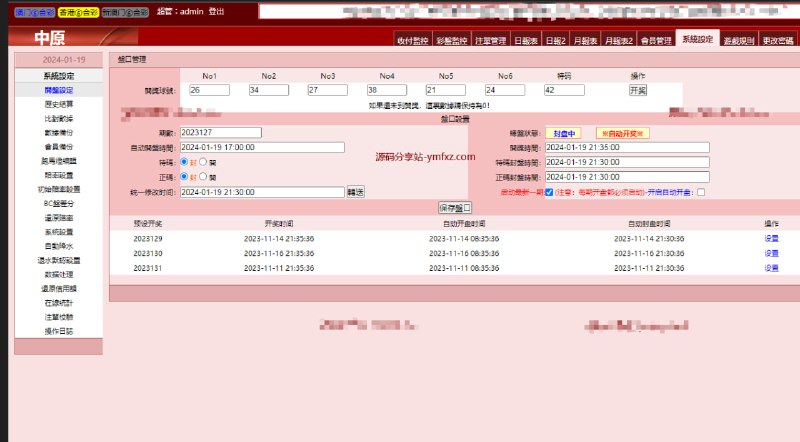
The core of the whole system is a digital asset demo platform that works with USDT on-chain data. The backend lets you configure a receiving wallet address and keys, and after a one-click startup script runs, it automatically monitors on-chain transfer records, using block hashes as the data source for random-number demos. In plain terms, it uses the unpredictability of the blockchain as a seed for probability simulation — an approach that’s actually pretty common in the technical community.
The Logic Behind the Four Demo Modules
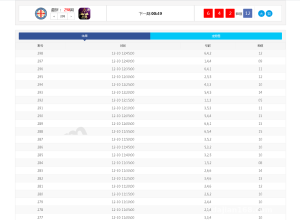
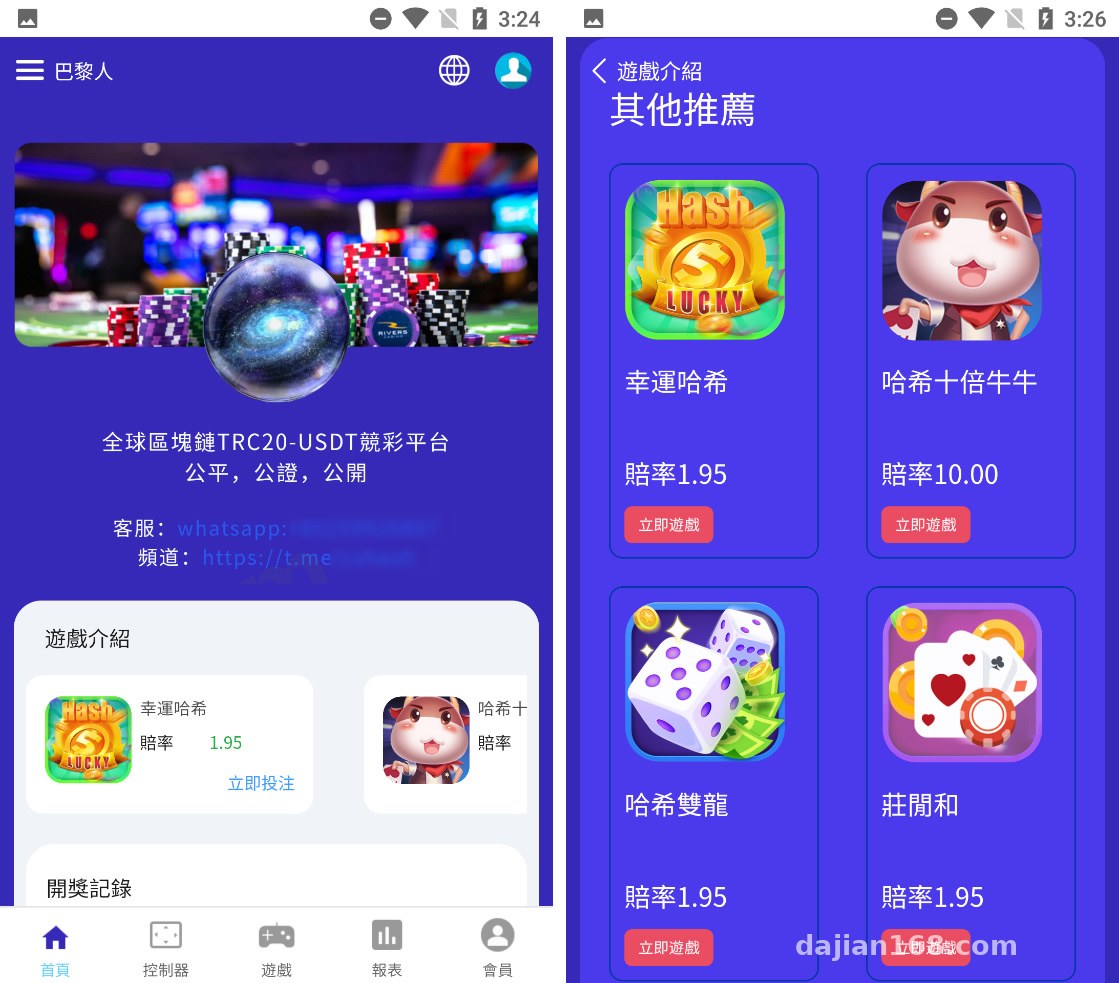
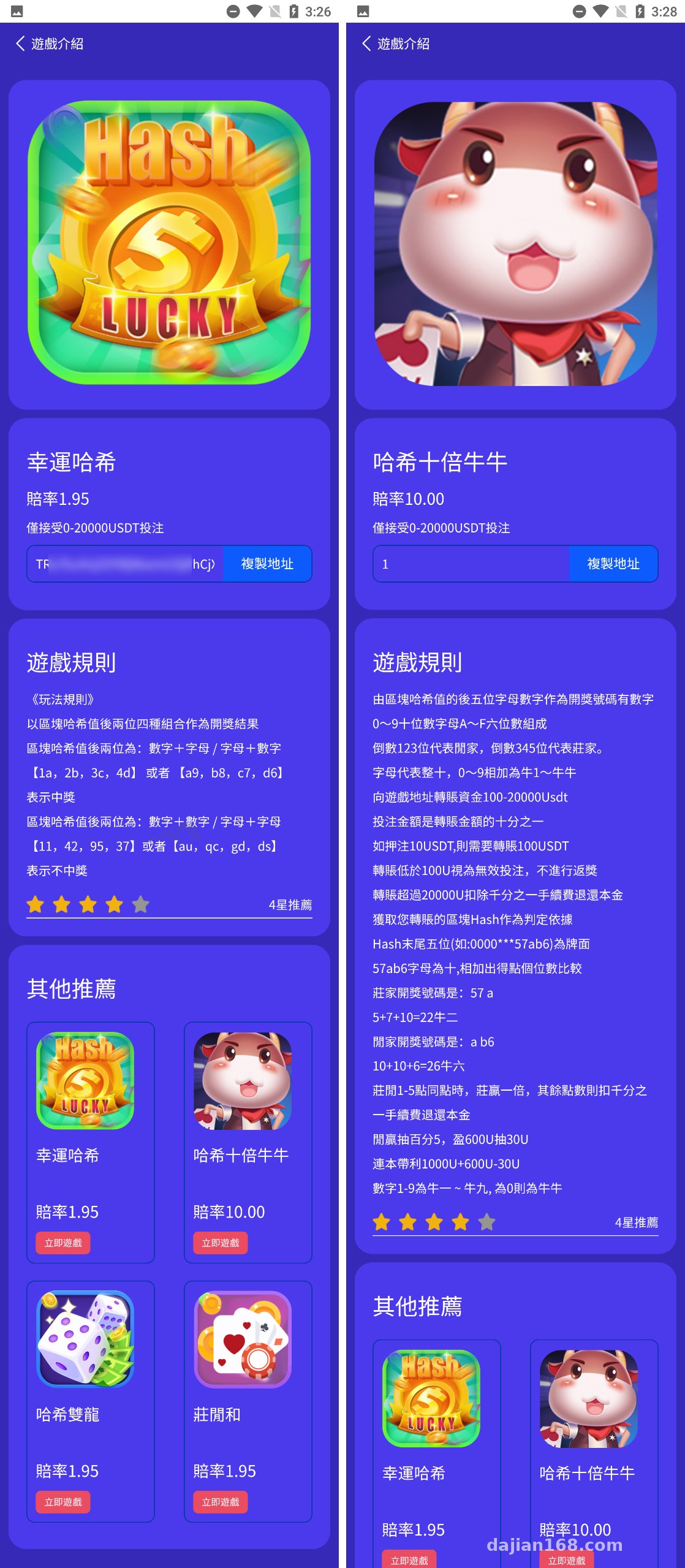
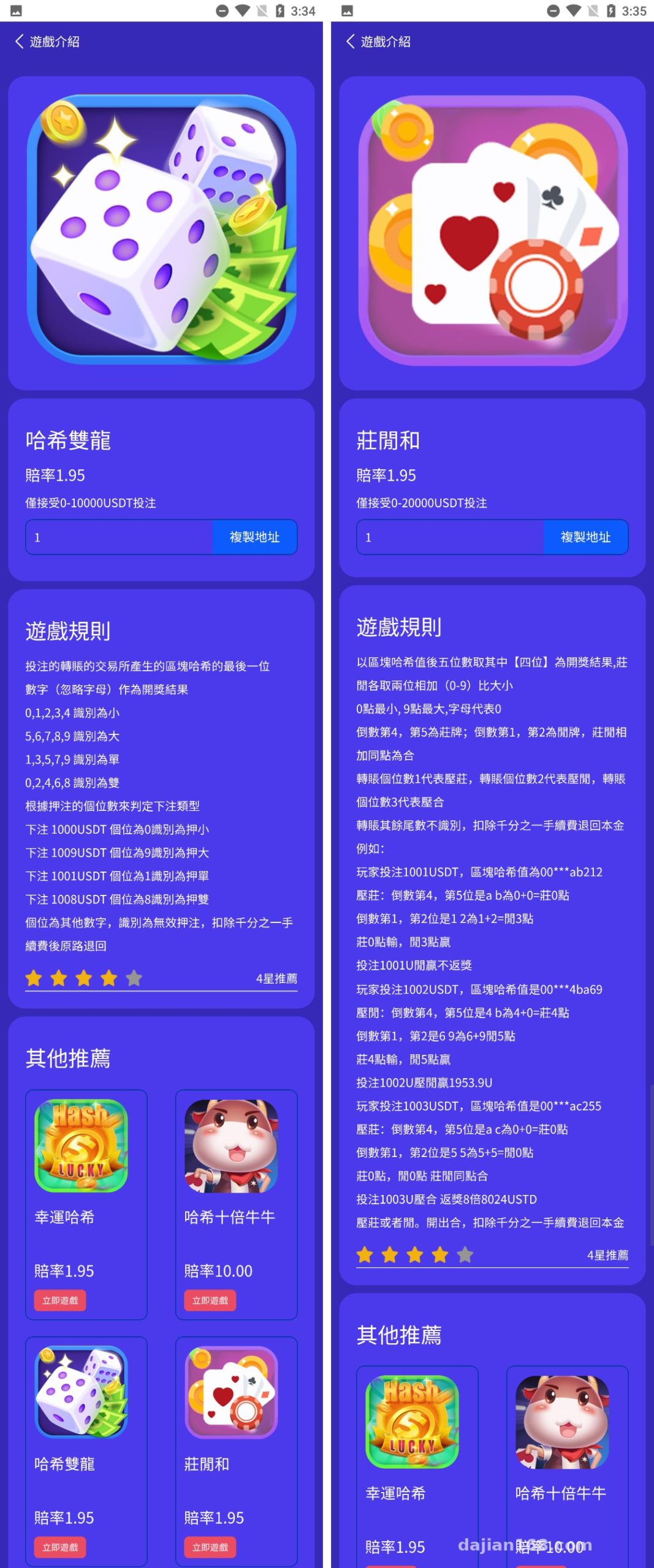
The system ships with four demo modules: Lucky Hash, Hash Bull King, Hash Twin Dragons, and Banker-Player Tie. Let me use Lucky Hash to explain the underlying logic: in the demo environment, a user submits simulated funds of 10–20,000 USDT, and the system grabs the hash of the block containing that transfer as the decision basis. If the last two characters of the hash happen to be a digit-plus-letter combination, it returns simulated points at a 1.95x rate. For example, with 100 simulated USDT, if the block hash ends in F1, the system credits 195 simulated points to the corresponding account. The whole process is fully automated — the script polls on-chain data with latency around 10 seconds, which held up well in my testing.
The other three modules work similarly, all using different digits of the block hash for their decision rules; the only differences are the payout multipliers and decision conditions. The backend lets you toggle each module independently and adjust multiplier parameters, which is very friendly for secondary development.
Agent and Distribution System
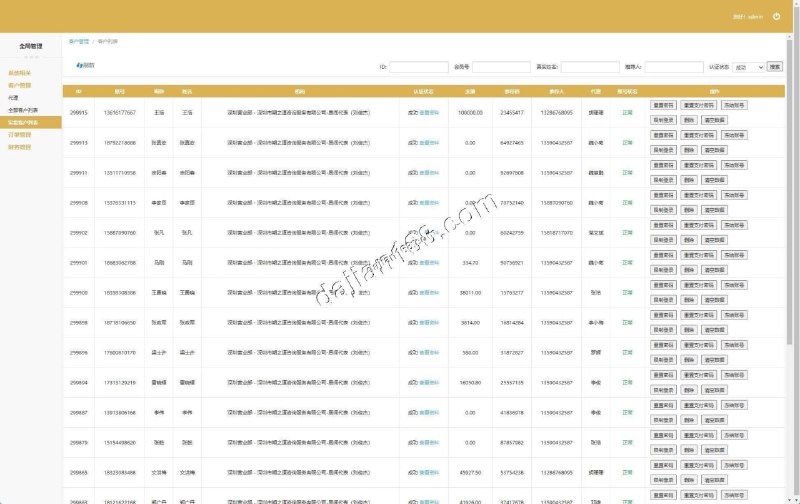
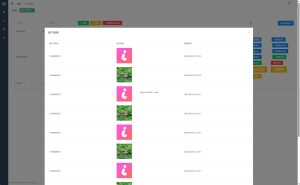
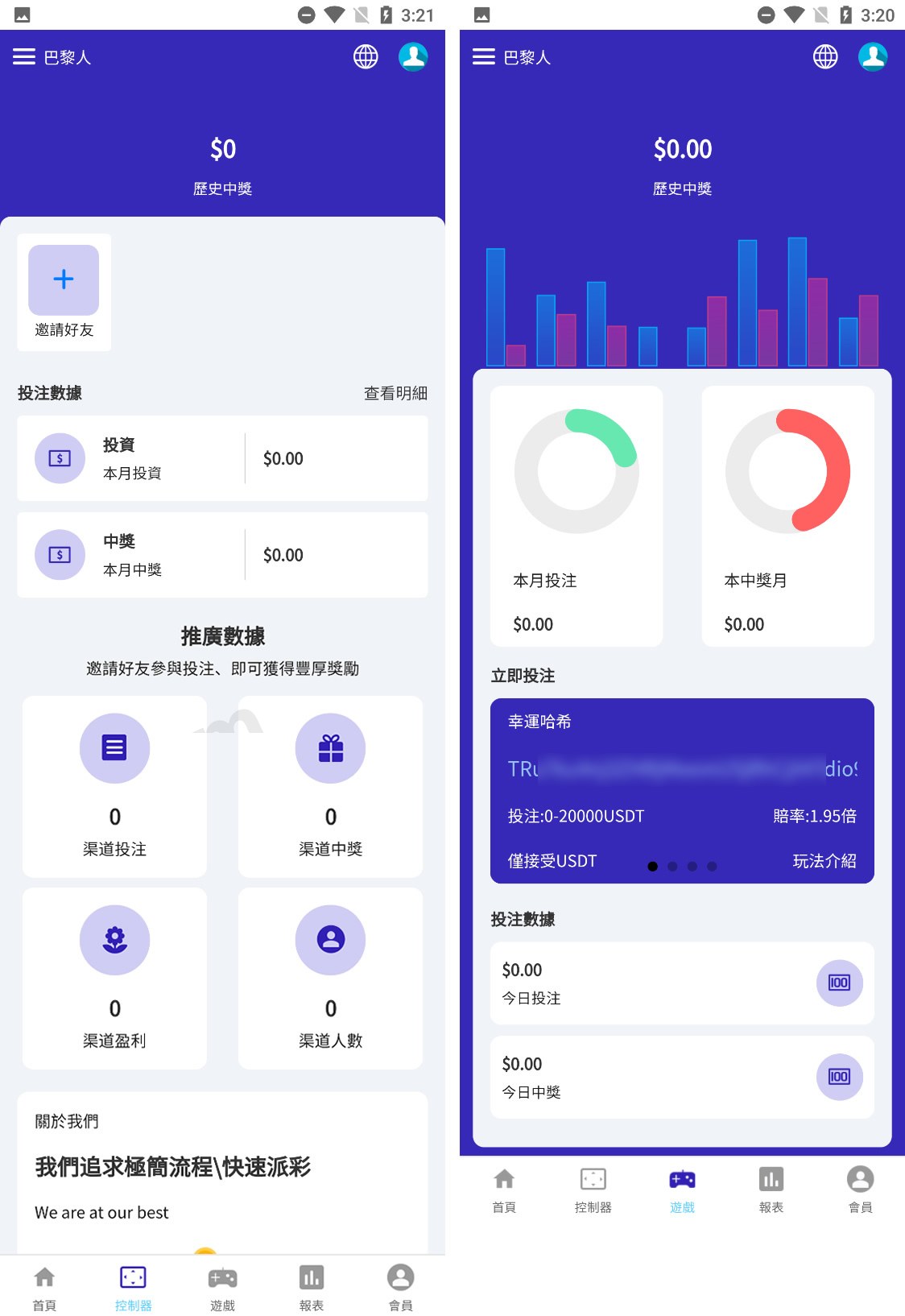
The backend includes an open agent program and a three-tier distribution structure. Users generate their own invite links, and when downlines generate simulated transaction volume, uplines receive rebates proportionally. Rebate rates are configured by tier in the backend, and settlement cycles can be set to real-time or daily. I tested the distribution calculation chain myself — make sure the three tiers’ percentages combined don’t exceed the gross margin on volume, or your demo data will run at a growing loss. Do that math in advance.
Deployment Essentials: The Full Flow from Environment to Compilation
Environment Prep
I started with a 2-core 4G server running CentOS 7.9, with Nginx, MySQL 5.7, and PHP 7.4 installed (or a Node environment, depending on the backend version). The BaoTa panel saves a lot of hassle, but note that PHP needs the fileinfo and redis extensions, or the backend captcha and caching will throw errors.
One-Click Startup Script
The source code includes a startup script for automatic transfer collection — essentially a resident process that polls the node’s JSON-RPC interface to pull block data. My first pitfall: the public node the script uses by default has strict rate limiting, and it disconnected after half an hour of running. The fix is to set up your own light node or buy a stable RPC service and put the node address into the config file — stability improves dramatically. The second pitfall was time zones: the server clock wasn’t synced to UTC, so block heights didn’t match and collection dropped records. Installing an NTP service to sync time solved it.
Compiling H5 and App with uniapp
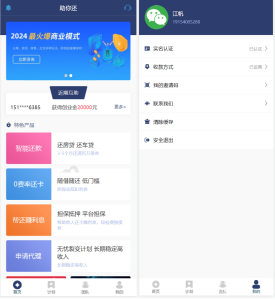
Open the front end in HBuilderX, update the app identifier in manifest.json, then publish the H5 build directly; for the App version, either cloud packaging or offline packaging works. The copy for all nine languages lives in JSON files under the locales directory — to add a language, just duplicate a file and translate it; the front end detects it automatically. One heads-up: when listing the App in app stores, the digital asset demo category faces fairly strict review, so adjust feature descriptions and screenshots per each platform’s requirements.
Backend Wallet and Security Configuration
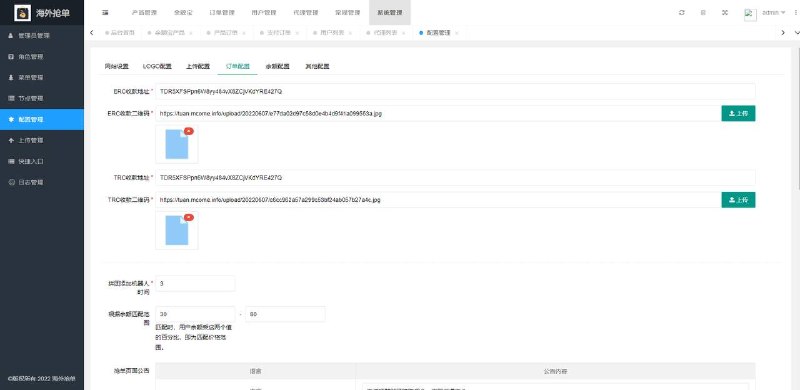
For setting the payout wallet address and private key in the backend, I strongly recommend proper permission isolation: enable two-factor authentication for admin accounts and store private-key operation logs in a separate table. Also, only open necessary ports on the server firewall, and change the default backend path. These are all basics, but some people launch with everything exposed to save effort — getting scanned is only a matter of time.
Customization Suggestions: What’s Worth Changing
The code structure is overall clean — uniapp front end plus a conventional MVC backend, with fairly complete comments. If you plan to customize it, I’d suggest starting from these directions: first, integrate your own payment gateway, replacing USDT top-ups with multi-channel payment gateway integration through a proper cashier system channel — get it running in the sandbox before production; second, swap the probability simulation module’s data source from block hashes to your own random number service, making it easier to build compliant demo scenarios; third, the distribution system can be converted into a task distribution model, where users earn points by completing promotion tasks — much cleaner logic.
Highlight: one-click startup script + nine languages + dual H5/App compilation — the biggest value of this architecture is its low cost of customization. Swapping the demo modules for task distribution or market data simulation scenarios takes roughly a week of work.
Who This Is For
It suits developers with a PHP or Node background who want to study blockchain data collection and payment gateway integration, as well as teams needing a multi-language cashier system prototype. Complete beginners shouldn’t jump straight in — just environment setup and node integration can stall you for two days.
FAQ
Q: What’s the minimum server configuration?
A: 2 cores and 4G will run it, but I recommend deploying the collection script and web service separately; 4 cores and 8G is more stable once traffic grows. Leave 50G+ of disk for the database — the log tables grow fast.
Q: Can I add my own languages beyond the nine?
A: Yes. Language packs are all JSON files — duplicate one, translate it, drop it in, and add a record to the backend language list. No front-end code changes needed.
Q: What tools are needed to build the App?
A: HBuilderX cloud packaging is the easiest, though it requires a developer account registration; offline packaging needs Android Studio and the matching SDK — expect about half a day to get it running the first time.
Q: The collection script keeps disconnecting — what do I do?
A: Nine times out of ten it’s public RPC node rate limiting. Switch to a self-hosted node or a paid RPC service, add reconnection logic, and in my testing it can run stably for over a week without dropping.
One last reminder: this article is a technical deployment record only. All features are for sandbox demos and learning/research purposes, in compliance with laws and regulations, and must not be used for anything unlawful. Questions are welcome in the comments — I reply to everything I see.
Disclaimer: This article is for technical education and demonstration only. It is not professional or financial advice. Any real-world deployment must comply with applicable laws and regulations.
#payment gateway integration #cashier system #USDT demo #uniapp #source code deployment
-
 Alipay QR Code Scan
-
 WeChat Scan Pay