Card Game Simulation System Setup Guide: Deploying a Multi-Module Demo Platform with Backend Configuration Notes
Card Game Simulation System Setup Guide: Deploying a Multi-Module Demo Platform with Backend Configuration Notes
Disclaimer: This article is for technical education and demonstration only. It is not professional or financial advice. Any real-world deployment must comply with applicable laws and regulations.
I recently helped a friend who does tabletop game algorithm research deploy a complete multi-module card simulation demo platform, which came bundled with a Texas Hold’em module. In plain terms, it’s a card game simulation demo platform with four modules inside — a three-card game, a card-ranking game, a general card simulator, and Texas Hold’em — all with a full admin backend. It took me two days, so I’m writing down the pitfalls I hit to save some time for anyone who wants to work with this kind of system.
The Overall Architecture First
The first thing I did after getting the package was look at the directory structure. The front-end/back-end separation is decent: the server uses standard Socket long connections plus HTTP management endpoints, the admin panel is a traditional PHP backend, the database is MySQL, and Redis handles caching. The four game modules are each independent components, mounted through a unified dispatch layer — a smart design choice, since you can pull out and modify a single module during secondary development.

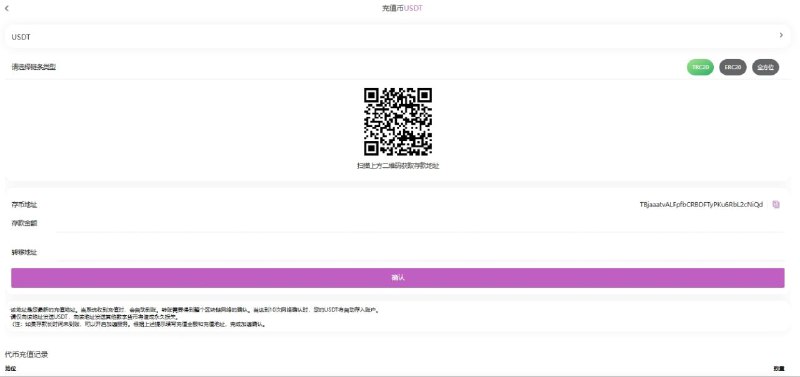
The package ships with a full operational configuration, meaning features like room management, member management, and data statistics in the backend are ready out of the box. I went through the backend menus and found roughly these sections:
Core Backend Features
· Member and permission management: tiered roles, with operation logs kept on record
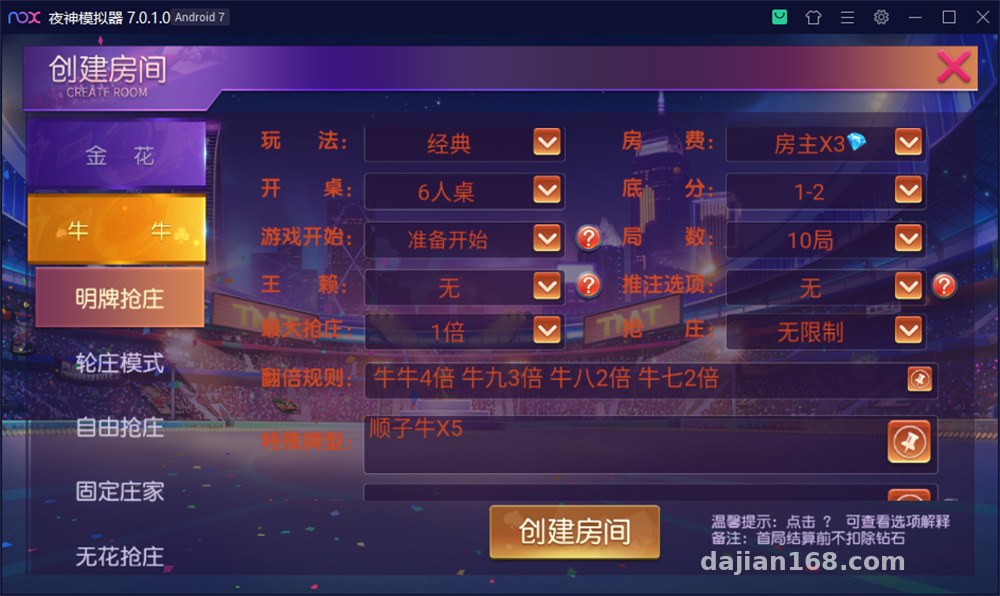
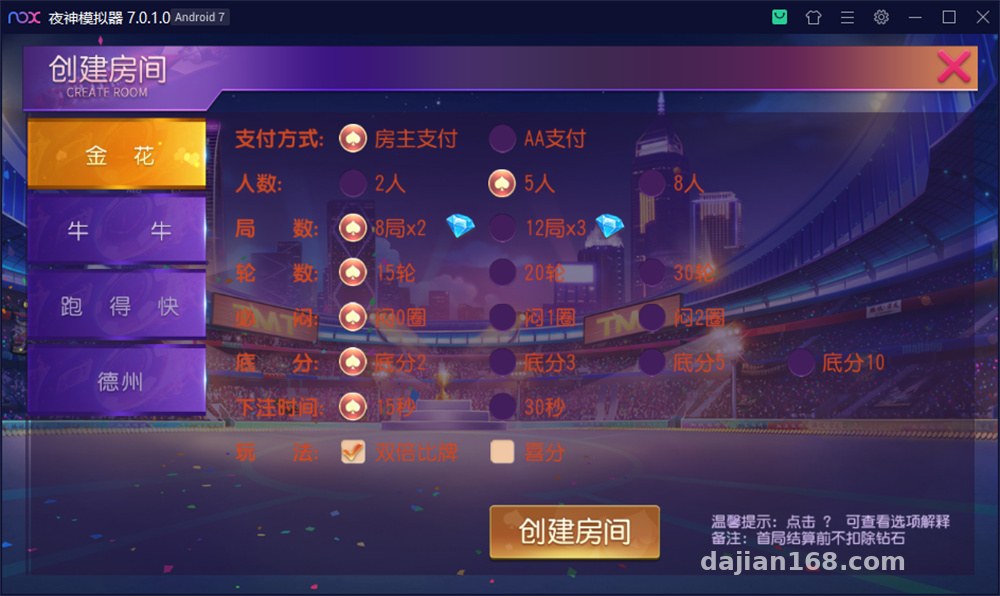
· Room and table configuration: rule parameters and random number seeds for each table can be adjusted in the backend — very convenient for algorithm demos
· Data dashboard: online counts, component call frequency, per-module usage stats
· Interface configuration: placeholder slots for payment and third-party login integrations, which can be disabled in a demo environment
Deployment Notes: Environment and Configuration Pitfalls
My environment was CentOS 7.9 + PHP 7.4 + MySQL 5.7 + Redis 6. Don’t ask me why not PHP 8 — this older component stack throws a pile of extension compatibility errors under 8.0, and it’s not worth the trouble.
Common Failure Points
1. The Socket service startup script has hardcoded paths. If you change directories, you must manually edit the service file, or the daemon won’t start.
2. The Redis password is configured in two separate files. Changing only one causes the components to fail connecting to the cache, and the error message is extremely vague — it took me nearly an hour to track down.
3. Watch the character set when importing the database. The source database is utf8mb4; if you create your local database with utf8, emoji nicknames in the game record tables will turn into garbled text.
Change the default admin credentials immediately on first login. The system ships with weak default passwords, and if you deploy on a public network, you must use a firewall to restrict the backend port to specific IPs — that’s a baseline requirement.
Hands-On Testing: How the Four Modules Perform
The hand-ranking logic in the three-card and card-ranking modules is written fairly cleanly. Random numbers use server-side seeds, and a reproducible mode can be enabled in the demo environment, which makes algorithm verification much easier. The Texas Hold’em module is more complex — it includes a turn-based state machine, chip settlement demos, and multi-table concurrency. I ran a load test: a single machine handled 2,000 long connections fairly stably, but beyond that you’d need to tune kernel parameters.
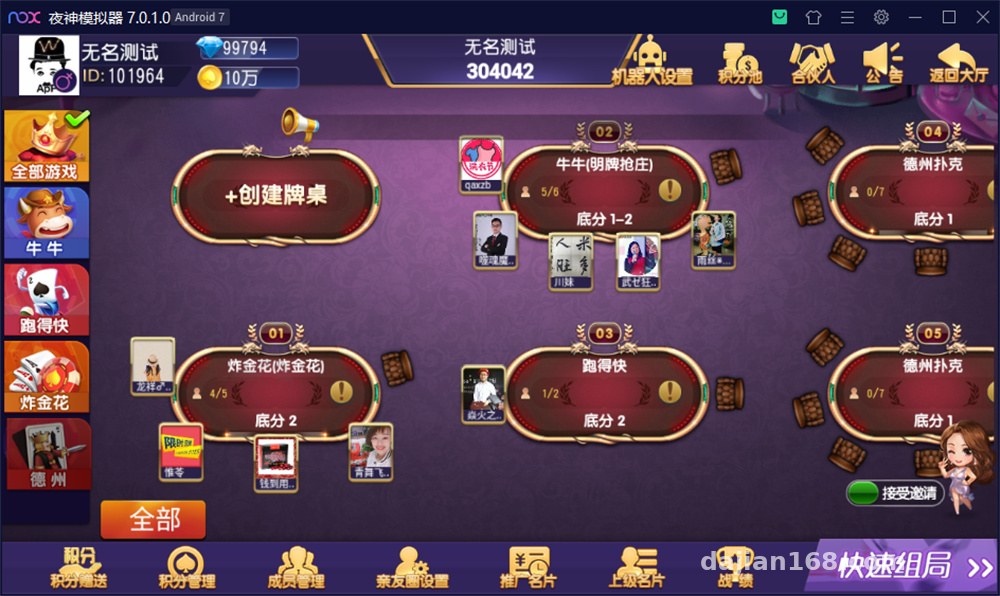
The general card simulator module is simpler — more like a universal card table framework, suitable as a base for secondary development with custom rules. The code comment coverage is average, but the structure is clear; a team with PHP fundamentals could get up to speed and start modifying it in two or three days.
Highlight: the dispatch layer supports hot-swappable modules — taking a single game component offline doesn’t affect the others, which is very useful for algorithm comparison demos or teaching scenarios. The built-in operation logging and random number seed management also save a lot of effort in environments that need reproducible experiments.
Who This Is For
· Developers studying card algorithms and probability simulation — the four modules will keep you busy for a while
· Teams building tabletop game teaching demos — rule parameters are configurable in the backend, so rule changes don’t require touching code
· Learners who want a real-world Socket long-connection case study — the communication layer code is worth reading
· Technical studios doing secondary development work — the componentized structure is delivery-friendly
FAQ
Q: What server specs does this system need?
A: A demo environment runs fine on 2 cores / 4 GB. For multi-table concurrent demos, start with 4 cores / 8 GB. Deploy the Socket service and MySQL separately if possible — database IO is the first bottleneck.
Q: How should the payment interface be handled?
A: The backend reserves a standard integration reel simulation. For a demo environment, it’s best to disable it and comment out the related routes. A pure card algorithm demo doesn’t need it at all, and leaving it off is also better for compliance.
Q: Can I add my own modules through secondary development?
A: Yes. Component registration in the dispatch layer is config-file driven. Copy the directory structure of an existing module, implement the required interface signatures, and the backend can mount your new component. I added a simple blackjack demo module in half a day.
Q: Does it work on mobile?
A: The package includes an H5 front end — the responsive design is mediocre. Android native source code is also included but needs to be compiled yourself. There’s no iOS build, so you’d have to handle signing on your own.
One last note: deploying this system isn’t hard in itself — the difficulty is in the details. Remember the three pitfalls — character set, the dual Redis config, and the Socket path — and you’ll avoid a lot of detours. This system is for card algorithm research and teaching demos only; please comply with all applicable laws and regulations when using it, and never use it for any unlawful purposes.
Disclaimer: This article is for technical education and demonstration only. It is not professional or financial advice. Any real-world deployment must comply with applicable laws and regulations.
#source code setup #card simulation #Texas Hold’em #deployment notes #secondary development
-
 Alipay QR Code Scan
-
 WeChat Scan Pay