Multi-Channel Payment Gateway Setup Walkthrough: Checkout API Integration and Backend Architecture
Multi-Channel Payment Gateway Setup Walkthrough: Checkout API Integration and Backend Architecture
Disclaimer: This article is for technical education and demonstration only. It is not professional or financial advice. Any real-world deployment must comply with applicable laws and regulations.
A friend running a digital resource site asked me to help deploy a payment gateway system recently. The back-and-forth took close to two weeks. On the surface the thing looks like nothing more than a payment aggregation dashboard, but underneath — from signature verification to callback handling, then multi-cloud storage and tiered membership — every layer could justify its own article. Here’s everything worth sharing from that build, for anyone else climbing the same walls.
1. Core Features Tested: What Can This System Actually Do
My friend’s initial ask was straightforward — could we get WeChat Pay, Alipay, and a third-party checkout channel all sitting inside one backend. I hadn’t seriously studied this kind of aggregation architecture before either, and once the deployment was done I realized the rabbit hole runs deep. Below is the full list of features I verified in production.
1.1 Multi-Channel Payment APIs Running Side by Side
The backend hooks WeChat H5, Alipay web payment, and one third-party checkout channel simultaneously, all sharing the same order ID space. The user picks a channel on the checkout page, the system posts the order through the matching API, and after the payment completes the callback hits a unified notification URL. There’s a detail worth flagging here: the third-party channel’s signature algorithm is completely different from WeChat and Alipay’s, so I built a dedicated adapter layer to bridge them. Without it the callback verification step was throwing errors every few minutes.

1.2 Dynamic Billing Rules
The system calculates deduction points automatically based on resource size and whether cloud storage is enabled. A 50 MB resource package going through local storage costs 5 points; the same package routed through Aliyun OSS costs 8. Rules can be adjusted live from the backend without touching code. Operations folks will appreciate this — no more redeploy every time pricing changes.
1.3 Multi-Language and Multi-Template Support
The template engine uses a three-tier template directory layout, with separate sets for Simplified Chinese, Traditional Chinese, and English. Switching languages doesn’t only translate the strings — date formats and currency symbols update as well. Frontend template files use TPL tag syntax, and backend translation files sit under the language directory. Adding a new locale means duplicating the translation file and editing the fields.
Heads-up: The trickiest part of multi-language support isn’t the translation itself — it’s character encoding. Before going live, double-check the database connection uses utf8mb4, otherwise Traditional Chinese strings with emoji or special characters will silently turn into question marks.
1.4 Multi-Cloud Storage Switching
The storage backend supports local, Qiniu Cloud, and Aliyun OSS — all three modes are configured and switched from the dashboard on the fly. From my friend’s testing, OSS gave the most stable download speeds, while local storage made more sense during small-scale testing to keep costs down. Switching storage types doesn’t require migrating existing data. New uploads go to whatever storage is currently configured, and historical assets stay where they were originally placed.
2. Deployment Notes: I’ve Already Stepped on These
2.1 PHP Version and Extensions
The system runs on PHP 7.4, and the extension list is short: cURL, OpenSSL, fileinfo, zip, mbstring. One weird bug bit me during deployment — Alipay signature verification kept failing. Turned out the OpenSSL version was too old; upgrading to 1.1.1 fixed it. Worth auditing extension versions across the board before going live.
2.2 Payment Callback Security
Each of the three payment channels got its own signature verification on the callback endpoint. WeChat uses v3 RSA verification, Alipay uses RSA2, and the third-party channel uses MD5 with a custom token. The callback script verifies the signature first, then processes the business logic — failed verification returns 403 immediately. Even if someone manages to forge a callback, they can’t reach the business layer.
2.3 Member Tier and Permission System
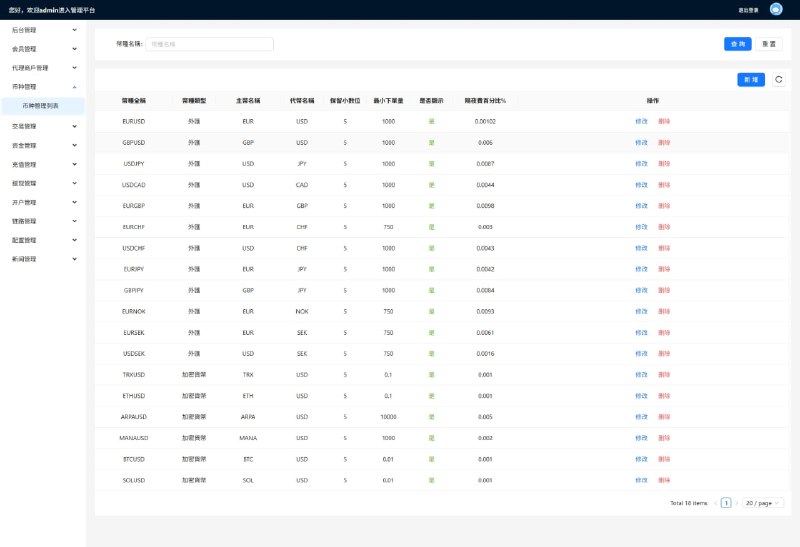
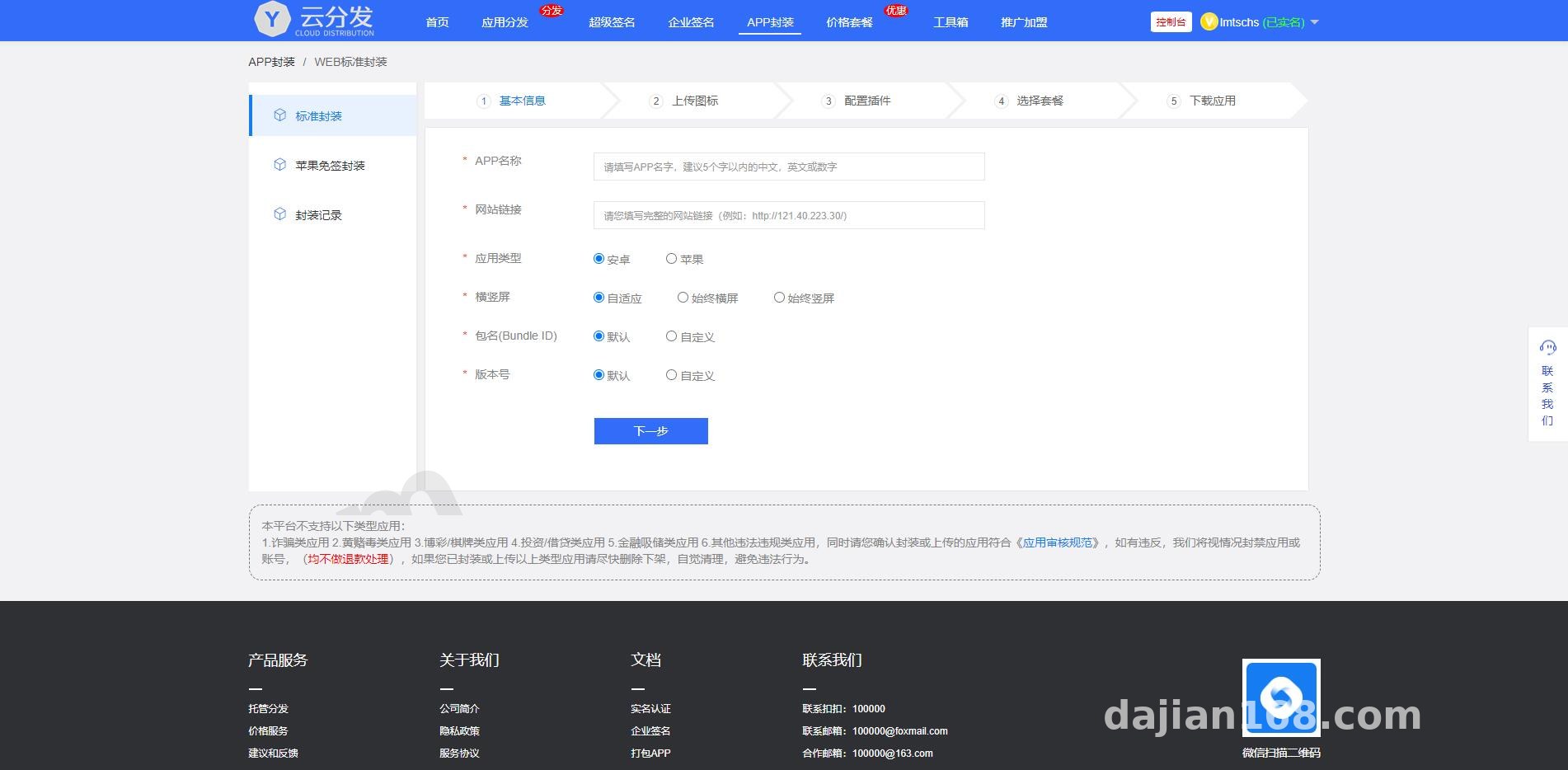
The system ships with member tier configuration out of the box. Each tier controls storage capacity, ad reel simulation visibility, and the maximum upload file size. None of these rules are hardcoded — everything lives in the database. I also added a secondary member panel page showing account balance, recharge history, transaction records, and a list of bound domains. The bound domain feature is especially handy for site owners — it effectively gives each member their own portal.
2.4 Data Statistics and Version Management
The backend home page has a dashboard refreshing in real time with daily visits, download counts, and payment totals. The version management module supports uploading multiple historical versions of the same resource, and the download page lets users pick which version to pull. This feature sounds minor until you actually run a resource site — people regularly need older versions, and it saves a lot of support tickets.
3. Suitable Users and Deployment Recommendations
This system fits site owners with digital resources who need a paid distribution setup. If the total resource count stays under a few thousand, a single 4-core 8 GB server handles several thousand daily downloads comfortably. Once traffic grows, then it’s worth adding OSS and CDN — no need to over-spec from day one.
On the customization side, the payment adapter layer, storage driver layer, and template engine are all properly abstracted. Adding a new payment channel or storage backend only means implementing the relevant interface. The codebase isn’t complicated, so a developer with PHP basics should pick it up quickly.
Frequently Asked Questions
Q: Does the payment callback URL need to be on a registered domain?
A: WeChat and Alipay require the callback URL to use HTTPS on a properly registered domain. Local testing can rely on intranet penetration tools for temporary debugging, but that won’t work for production environments long term.
Q: Does switching languages affect existing database content?
A: No. Language switching only affects frontend display strings and date formats. Database content stays universal, and switching language leaves all data rendering normally.
Q: Can OSS storage and local storage be used together?
A: Yes. Each resource entry can have its own storage type set. The backend list shows the current storage location of each asset, and the built-in migration script handles bulk transfers when you need to move things around.
Q: How quickly do member tier rule changes take effect?
A: Immediately. Rule edits write directly to the database, and the user’s next request runs against the new rules — no service restart or cache clear required.
Q: What are typical fees for third-party checkout channels?
A: Rates vary widely between third-party channels, generally somewhere between 1% and 2.5%. Exact numbers depend on negotiations with the channel’s business team. I don’t recommend any specific channel here — site owners should compare options themselves.
Disclaimer: This article is intended purely as a technical demonstration and experience share for building payment checkout systems. All content is based on lawful, compliant technical architecture discussion and follows applicable laws and regulations. Any illegal or non-compliant use is strictly prohibited.
Disclaimer: This article is for technical education and demonstration only. It is not professional or financial advice. Any real-world deployment must comply with applicable laws and regulations.
#payment gateway #checkout system #payment API integration #build walkthrough #multi-cloud storage
-
 Alipay QR Code Scan
-
 WeChat Scan Pay