Building a New-UI Overseas Hotel Order-Taking System with uniapp: A Practical Record
Building a New-UI Overseas Hotel Order-Taking System with uniapp: A Practical Record
Recently I helped a client running an overseas-market business deploy a hotel order-taking system. The frontend uses uniapp and the backend is PHP, with the overall UI redesigned from the ground up. The client mainly handles hotel booking services in several Southeast Asian countries. Their previous order-taking system was constantly flagged by risk controls, and after switching to this new build, the feedback on order-locking and continuous-order stability has been quite positive. In this article, I’ll walk through the pitfalls encountered during deployment and break down the key features, as a reference for anyone with similar needs.
I. System Feature Walkthrough
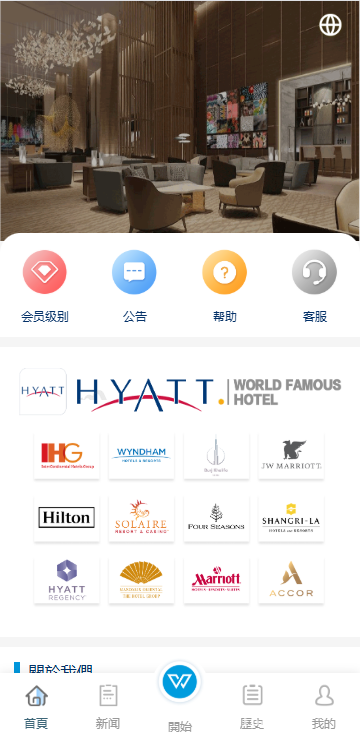
The source code package delivered was fairly complete. The uniapp frontend project can be compiled directly to H5 or packaged as an APP, while the PHP backend runs on the ThinkPHP framework with a clear directory structure and low customization cost. Let me list the core features:
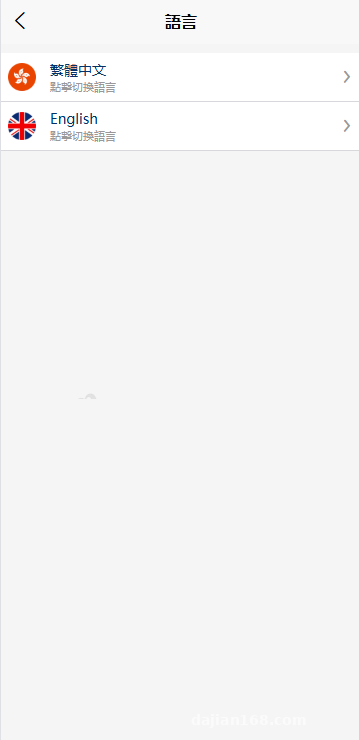
1. Multi-Language Switching
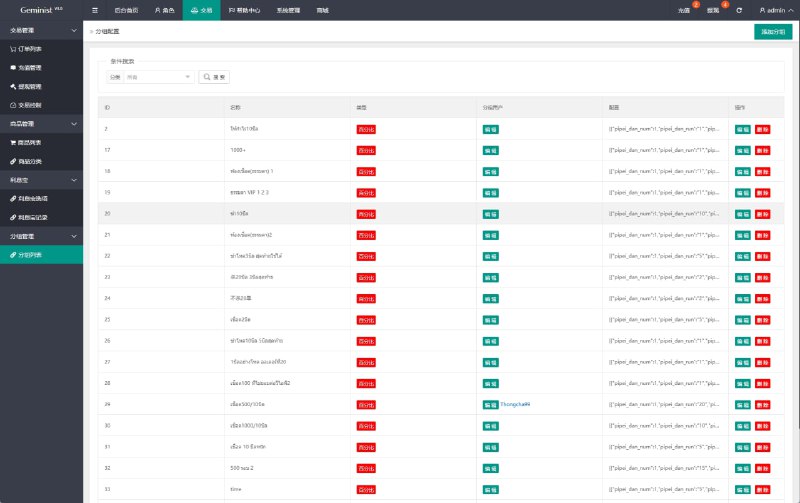
The system comes with built-in multi-language packs, defaulting to Chinese and English. My client asked me to add Thai and Vietnamese as well. The language files are independent JSON files and can be added directly through the backend’s language management panel—no code changes required. The multi-language switching takes effect globally, covering product titles, order-status text, prompts, and more.
2. Welfare Orders and Commission Multipliers
Compared to the older version, the new build adds a “Welfare Order” module with independently configurable commission multipliers. For example, regular orders pay 1x commission, while welfare orders can be set to 2x or 3x. When members take orders, they automatically see a dedicated welfare-order section, which also has higher priority than regular orders. The logic for this lives in the order-dispatch code and is written fairly clearly.
3. Order-Locking and Continuous-Order Mechanism
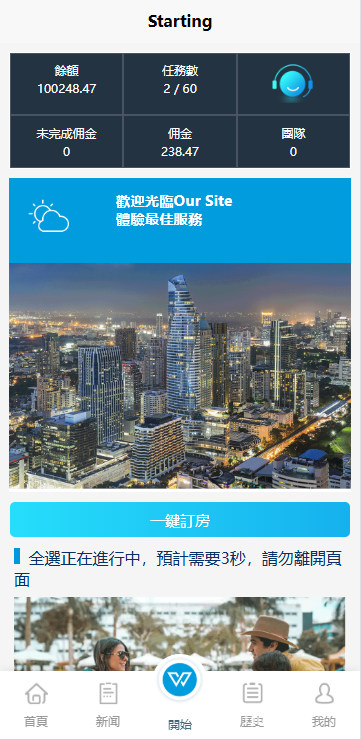
This is the feature the client cared about most. The system supports continuous orders: after a member completes one order, the next is automatically dispatched without returning to the list to grab again. Order-locking, on the other hand, allows a task to be paused and held for a set period during processing, preventing others from grabbing it. The lock duration and maximum number of continuous orders can both be configured in the backend.
4. Order-Grabbing Hall and Task Dispatch
The order-grabbing hall is built with uniapp on the frontend, featuring both pull-to-refresh and pull-up loading. Real-time performance is decent, with order status updates delivered through polling combined with long-connection push. The backend can control the grabbing speed and limit how many orders each member can accept per day. The member list page includes filtering and search, making it easy to locate a specific member.
II. Deployment Essentials and Pitfalls
I recommend PHP 7.4 or above for the deployment environment; I used 8.0 and it ran very smoothly. MySQL 5.7 also works, but with 8.0 you need to pay attention to the character set. Nginx 1.18 + PHP-FPM is the standard combination.
1. Database and Cache
After importing the SQL, remember to update the database configuration in the config file. Redis is a must—the task queue for the order-grabbing hall runs on Redis lists, and without it, the system will choke under high concurrency. When I first tested without Redis, thirty people grabbing orders simultaneously froze the system entirely. After installing it, five hundred concurrent users posed no problem.
2. Scheduled Tasks
The system has several crontab scheduled tasks to configure, such as automatic order-timeout release, fund settlement, and commission crediting. A ready-made crontab file is included in the source code—just follow it as-is. Pay attention to the time zone: for overseas business, it’s advisable to change the server’s time zone to the target market’s time zone.
3. Payment Interface Integration
The source code reserves a default spot for the payment interface, connecting to a standard fourth-party payment channel. If the client wants to use USDT or other overseas payment channels, simply add a new driver in the payment plugin directory—a standard interface is available in PayService. Make sure to configure the callback URL with HTTPS, otherwise signature verification will fail.
4. APP Packaging
Open the uniapp project directly in HBuilderX—cloud packaging or local packaging both work. The APP icon and splash screen can be changed in manifest.json, and the certificate can be self-generated or provided by the client. For overseas business, I recommend releasing both Android and iOS versions for broader coverage.

⚠️ Tip: Before deployment, be sure to change all APP_KEY and encryption keys in the config file. The default keys in the source code are public, and leaving them unchanged is essentially running naked. Also, change the default admin account and password immediately—ideally to a strong password of 16+ characters with special symbols.
III. Target Audience and Customization Suggestions
Honestly, this system is not for beginners. It requires a solid foundation in PHP and frontend development. Here are the types of users it suits best:
1. Studios already running overseas hotel, booking, or order-taking businesses that need a ready-made system to support operations
2. Developers who take on customization projects—the source code structure is clear and extension points are well prepared
3. Teams looking to self-host and operate a platform—the system includes built-in membership, commission, and settlement systems
Customization Suggestions
I customized two areas for my client: first, a member-tier system. The original version only had regular members and VIPs, so I added Gold and Diamond tiers, each with different commission multipliers and order-acceptance caps. Second, an order-acceptance statistics report. The original version only showed a simple order count, so I added a daily, weekly, and monthly summary chart using ECharts.
If budget allows, I recommend switching the order push to WebSocket—polling still eats up bandwidth during peak hours. On the payment side, the original version only supports one payment method; I’d suggest integrating two or three channels for redundancy, so a single channel failure won’t bring the entire business to a halt. Additionally, both SMS and email notifications are worth integrating. The client’s operations team reported that these two significantly reduced complaint rates.
Frequently Asked Questions
Q: Can the uniapp frontend be packaged directly into an APP and listed on app stores?
A: Yes. You can use HBuilderX’s cloud packaging or local packaging—just have your certificate ready. Android listing requires a software copyright and ICP filing, while iOS listing requires an overseas developer account. Detailed packaging steps are in the README document included with the source code—follow the steps and you’ll be fine. The free tier of cloud packaging has usage limits, so if you need to package frequently, go with local offline packaging.
Q: Which languages are currently supported? Can I add my own?
A: Chinese and English are supported by default. The language files are in independent JSON format, and you can add new language packs through the “Language Management” section in the backend—just fill in the translated copy and save to take effect. No code changes needed. I added Thai and Vietnamese for my client, and the switching worked smoothly in testing. Note that on the H5 frontend, you’ll need to clear the cache to see newly added languages.
Q: Do the order-locking and continuous-order features slow down the grabbing speed?
A: Order-locking is designed for stability, and continuous orders are designed for efficiency—the two don’t conflict. You can configure the parameters separately in the backend, for example, a maximum lock duration of 30 minutes and up to 5 continuous orders. With a well-optimized Redis queue, the order-grabbing hall can handle 500 concurrent users without lag. I recommend running a stress test before going live to establish your server’s performance baseline.
Q: Does the system support two-level distribution or multi-level commissions?
A: The original version only supports one-level direct referral commissions. When customizing for my client, I extended it to a three-level distribution system. This requires modifying the commission settlement table and the distribution relationship table, as well as adding logic to the settlement scheduled task. If you have this requirement after getting the source code, I recommend confirming your data structure before making changes, to avoid headaches with data migration later.
Overall, this system has a lot to work with. The redesigned UI is a significant step up from the older version, and the responsive experience of the uniapp frontend is smooth. If you’re technically inclined and looking for a hotel order-taking system source code that can run out of the box, this one is worth serious consideration. Once my client’s business is up and running, I’ll come back to share insights from the operational side.
#Order-Taking System #uniapp Source Code #Order Grabbing System #Overseas Hotel #PHP Development
-
 Alipay QR Code Scan
-
 WeChat Scan Pay