
Contact Information: To prevent loss, please remember this website: dajian168.com Telegram: @dajian168 Telegram Channel: @dajian168168 WhatsApp: +852 Line ID: dajian168 Skype: [email protected] Email: [email protected] [email protected] USDT-TRC20 Address: USDT-TRC20 Address 2: Avatar/Profile:...
- About Us
- 2024-06-29
- 2655

Honestly, when I first came across an overseas demo trading system, I had absolutely no idea what I was doing. A client approached me with a request for a multilingual demo trading system that could connect to futures trading sessions. The budget was limited, but the list of required features was long. I remember thinking, “This is going to be difficult.” After reviewing the solutions available on the market, most were either too expensive or did not fit the requirements, so I bit the bullet and built my own. Surprisingly, it ran very reliably. The core of this system is a decoupled frontend and backend architecture. The frontend was developed with uniapp and supports both iOS and Android, while the backend is implemented in PHP, making deployment very straightforward. What I was most pleased with was its multilingual support. Chinese, English, Thai, Vietnamese, and several other commonly used languages are included by default, and adding a less widely spoken language is straightforward through further customization. I. System Features in Detail This demo trading system is not an incomplete, half-baked product; it is a fully functional trading system. After I deployed it for the client, he immediately used it in several......
- Development Case Studies
- 2026-10-29
- 228
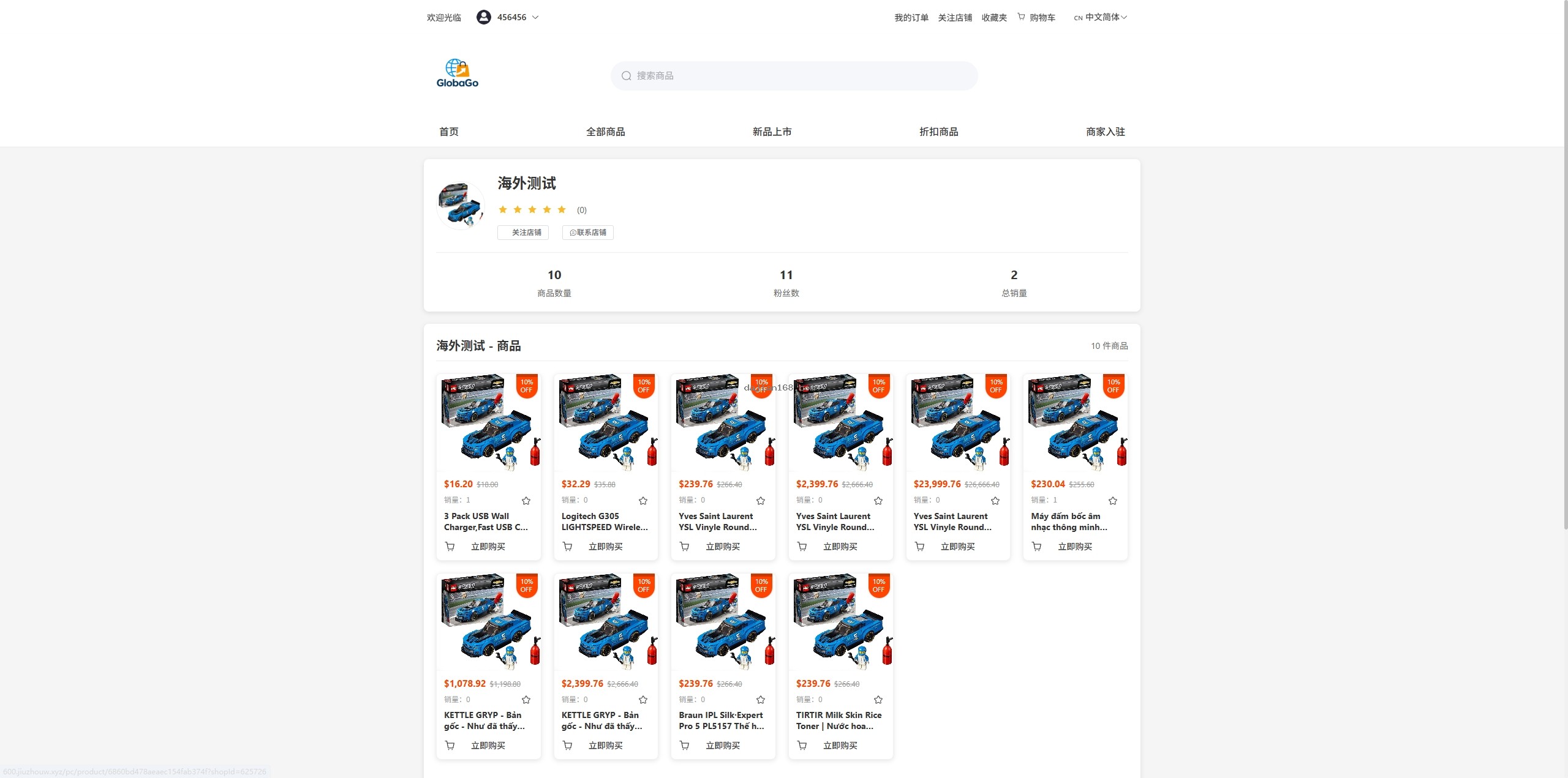
New Cross-Border E-Commerce System | Complete Deployment Guide: Multilingual Storefront + Merchant Onboarding + One-Click Product Listing Honestly, the first time I deployed this cross-border e-commerce system, its architectural complexity completely threw me off. The customer app, merchant app, registration portal, and admin panel are all built with VUE, while the server side uses JAVA. This combination really does pack a punch. After spending some time getting to grips with it, I’m going to walk you through the complete deployment process and the core features today. I. System Architecture and Core Modules This cross-border e-commerce system uses a standard architecture that separates the front end from the back end. The front end is handled entirely by VUE across four applications: the customer app, merchant app, registration portal, and admin panel. The back end is powered by JAVA, and the full source code is open source and ready for further development. The system supports language switching out of the box, offers a straightforward and efficient merchant onboarding process, and includes one-click product listing to significantly reduce merchants’ operating costs—an excellent choice for cross-border e-commerce projects. Multilingual Storefront System: Supports language switching out of the box. All front-end interface text is fully......
- Development Case Studies
- 2026-10-29
- 232
New JAVA Address Book System | Fully Open-Source Social Communication System with Native Android and iOS Frontends Honestly, when I first came across this address book system, I never expected an app that looked as simple as this could be developed to this level. With a JAVA backend and native clients for both Android and iOS, the architecture alone is already highly competitive. The moment I received the source code, I knew it was worth studying carefully. Today, I will share my complete deployment and user experience with you all. I. System Overview and Core Features This is a production-grade JAVA address book system that uses a front-end/back-end separated architecture. The backend is powered by JAVA, while the clients are natively developed for both Android and iOS. The complete source code is open source and ready for secondary development. The system is designed as a social communication application, covering core modules such as contact management, group management, and message notifications. It runs smoothly and synchronizes data with high efficiency. Native development for both platforms: The Android client is developed using Java/Kotlin, while the iOS client uses Swift/Objective-C. Both use native source code rather than hybrid or WebView-based solutions, delivering excellent......
- Development Case Studies
- 2026-10-29
- 200

Facebook Embedded Login-Free Advertising System | Fully Open-Source Solution with a Java Backend and Vue Frontend Honestly, when I first got my hands on the source code for this system, I spent the points simulationter half of the night just figuring out the overall architecture. It is completely different from the flashy rebranded projects on the market. Automatic Facebook account identification combined with a login-free experience really impressed me. I decided to share the complete deployment process and break down the core features so that anyone who needs it has a useful reference. 1. System Architecture and Core Features This Facebook embedded login-free advertising system uses the industry’s mainstream decoupled front-end and back-end architecture. The back end is powered by Java, while the front end is developed with Vue. The complete source code is available for further development. The system focuses on two core modules: advertising and campaign management. They are seamlessly integrated, allowing users to monitor campaign performance directly while managing advertising campaigns, with virtually no latency in data synchronization. Advertising Center and Campaign Management System: Deeply integrated and covering the entire workflow of ad creation, delivery, monitoring, and optimization, with support for multidimensional targeting strategies based on geography,......
- Development Case Studies
- 2026-10-29
- 240
A hands-on guide to deploying a Vue-based multi-language short video content distribution and local social platform. We cover vue-i18n internationalization, backend task scheduling scripts, and practical secondary development tips....
- Development Case Studies
- 2026-10-28
- 224
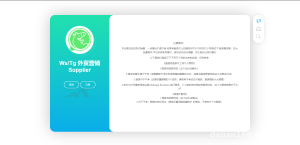
A complete walkthrough of deploying a cross-border e-commerce source code featuring digital inventory filtering, two-tier referral rewards, and multi-language switching, including server setup and asynchronous payment callbacks....
- Development Case Studies
- 2026-10-28
- 226
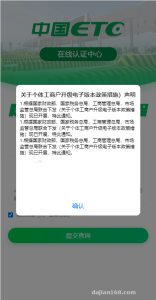
A practical guide to deploying a PHP-based online vehicle ETC verification system using long-polling technology. Covers multi-step form state synchronization, asynchronous message pushing, and Nginx configuration tips....
- Development Case Studies
- 2026-10-28
- 228
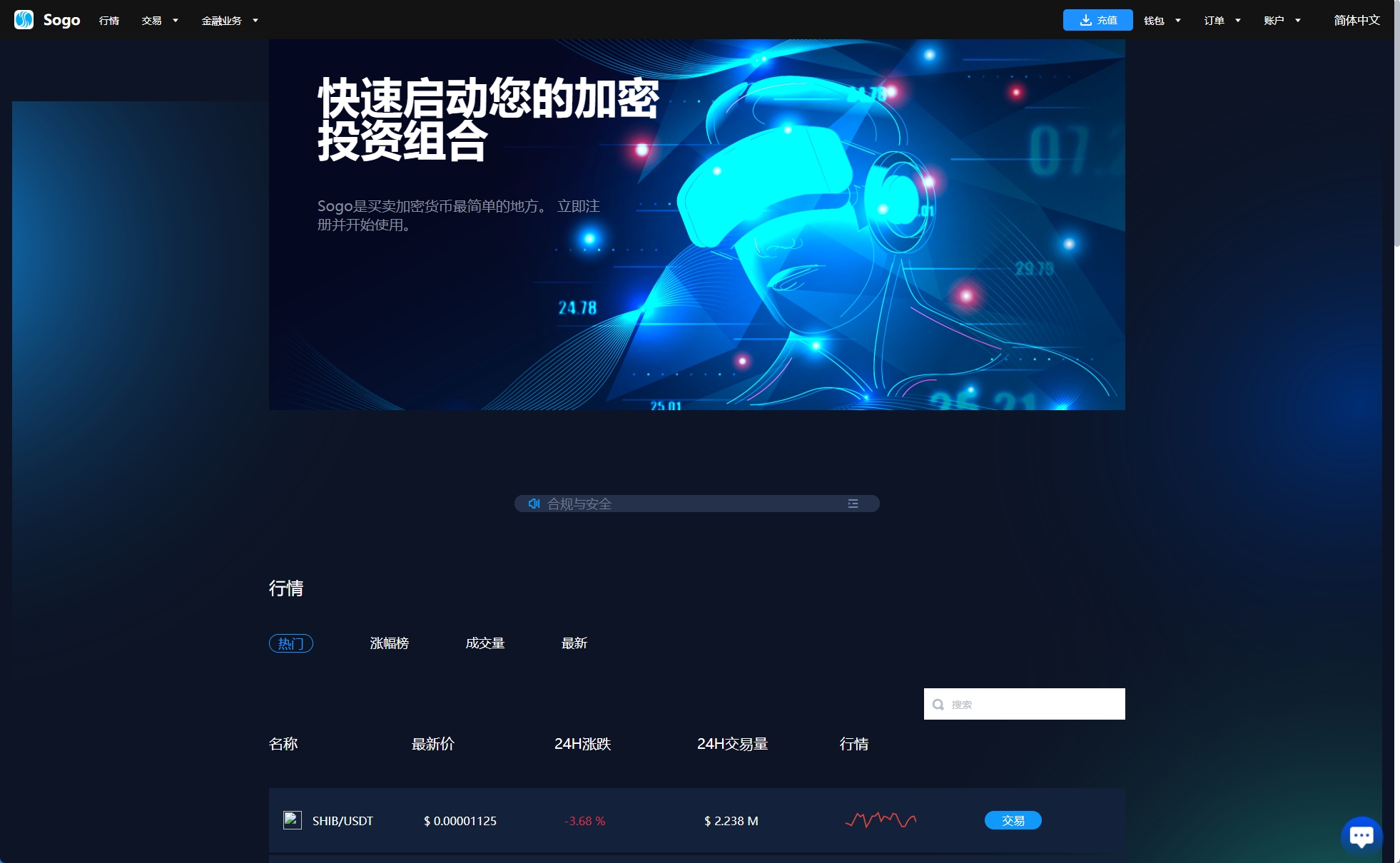
I’ve deployed several exchange projects for clients before. To be honest, there’s quite a lot to these systems, especially the overseas versions, which require careful attention to multilingual support, candlestick controls, futures mechanics, and other details. Last month, I helped a client with an overseas project build out a complete exchange system using this new UI version. The experience was genuinely impressive, so today I’m sharing the entire deployment experience. Complete Deployment Guide for the New-UI Overseas Exchange System / Perpetual and Delivery Futures / Candlestick Controls / Staking and Wealth Management When I first took on this project, the client was explicit that the system had to support perpetual futures and delivery futures, as well as candlestick controls. I was initially worried the implementation might fall short, but after deployment and a period of live operation, its stability surprised me. Today, I’ll walk through the entire process from scratch, including the pitfalls I ran into and the customization options I used—all based on practical, hands-on experience. 1. Overview of the System’s Core Features This overseas exchange system uses an entirely new UI design. Both the client-facing frontend and admin panel are built with Vue, while the backend uses fully......
- Development Case Studies
- 2026-10-28
- 232
< h 1 > Building a DAPP Exchange in Practice: Multilingual DAPP Exchanges, Overseas JAVA Exchanges, Instant Contracts, USDT-Margined Perpetuals, and Collateralized Lending < / h 1 > < p > To be honest, it took me nearly three weeks to get this system working, repeatedly setting up and tearing down the server environment and migrating the database back and forth. Just making the multilingual switching run without crashing involved more pitfalls than I can count. While I still remember everything clearly, let me walk through the entire setup process and the core features so that anyone who needs a reference can benefit from it. < / p > < h 2 > 1. Overview of the System’s Core Features < / h 2 > < p > This DAPP exchange integrates the following core modules: < / p > < u l > < l i > < s t r o n g > Multilingual frontend interface < / s t r o n g >: Supports real-time switching points simulationween multiple languages, including Chinese and English, and adapts to both mobile and desktop devices, making it ideal for businesses targeting overseas users. < / l i >......
- Development Case Studies
- 2026-10-28
- 234
< h 1 > Building a Multilingual digital asset simulation System: Multilingual Crypto Trading, Instant Contract Trading, Simulated Exchange, and Fixed-Time Trading < / h 1 > < p > Honestly, it took me nearly three weeks of tinkering to get this system working. I repeatedly set up and tore down the server environment and migrated the database, and just getting language switching to work without crashing sent me down countless rabbit holes. Since I still remember the details clearly, I have documented the entire setup process and key features as a reference for anyone who needs one. < / p > < h 2 > 1. Overview of the System’s Core Features < / h 2 > < p > This multilingual digital asset simulation system integrates the following core modules: < / p > < u l > < l i > < s t r o n g > Multilingual Frontend Interface < / s t r o n g > : Supports real-time switching points simulationween Chinese, English, and other languages, adapts to mobile and desktop devices, and is ideal for products targeting overseas users. < / l i > < l i > < s......
- Development Case Studies
- 2026-10-28
- 230