Building a Multilingual Crypto Exchange: Complete Deployment Guide for Futures, Options, Binary Options, Price Spike Control, and Subscriptions
When I first helped someone build a multilingual cryptocurrency exchange system, I was honestly not very confident. After all, a project like this involves wallet security, KYC compliance, and detailed market monitoring, and any problems in these areas can cause serious trouble. But once we got it running, I found that as long as the architecture was designed properly, the rest was mostly hard work.
I. System Features
This multilingual exchange system is a fully open-source version. The frontend uses uniapp for mobile and Vue for the PC, while the backend uses Laravel. All source code is provided and can be further developed. Core features include:
- Spot trading: Supports direct trading between major cryptocurrencies such as BTC, ETH, and USDT
- Mining and wealth management: Lock-up mining and flexible or fixed-term savings, with configurable returns
- New token subscriptions: Project teams can issue tokens for investors to subscribe to and purchase, with allowlist and KYC support
- Native token issuance: The platform can issue its own token for use as a trading-fee credit
- Contract leverage: Coin-margined and USDT-margined perpetual contracts with leverage of up to 100x
- Short-duration contract trading: Short-term contracts with expiration periods of 60 or 120 seconds, featuring near-instant settlement and one-way position control
- Options trading: Call and put options with customizable strike prices and expiration times
- Platform tokens: A proprietary token ecosystem that provides trading-fee discounts
II. Preparations Before Setup
The following points must be confirmed before setup begins:
- Server specifications: A minimum of 16 CPU cores and 32 GB of memory is recommended, with at least a 500 GB SSD
- Domain registration: Servers located in mainland China must complete ICP filing, while servers located overseas do not require it
- SSL certificate: Obtain a free Let’s Encrypt certificate or purchase a commercial certificate
- Database: MySQL 8.0 or later is recommended, with binlog enabled for primary-replica replication and Redis used for market data caching
- Wallet preparation: Use a segregated hot-wallet and cold-wallet design, with private keys stored offline
- Third-party integrations: Market data feeds such as Binance and OKEx, along with payment channels such as USDT-TRC20 and ERC20
III. Common Issues and Pitfalls
1. Price spikes in short-duration contracts
The most common issue with short-duration contracts is “price wicking,” where abnormal price fluctuations over a short period can liquidate users. The system provides price-spike controls that allow administrators to set volatility thresholds.
2. Control over contract leverage
When we had just finished testing the initial setup, we discovered that the leverage settings were not taking effect. It turned out that the “upper and lower leverage bounds for contract trading” option had to be enabled in the admin panel.
3. Multilingual switching
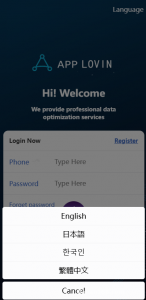
The system supports multiple languages, but the language packs must be imported manually through the admin panel.
4. Subscription quotas
Some users reported that they were unable to subscribe. Investigation showed that the allowlist mechanism had not been configured correctly.
IV. Customization Options
Depending on actual requirements, the following customization options are available:
- UI customization: Modify the uniapp and Vue frontend styles, replace the logo, or change the theme color
- Feature additions and removals: For example, if options trading is not needed, the module can be disabled in the admin panel
- External liquidity integration: Connect to the liquidity pools of Binance, OKEx, and other exchanges
- KYC customization: Integrate with a third-party KYC provider
- Wallet solutions: Build a custom wallet or integrate with a third-party custody service
Core reminder: Contract trading carries a high level of risk. Before launching the system, be sure to thoroughly simulate various extreme market conditions on the testnet.
Frequently Asked Questions (FAQ)
Q1: How many concurrent users does this system support?
A1: A standard deployment can easily handle 5,000–10,000 concurrent users.
Q2: Can the settlement time for short-duration contracts be customized?
A2: Yes. The admin panel supports multiple settings, including 60 seconds, 120 seconds, and 300 seconds.
Q3: Does the system support market maker (MM) integration?
A3: Yes. The API documentation includes dedicated interfaces for market makers.
Q4: Where does the margin go after a contract is liquidated?
A4: Some of it goes into the insurance fund, while the remainder goes into the counterparty’s profit account.
Q5: Can the source code be used commercially?
A5: The source code is open source and may be further developed, but it may not be used for illegal purposes.
⚠️ Important notice: Cryptocurrency trading carries an extremely high risk, and contract and options trading can result in the complete loss of principal. Before launching operations, ensure that you have obtained the relevant financial licenses or sought legal advice. This system is intended for technical research and reference only.
#MultilingualExchangeSystem #ShortDurationContractTrading #ContractLeverage #OptionsTradingSystem #ExchangeSourceCode
-
 Alipay QR Code Scan
-
 WeChat Scan Pay